

In this article
When a friend recommends a campaign, their endorsement carries a weight that cold discovery never can. The recommendation comes from someone the new backer already trusts, so it gets past the skepticism that stops strangers from backing.
Most creators overlook this channel entirely, focusing only on the visible levers. Backer advocacy gets treated as a bonus that either happens or doesn't, something you can't really control or measure.
Key Takeaways
- Backers don't share by default even when the product is good enough.
- How you ask matters as much as what you offer. The framing shapes whether backers engage.
- Give backers choices in how they share. Locking them into one channel silences the rest.
- Trust is the prerequisite for sharing. Backers stake their reputation on your campaign.
- Sharing requires incentive. Without it, backers stay silent.
Why Crowdfunding Backers Don't Share Campaigns
Don't assume backers will share your campaign by default. Most campaigns assume sharing happens naturally if the product is good enough. It might, but backer psychology explains why these blockers matter more than product quality.
Social Currency & Status Signaling
Sharing feels like promotion, but it's actually identity play. When a backer tells someone about a campaign, they're saying: "I'm the kind of person who finds cool things first. I have good taste. I spotted this before it was obvious."
Jonah Berger's research on social currency shows people amplify things that signal good judgment. But when a campaign lacks credibility signals like unique positioning, a founder's track record, or the sense that recommending it proves you have taste, backers hesitate. They're being asked to vouch for something unknown, which means putting their reputation on the line for no return.
Kickstarter's Projects We Love badge sidesteps this. It borrows institutional credibility, so recommending it requires less personal risk.
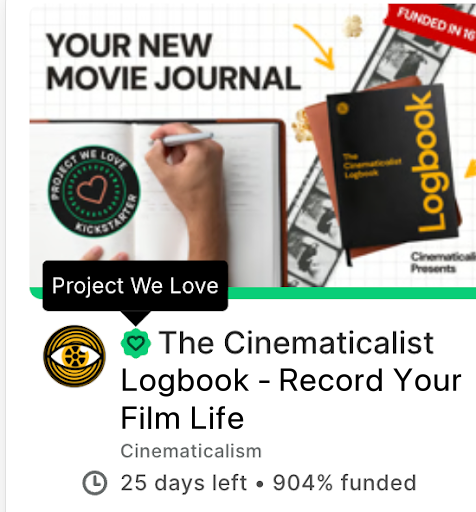
Most campaigns have no such signal. They launch as unknowns and ask backers to recommend them with nothing to gain socially in return. If the campaign flops, the backer becomes the friend who fell for it, so they keep the find to themselves.
Self-focused requests
This is the most overlooked reason backers don't share, and it's entirely in your control.
When a creator asks a backer to share, the ask is usually framed one way: "Help us hit our funding goal. Tell your friends." The backer reads this as: share this for me. That triggers guilt. Using your social capital to help a stranger hit a business target feels transactional. Most backers decline.
Guilt is measurable here. In a field experiment with 100,000 Collage.com customers, people invited to pass on a discount as a gift to a friend reported feeling less guilty about sending it than people offered the same discount as a reward for themselves (Jung et al., Information Systems Research, 2020). An ask that reads as self-serving makes sharing feel uncomfortable. “Help us hit our goal” sits even further from the friend’s interests.
Low sense of impact
Backers assume their individual share doesn't matter. When they see a viral campaign succeeding, they assume it happened through the algorithm and press, not personal recommendations. So when they back a campaign that's smaller or slower-growing, they apply the same logic: this campaign will succeed or fail on its own. My share won't change the trajectory. So they stay silent.
The belief that their contribution is irrelevant becomes the reason they don't contribute.
Backers Aren't Given Sharing Alternatives
Backers might not share because they're only given social media as an option.
A backer might not use Facebook much. Another might feel uncomfortable posting promotional content on their feed. A third might prefer email. When a campaign only says “share on social,” none of them has a channel that fits how they talk to people.
The barrier is choice. If backers were given multiple sharing channels (email sharing, direct referral links, messaging apps, even old-school word-of-mouth incentives), they'd use the one that fits how they actually communicate. With social media as the only option, the backers who’d rather text or email a friend have no easy way to share, so most of them won’t.
Backers Get Nothing for Sharing
Most campaigns ask backers to share for free. No discount, no early access for friends they refer. The barrier is incentive. Backers would share if it benefited them, but campaigns offer no reason to spend their social capital.
Sharing is work. A backer has to reach out to people, explain the campaign, putting their reputation behind it. With nothing in it for them or the person they’re telling, most decide their time is better spent elsewhere.
A reward on its own doesn’t solve it, though. If only the backer gets something, their recommendation starts to look like a sales pitch, and that brings back the guilt from the creator-centered ask. The reward has to reach the friend too, so the backer is passing on something worth having.
How to Get Backers to Share Your Campaign
1. Reframe sharing as a gift to friends.
The reward gives backers a reason to share. The framing decides whether they feel comfortable doing it.
Specific places to change this language:
- your campaign updates,
- your email sequences,
- your referral copy.
Instead of "Share this campaign," write "Share with someone who'd love early access." Instead of "Tell your friends we're funding," write "Get your friends $30 off if they back in the next week."
Test different framings in your emails and see which resonates. Track which subject lines and copy drive the most referral clicks. Update based on what your specific audience responds to.
2. Create a referral program with clear mechanics and real incentives.
Don't launch without a referral system. Design it before day one and communicate it clearly in your campaign page and first update.
Both the backer and their friend should benefit.
- $15 off for both, an exclusive add-on only for referrals,
- early-bird pricing locked to referred backers,
- merchandise bundles tied to referral milestones.
The size matters less than clarity. Make it obvious what someone gets for sharing and how to track it.
Use a referral tool with visible tracking. Kickbooster gives every backer who signs up their own link and dashboard, so they can watch their referrals add up and see what they’ve earned. When backers see that sharing worked, they share more.

Communicate the referral program in every update. Remind backers
- how much they've earned,
- how close they are to unlocking the next reward tier,
- how many friends need to back to hit the stretch goal milestone.
Make referral activity visible and rewarding.
3. Make backers feel like stakeholders.
Backers share campaigns they helped build:
- send 2-3 updates per week during the campaign,
- ask for feedback on features in polls,
- announce which backer suggestions you're implementing.
Pebble Time posted 11 updates over its 31-day campaign in 2015, roughly one every three days, and its team answered backer questions in a Reddit AMA on day two.
Create a private Discord or Facebook group for backers. Answer questions directly. When backers feel heard and involved, they share to get the product made.
Ask specific questions in updates: "Which color variant should we prioritize first?" or "Should we add feature X or Y?" Then act on their input visibly.
Before BB-777 launched on Kickstarter, we set up four WhatsApp groups as an inner circle for the boombox’s most loyal fans, with SMS, email and VIP exclusives keeping them close. The campaign raised $7,133,869 from 9,337 backers.
3. Report the results of sharing
Backers who think their share won’t change anything need proof that it does. Give them that proof in your updates, with numbers from your referral tracking.
- Report how many backers joined through backer links that week: “38 of this week’s new backers came from links you shared.”
- Tie shares to the next milestone: “We’re 60 backers from the next stretch goal. If everyone here brings one friend, we’ll unlock it by Friday.”
- Thank your top referrers by name, with their permission, so others can see one person’s shares adding up.
- Report wins from channels too: “Your posts in our Discord brought in 25 backers yesterday.”
Once backers see a share turn into a backer, the next ask feels worth doing.
4. Give backers multiple sharing channels.
Don't assume all backers use social media equally. Lock them into one channel and many stay silent.
Offer:
- email sharing tools,
- direct referral links (trackable and shareable anywhere),
- Discord/Slack/Telegram sharing buttons,
- messaging-app integrations,
- old-school word-of-mouth incentives (bring a friend to a livestream event, get a discount).
Let each backer share through their primary network.
Then track which channels actually bring in pledges. Kickstarter’s referral dashboard is the place to start, but it has a blind spot: when someone hears about your campaign elsewhere and then finds it through the Kickstarter app or search, the pledge counts as Kickstarter’s. Mike Gnade of Rock Manor Games saw this on Set a Watch: Swords of the Coin. The dashboard credited Kickstarter with 72% of his funding, while he estimated his own outreach drove up to 73% (Rock Manor Games).
Close that gap with custom referral tags. Kickstarter lets you create up to 500, so make one for each channel you share through: your email list, your Discord, each creator, each newsletter. Put the tagged link everywhere you post, and the dashboard will show which channels brought in which pledges. Double down on what works, and keep that data for your next campaign, since it shows where your audience actually spends time.
That data may also reflect where your audience lives, an insight you can use for future campaigns and promotional planning.
5. Build and communicate credibility before asking for shares.
Backers share campaigns they trust. Knowing what backers expect from creators reveals what builds that trust: transparency about your process, proof of capability, and consistent communication.
On your campaign page, clearly show:
- founder background and relevant experience,
- any media coverage or influencer mentions,
- team credentials,
- prototype or factory footage.
Use your first few updates to share production timelines, certifications, factory visits, and transparent shipping plans.
Each update should reinforce: "This team can deliver this product." A backer who sees consistent proof will share confidently. A backer who sees red flags stays silent.
Late in the campaign, as you approach stretch goals, showcase proof of execution. Show progress photos. Share supplier confirmations. Backers at that stage share out of altruism, wanting to see the campaign cross the line, but only if they trust it will actually get made.
Conclusion
Sharing is engineerable.
Backers will share when they feel invested, when sharing benefits their friends, when they trust the product will deliver, and when you give them a way to share that fits their actual behavior.
A lot of creators never even test this assumption. They launch, assume sharing will happen, and never find out why it didn't.
The leverage is yours.
Build your audience, design your referral mechanics, communicate constantly, ask through the right channels. Do that and your backers become advocates who choose to amplify you.
Or let TCF handle it, a Kickstarter Premier Partner with 1,000+ crowdfunding campaigns behind us. A dedicated project manager and 10 to 12 in-house specialists will manage everything, including building your backer community, writing emails that turn backers into sharers, and running your referral program for maximum results.
FAQ
Does Kickstarter have a referral program?
Not one that rewards backers. Kickstarter gives creators custom referral tags (up to 500 per campaign) and a dashboard that shows which tagged links brought in pledges. To pay or reward backers for bringing in friends, you need a third-party tool like Kickbooster.
Should I pay backers to share?
It’s worth it. Sharing takes effort, and a reward like cash back, a discount or an exclusive add-on gives backers a reason to do it. Rewards that also benefit the people they invite tend to make the ask easier. If backers earn a commission through an affiliate link, US endorsement rules require them to disclose it when they share, so include that in your referral instructions.
How do I track which backers referred others?
Kickstarter’s referral tags break results down by channel. For backer-level tracking, use Kickbooster, which gives each backer who signs up a personal link and a dashboard showing their referrals and earnings. You can then use those numbers in your updates to show backers what their shares added up to.