


In this article
Crowdfunding has produced some truly massive launches over the years. A handful of Kickstarter campaigns have raised tens of millions of dollars, attracted hundreds of thousands of backers, and turned ambitious product ideas into globally recognized brands.
For founders preparing their own launch, those numbers can feel both inspiring and intimidating. It is easy to look at record-breaking campaigns and assume they were once-in-a-lifetime success stories driven by hype or luck.
In reality, the most funded Kickstarter projects follow clear strategic patterns. Strong pre-launch audiences, compelling product positioning, well-structured campaigns, and precise launch timing often sit behind those headline numbers.
In this article, we’ll break down the 18 most funded Kickstarter projects of all time and analyze what actually drove their results. You’ll start with a ranked overview of the top campaigns, then move into detailed breakdowns of each project, and finish with 15 key lessons you can apply to your own launch.
Most Funded Kickstarter Projects (Ranked by Amount Raised)
1. eufyMake E1: the First Personal 3D-Texture UV Printer
Creator: eufyMake (Anker Innovations)
Year Launched: 2025
Funding Goal: $500,000
Amount Raised: $46,762,258
Number of Backers: 17,822
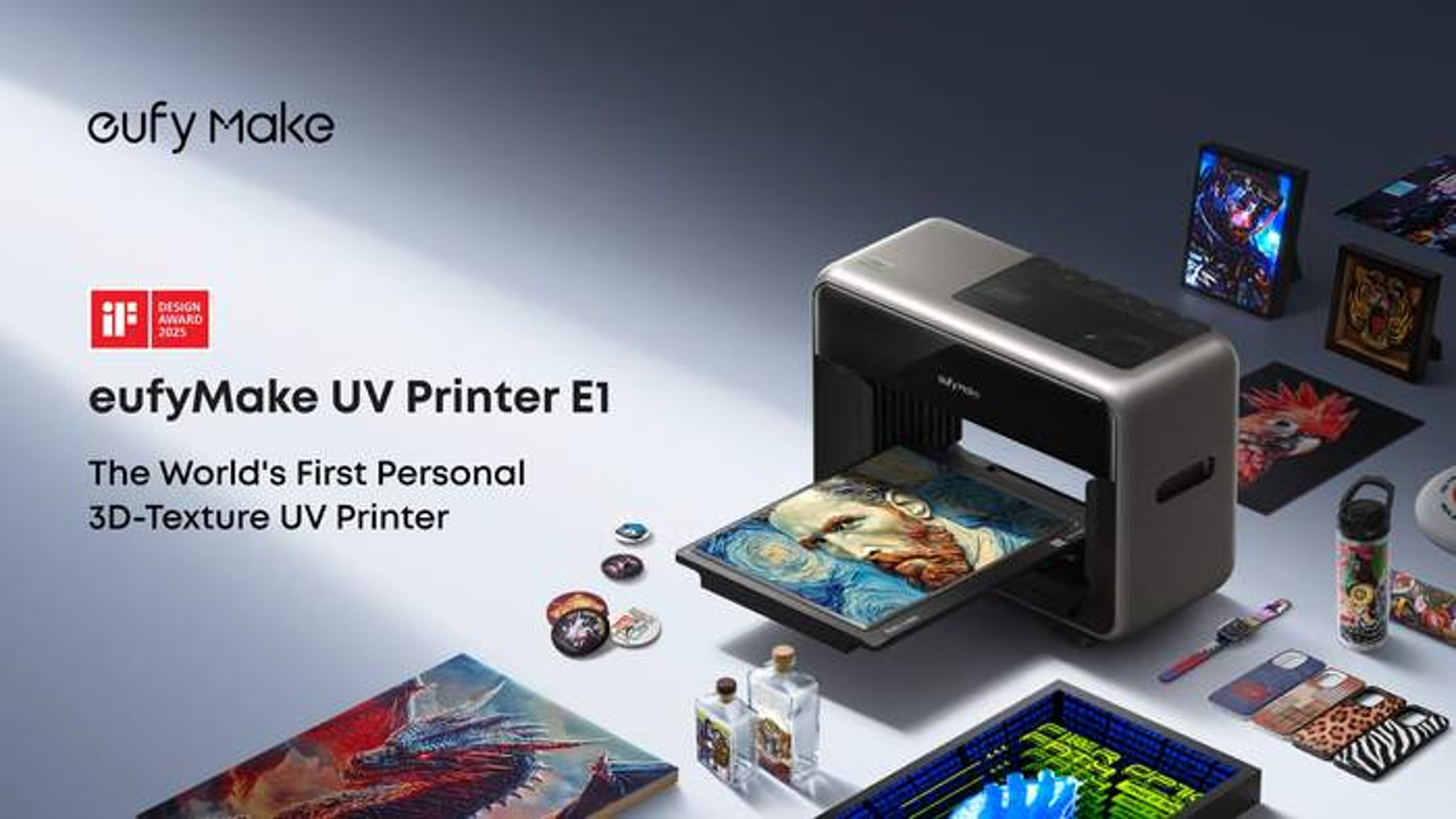
The eufyMake E1 campaign became the most funded Kickstarter project in history because it introduced a powerful industrial technology in a format that everyday creators could actually use. The printer brought UV texture printing, normally reserved for expensive commercial machines, into a compact desktop device designed for makers, hobbyists, and small businesses.
How It Raised So Much
- Industrial technology repositioned for consumers.
The E1 introduced consumer-friendly 3D-texture UV printing, allowing users to print detailed color images and raised textures on 300+ materials, including wood, metal, glass, leather, and acrylic.
- Prosumer positioning.
The product appealed to both hobbyists experimenting with new tools and small businesses producing custom merchandise or prototypes in-house.
- High average pledge value.
Early bundles started around $1,699, while premium bundles reached $2,700+, producing an average pledge of roughly $2,600 per backer.
- Strong brand credibility.
The campaign launched under Anker Innovations, a well-known consumer electronics company with a long history of delivering hardware products.
- Influencer validation before launch.
Reviews from respected maker and woodworking YouTube creators demonstrated the printer’s capabilities and helped build trust before the campaign opened.
- Momentum and social proof.
Rapid early funding, media coverage, and visibility on Kickstarter itself reinforced credibility and attracted additional backers.
2. Surprise! Four Secret Novels by Brandon Sanderson
Creator: Dragonsteel Entertainment
Year Launched: 2022
Funding Goal: $1,000,000
Amount Raised: $41,754,153
Number of Backers: 185,341

The campaign revealed that fantasy author Brandon Sanderson had secretly written four new novels during the pandemic. Instead of announcing them through a traditional publisher, he launched them directly to fans on Kickstarter as “A Year of Sanderson,” delivering one book each quarter in 2023 with optional monthly swag boxes between releases.
How It Raised So Much
- Massive existing fanbase.
Sanderson already had millions of readers worldwide. When the campaign launched, a huge portion of that audience converted immediately, driving enormous day-one momentum.
- A powerful announcement hook.
The reveal that the author had secretly written four surprise novels created instant media coverage and social sharing across the fantasy community.
- Wide pledge ladder.
Backers could choose between ebooks ($40), audiobooks ($60), premium hardcovers ($160), or full bundles up to $500, allowing both casual readers and superfans to participate.
- Subscription-style structure.
The campaign framed the rewards as a year-long experience, with quarterly book releases and optional monthly swag boxes, which increased overall pledge value.
- Direct-to-fan publishing.
The books were produced through Sanderson’s own company, Dragonsteel Entertainment, giving fans confidence in delivery and allowing the campaign to capture revenue normally split with publishers.
- Event-level momentum and social proof.
As funding surged past previous Kickstarter records, media coverage and community excitement amplified the campaign’s visibility and drove even more backers to participate.
3. Snapmaker U1 Color 3D Printer: 5X More Speed. 5X Less Waste.
Creator: Snapmaker
Year Launched: 2025
Funding Goal: $100,000
Amount Raised: $20,614,548
Number of Backers: 20,680
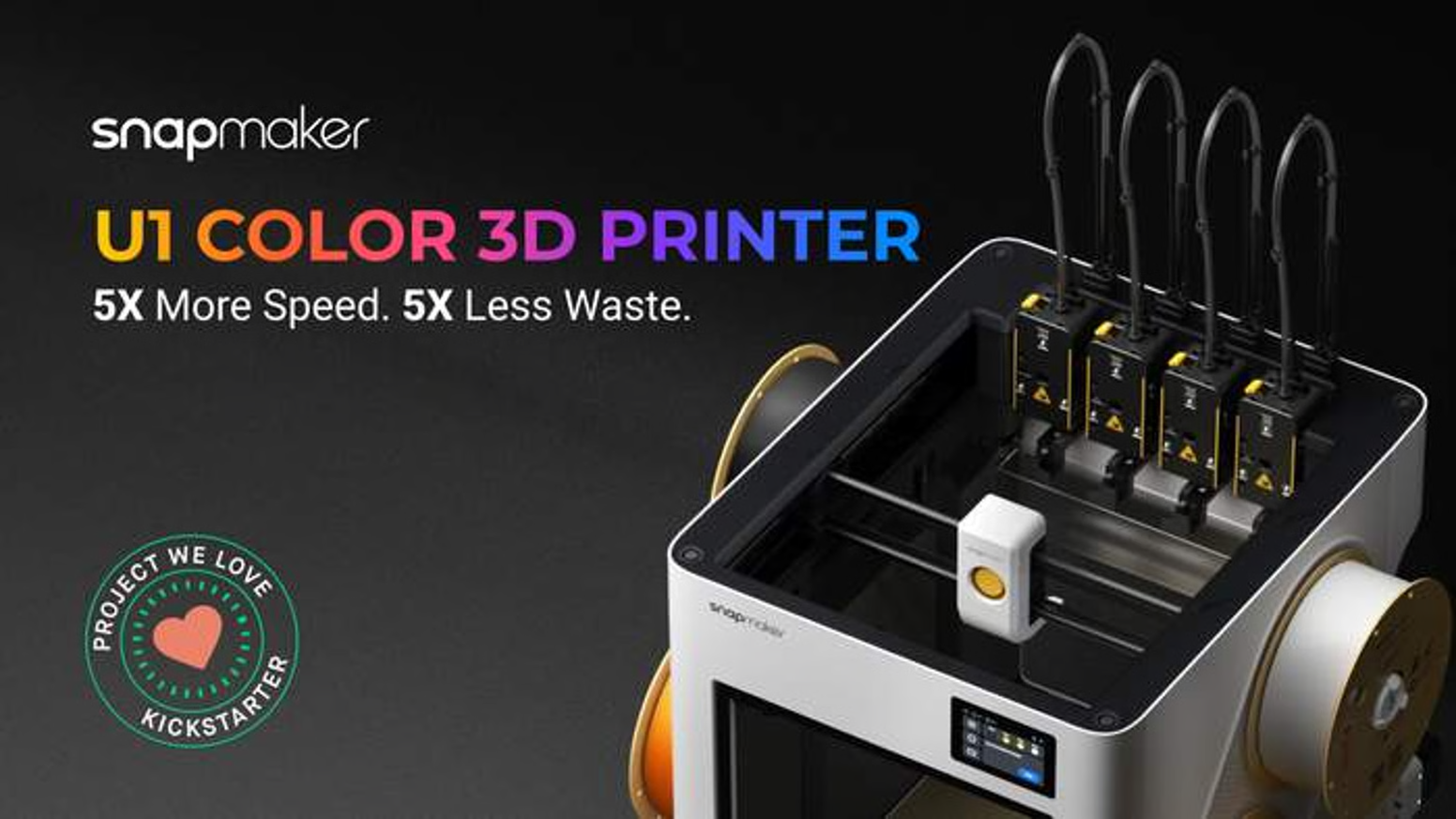
The Snapmaker U1 campaign built on the company’s existing reputation in the maker community while introducing a major upgrade in multi-color 3D printing. The printer focused on solving one of the biggest frustrations in the category, slow printing and excessive filament waste when switching colors or materials.
How It Raised So Much
- A proven brand in the maker community.
Snapmaker had already delivered successful Kickstarter campaigns with its earlier 3D printers, building trust with hobbyists and professionals who were familiar with the brand.
- A clear technical breakthrough.
The U1 introduced a four-toolhead system with SnapSwap™ technology, allowing toolheads to switch in about five seconds, dramatically reducing printing delays and filament waste.
- Strong demand for multi-color printing.
Multi-color and multi-material printing has been a long-standing challenge in the 3D printing community. The U1 positioned itself as one of the first affordable printers to make this workflow practical.
- High-value hardware rewards.
The main early-bird tier launched around $749, with bundles and add-ons increasing total pledge size, pushing the campaign to more than $20M from about 20K backers.
- Influencer and community validation.
Well-known 3D printing creators and reviewers tested the printer before launch, highlighting its speed, tool-changing system, and waste reduction benefits.
- Strong category momentum.
3D printers remain one of the most successful hardware categories on Kickstarter, and Snapmaker entered the campaign with a product positioned directly at the most active segment of that market.
4. Pebble Time: Awesome Smartwatch, No Compromises
Creator: Pebble Technology
Year Launched: 2015
Funding Goal: $500,000
Amount Raised: $20,338,986
Number of Backers: 78,471
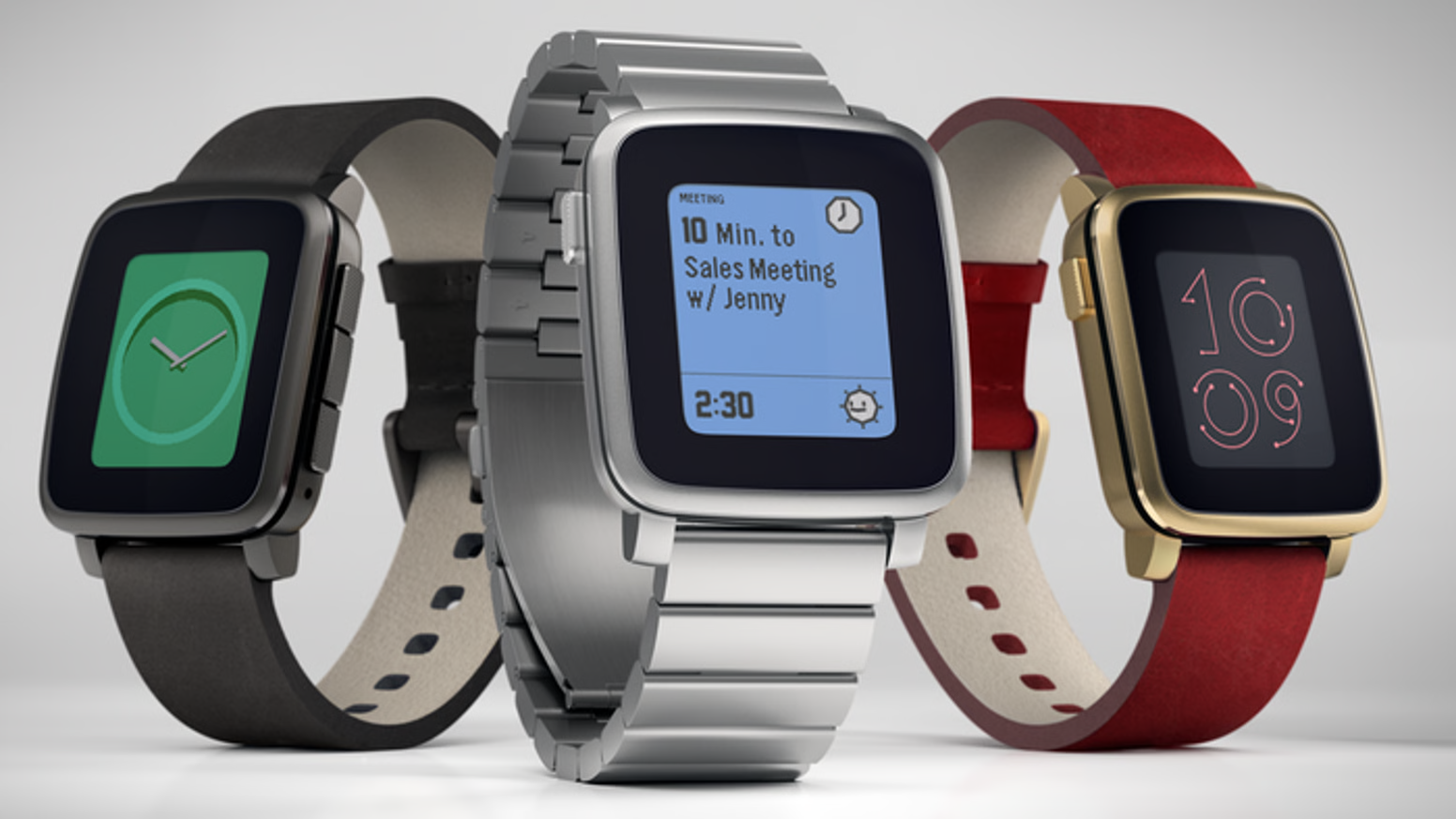
Pebble Time was the company’s second major Kickstarter campaign and launched at a moment when smartwatches were becoming one of the most talked-about consumer tech categories. Building on the success of the original Pebble watch, the campaign introduced a redesigned smartwatch with a color e-paper display, a new timeline interface, voice replies, and up to seven days of battery life.
How It Raised So Much
- A massive existing user community.
Pebble’s first Kickstarter campaign in 2012 created a large base of loyal users and developers, many of whom returned to support the next generation of the product.
- Perfect timing in the smartwatch boom.
The campaign launched in early 2015, when interest in wearable technology was exploding and major competitors like Apple were entering the market.
- A strong product upgrade.
Pebble Time introduced several major improvements over the original watch, including a color e-paper display, voice responses to notifications, and a new timeline interface for organizing information throughout the day.
- A large developer ecosystem.
By launch, Pebble already had 6,500+ apps and watchfaces created by more than 26,000 developers, giving the platform immediate functionality and long-term appeal.
- Well-structured reward tiers.
Early backers could get the Pebble Time for $159, with higher tiers offering the premium Pebble Time Steel ($250) or bundles of multiple watches.
- Strong media and community momentum.
Tech outlets closely followed the campaign as it rapidly broke Kickstarter funding records, which amplified visibility and attracted even more backers.
5. Brandon Sanderson’s Cosmere® RPG
Creator: Brotherwise Games
Year Launched: 2024
Funding Goal: $250,000
Amount Raised: $15,149,874
Number of Backers: 55,106
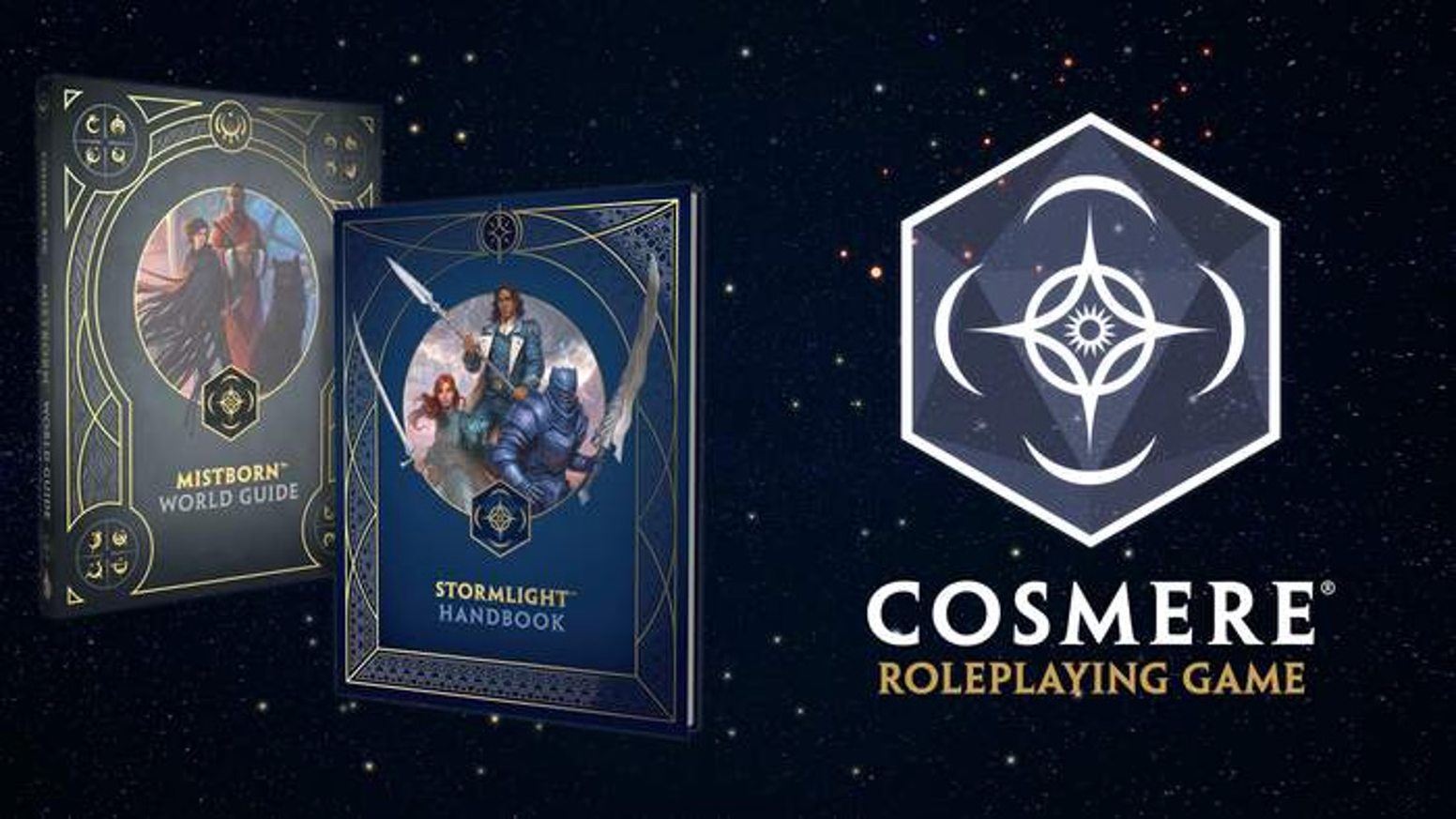
The Cosmere RPG expanded Brandon Sanderson’s bestselling fantasy universe into a full tabletop roleplaying system. The campaign launched with Stormlight Archive content while positioning the game as a long-term platform that would eventually include other Cosmere worlds like Mistborn. It quickly became the most funded tabletop RPG campaign in Kickstarter history.
How It Raised So Much
- A massive built-in fandom.
The Cosmere universe already had millions of readers worldwide, many of whom had supported Sanderson’s previous Kickstarter campaigns.
- Expansion of a successful IP.
Instead of launching a completely new concept, the project extended an existing universe with deep lore, making it instantly appealing to fans.
- High-value bundle tiers.
The campaign offered multiple pledge levels, including player sets, GM bundles, collector editions, and all-in packages with books, miniatures, dice, and accessories.
- Strong tabletop publishing partner.
The project was produced by Brotherwise Games, an established tabletop publisher with experience delivering complex physical game products.
- Record-breaking momentum.
The campaign raised millions within the first day, which generated media coverage and helped it become the most funded RPG project on Kickstarter.
- A long-term product roadmap.
Backers were not just buying a single game but supporting a system designed to expand across the entire Cosmere universe in future releases.
6. AWOL Vision Aetherion: Pixel-Clarity RGB Laser UST Projector
Creator: AWOL Vision
Year Launched: 2026
Funding Goal: $500,000
Amount Raised: $14,765,012+ (campaign still live at time of writing)
Number of Backers: 6,126 + (campaign still live at time of writing)
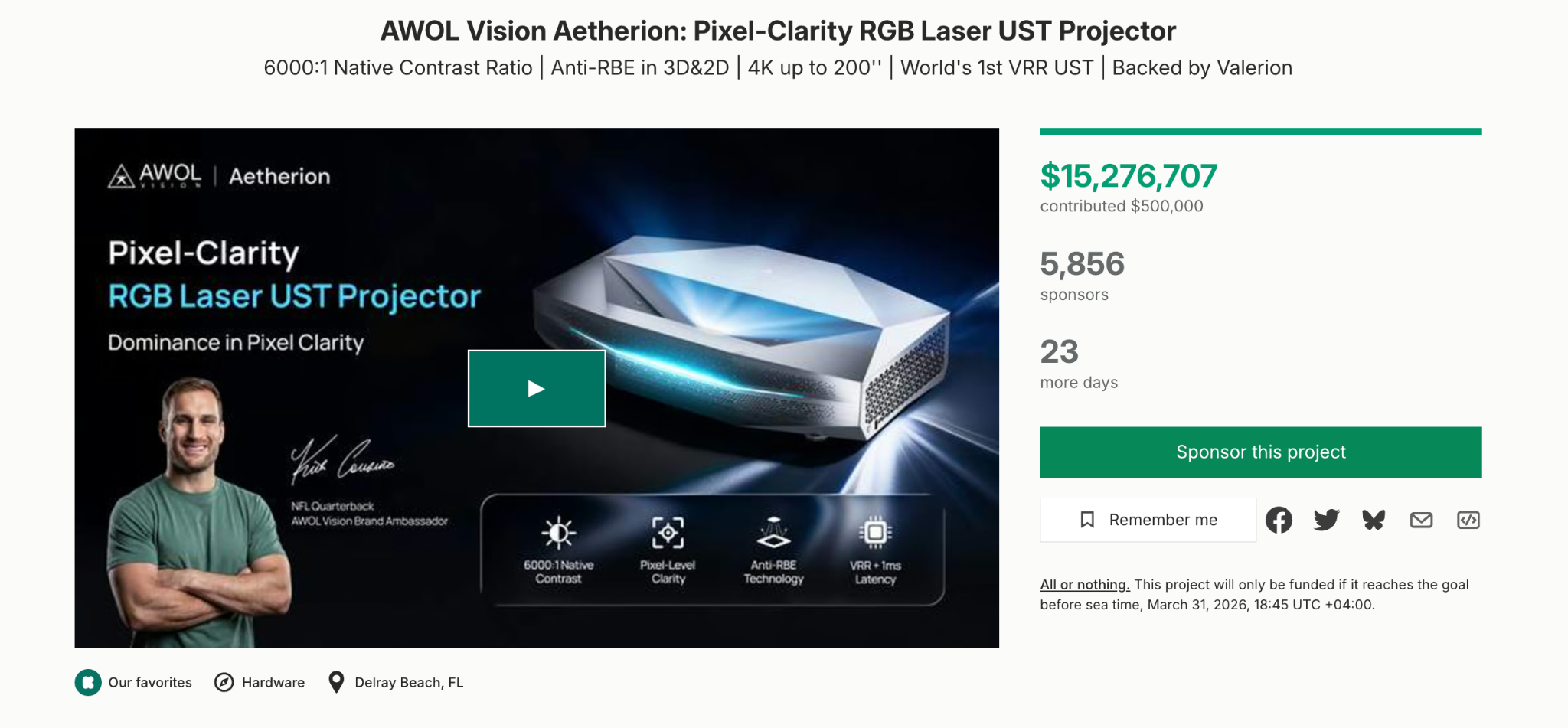
The Aetherion campaign targets high-end home entertainment buyers by offering a premium ultra-short-throw RGB laser projector capable of projecting a 4K image up to 200 inches. The product positions itself as a replacement for large TVs and traditional long-throw projectors, combining cinematic scale with simple setup designed for living rooms.
How It Raised So Much
- Extremely high average pledge value.
Most reward tiers start around $1,999-$2,199, with bundles reaching $5,000+, producing an average pledge of roughly $2,600 per backer.
- A clear “TV replacement” value proposition.
The campaign frames the projector as a way to create a 200-inch home cinema without complicated installation, solving a clear consumer desire for bigger-screen entertainment.
- Premium hardware positioning.
Features like 6000:1 native contrast, RGB triple-laser projection, 3,300 ISO lumens, and VRR support for gaming helped position the product as a top-tier home theater device.
- Early-backer discount mechanics.
Kickstarter pricing offered 40-50% discounts compared to expected retail, encouraging buyers to commit during the campaign rather than waiting for a retail launch.
- Large bundle tiers that increase pledge size.
Many backers selected packages that included ALR projection screens, audio systems, or furniture-style cabinets, pushing total pledge values into the several-thousand-dollar range.
- Strong early momentum and social proof.
Rapid early funding milestones and community discussion helped reinforce demand and attract additional high-ticket backers during the campaign window.
7. Roller Pro Carry-On Luggage by Peak Design
Creator: Peak Design
Year Launched: 2025
Funding Goal: $100,000
Amount Raised: $13,408,553
Number of Backers: 24,219

Peak Design entered the luggage category with its first rolling suitcase, the Roller Pro, positioning it as a complete redesign of the traditional carry-on. The bag introduced a proprietary SlimDrive™ handle system, hybrid soft-hard construction, and compatibility with Peak Design’s ecosystem of camera cubes and packing tools. The campaign quickly became one of the most funded product design projects on Kickstarter.
How It Raised So Much
- Strong repeat-creator credibility.
This was Peak Design’s 14th Kickstarter campaign, and the company had already built a reputation for delivering high-quality bags and accessories.
- A clear product innovation story.
The Roller Pro introduced the SlimDrive™ handle, a thinner trolley system that removes bulky tubes from the interior, freeing up packing space.
- A focused target audience.
The product was designed for travelers, photographers, and tech professionals, a niche that already overlaps with Peak Design’s existing customer base.
- Meaningful early-backer discounts.
Campaign pricing ranged from $415 to $525, compared to an expected $599.95 retail price, making the Kickstarter offer financially compelling.
- Ecosystem-driven add-ons.
Backers could purchase accessories like camera cubes, packing tools, and travel organizers, increasing average order value.
- Trust through proven fulfillment.
Peak Design emphasized its track record of successfully shipping products from previous campaigns, which reduced perceived risk for backers purchasing a premium travel product.
8. COOLEST COOLER: 21st Century Cooler That's Actually Cooler
Creator: Ryan Grepper
Year Launched: 2014
Funding Goal: $50,000
Amount Raised: $13,285,226
Number of Backers: 62,642
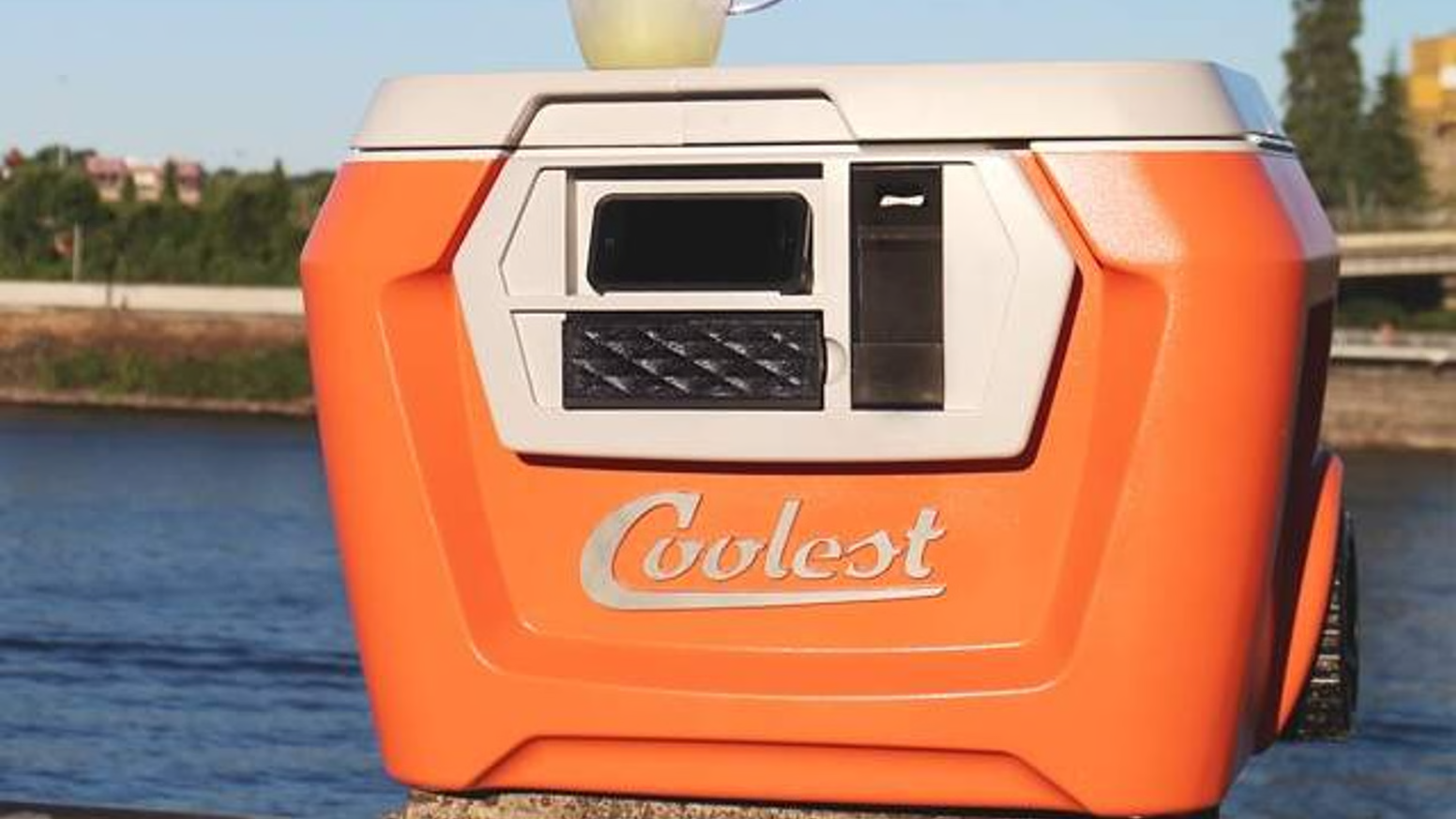
The COOLEST COOLER became one of the most viral Kickstarter campaigns ever by turning a simple outdoor product into a multi-feature “party machine.” The cooler combined several gadgets into one product, including a built-in blender, Bluetooth speakers, USB charger, LED lighting, and oversized beach wheels, making it easy for backers to imagine using it at beaches, tailgates, and outdoor gatherings.
How It Raised So Much
- A highly shareable product concept.
The campaign pitched the cooler as a portable party, bundling features like a blender, speaker, and charger into a single product that was easy to understand and exciting to share.
- A viral campaign video.
The product demo clearly showed the cooler being used at outdoor parties, beaches, and barbecues, which helped the campaign spread rapidly across social media.
- Accessible pricing.
Most backers pledged around $165-$185, resulting in an average pledge of roughly $210, which made the product affordable for a large audience.
- A massive goal-to-raise narrative.
The campaign set a $50,000 funding goal but eventually raised over $13.2 million, creating headlines and additional visibility on Kickstarter.
- Seasonal timing.
The campaign launched in summer, when interest in outdoor products like coolers and beach gear was already high.
- Kickstarter platform amplification.
As funding surged, the campaign received extensive attention from media outlets and Kickstarter itself, which drove even more traffic and backers.
Important Context
Despite its record-breaking fundraising, the project later became one of Kickstarter’s most well-known fulfillment controversies. Manufacturing delays, cost overruns, and communication issues prevented many backers from receiving their rewards on time.
Kickstarter eventually restricted the creator’s account after repeated attempts to contact them for updates went unanswered for more than 90 days. The creator is no longer allowed to launch new projects on the platform.
9. Frosthaven
Creator: Isaac Childres
Year Launched: 2020
Funding Goal: $500,000
Amount Raised: $12,969,608
Number of Backers: 83,193

Frosthaven launched as the standalone sequel to Gloomhaven, one of the highest-rated and most popular board games ever created. The new campaign expanded the universe with a larger campaign system, town-building mechanics, and more than 100 scenarios with 16 new character classes. It quickly became the most funded board game in Kickstarter history at the time of its launch.
How It Raised So Much
- A massive existing fanbase.
Gloomhaven had already built a huge global community of players, so Frosthaven launched with strong built-in demand.
- A clear sequel value proposition.
The campaign positioned Frosthaven as a bigger, deeper continuation of the original game, rather than a completely new concept.
- Huge gameplay scope.
The game promised 100+ scenarios, 16 new playable classes, and a town-building system, giving backers hundreds of hours of gameplay.
- Large backer volume.
With 83,000+ backers and an average pledge of roughly $150-$160, the campaign reached nearly $13M through sheer community scale.
- Strong tabletop media coverage.
Board game reviewers, YouTube creators, and tabletop publications helped drive awareness before and during the campaign.
- Retailer and bulk pledges.
Many board game retailers pledged for multiple copies, adding large order volumes beyond individual consumer purchases.
10. Pebble 2, Time 2 + All-New Pebble Core
Creator: Pebble Technology
Year Launched: 2016
Funding Goal: $1,000,000
Amount Raised: $12,779,843
Number of Backers: 66,673
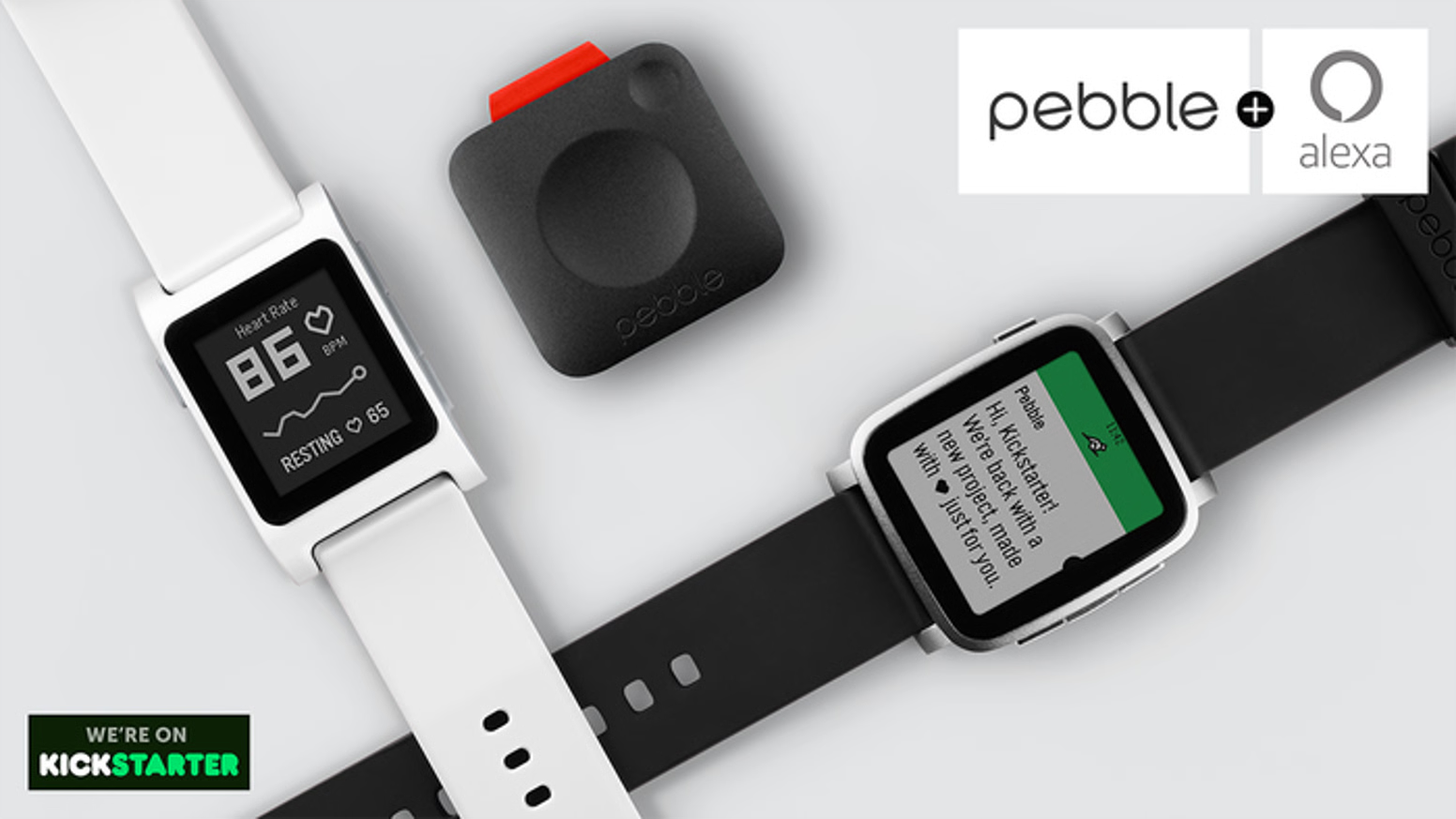
This campaign was Pebble’s third major Kickstarter launch and came from the company that helped create the smartwatch category in the first place. Instead of launching a single device, Pebble introduced two new smartwatches (Pebble 2 and Pebble Time 2) and an entirely new connected wearable called Pebble Core, a small 3G device designed for phone-free running with GPS, music streaming, and voice control.
How It Raised So Much
- A massive existing user base.
Pebble had already run two record-breaking Kickstarter campaigns before 2016, including the original Pebble watch and Pebble Time. That history created a large pool of repeat backers who trusted the brand and wanted the next generation of devices.
- A multi-product launch strategy.
Instead of one product, the campaign introduced three devices at once, which allowed backers to choose between models or bundle them together.
- Strong tiered pricing and bundles.
Entry tiers started around $99 for Pebble 2, $169 for Time 2, and $69 for Pebble Core, while bundle tiers reached $300+, increasing the campaign’s average pledge.
- Clear product differentiation.
Pebble positioned its watches around multi-day battery life, e-paper displays readable in sunlight, cross-platform compatibility with iOS and Android, and integrated fitness tracking.
- Strong tech press coverage.
Major outlets like Gizmodo, TechInsider, and BGR covered the launch, driving large early traffic to the campaign.
- Developer and hacker appeal.
Pebble Core was marketed as a hackable wearable computer, attracting developers interested in building custom hardware and software integrations.
11. Kingdom Death: Monster 1.5
Creator: Kingdom Death (Adam Poots)
Year Launched: 2016
Funding Goal: $100,000
Amount Raised: $12,393,139
Number of Backers: 19,264
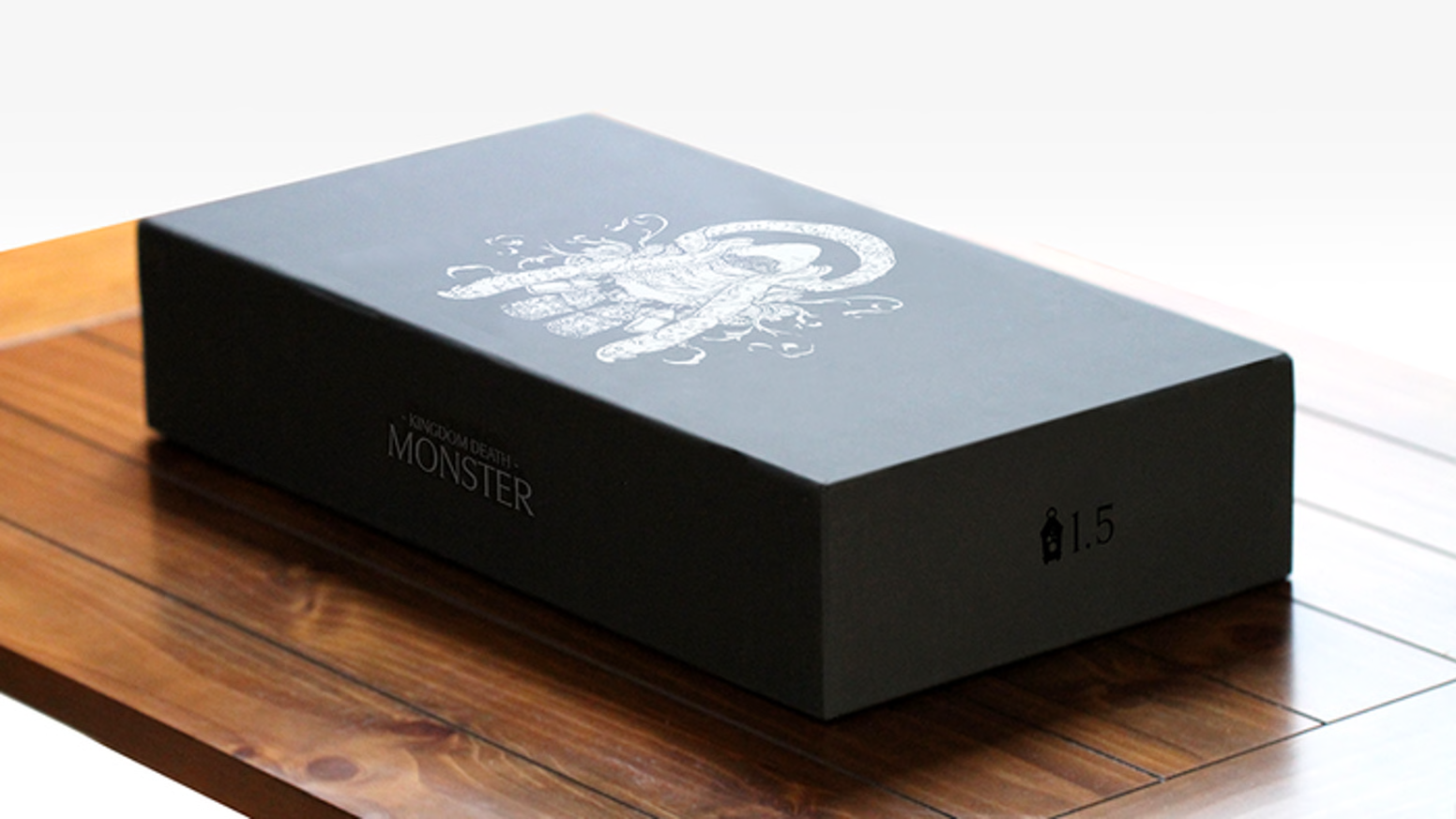
Kingdom Death: Monster 1.5 is one of the clearest examples of how a niche audience with extremely high spending power can drive massive crowdfunding totals. The campaign funded an updated edition of the cult horror board game along with expansions, upgrades, and collector content. Despite having far fewer backers than most top campaigns, the project crossed $12.3M thanks to unusually high pledge sizes.
How It Raised So Much
- Extremely high average pledge value.
With 19,264 backers generating $12.39M, the campaign averaged roughly $640+ per backer, far higher than most Kickstarter projects.
- A deeply committed collector community.
Kingdom Death had already built a passionate fanbase that treated the game as a long-term hobby and collectible ecosystem, not a one-time purchase.
- Premium core game pricing.
The core game itself started around $200-$250, positioning the product as a premium tabletop experience from the start.
- Extensive add-ons and expansion tiers.
Backers could add expansions, miniatures, and upgrade packs, with some tiers exceeding $1,000+, dramatically increasing average pledge size.
- Strong early momentum.
The campaign reached $1M within minutes, creating immediate social proof that attracted additional backers.
- Scarcity and limited availability.
Many pledge tiers and expansions were limited or Kickstarter-exclusive, encouraging collectors to pledge quickly and increase their cart size.
12. EcoFlow DELTA Pro: The Portable Home Battery
Creator: EcoFlow
Year Launched: 2021
Funding Goal: $100,000
Amount Raised: $12,179,651
Number of Backers: 3,199
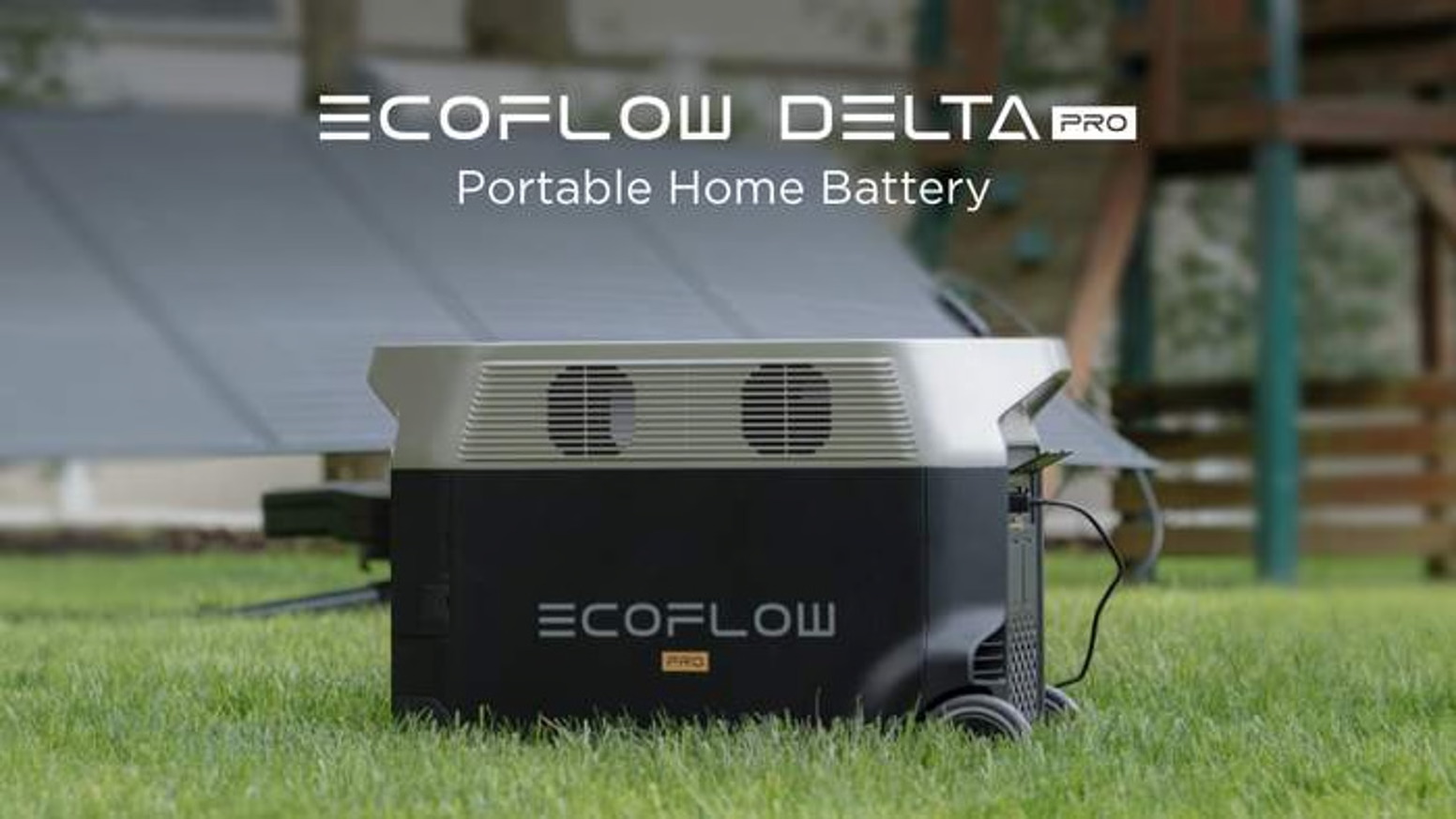
EcoFlow DELTA Pro showed how high-ticket hardware with real-world utility can generate massive crowdfunding totals even with a relatively small number of backers. The campaign introduced a portable home battery system designed for backup power, off-grid energy use, and smart home energy management. With expandable capacity up to 25kWh, the system positioned itself as a complete energy ecosystem, not a simple portable power station.
How It Raised So Much
- Extremely high average pledge value.
With $12.18M raised from just 3,199 backers, the campaign averaged roughly $3,800 per backer, driven by high-ticket bundles and system configurations.
- A strong real-world use case.
The product addressed concrete problems such as power outages, grid instability, and rising energy costs, making it attractive to homeowners and professionals.
- A complete ecosystem strategy.
DELTA Pro was designed as a modular energy platform, supporting extra batteries, solar panels, generators, and smart home panels.
- Premium bundle structure.
While the base unit started around $1,999, full system bundles with solar panels and additional batteries reached $7,000+, dramatically increasing average order value.
- Rapid early momentum.
The campaign crossed $1M within minutes, generating strong social proof and media attention.
- Strong product positioning.
EcoFlow reframed the category from “portable power station” to “portable home battery,” which expanded the perceived value and target audience.
13. Travel Tripod by Peak Design
Creator: Peak Design
Year Launched: 2019
Funding Goal: $500,000
Amount Raised: $12,143,435
Number of Backers: 27,168
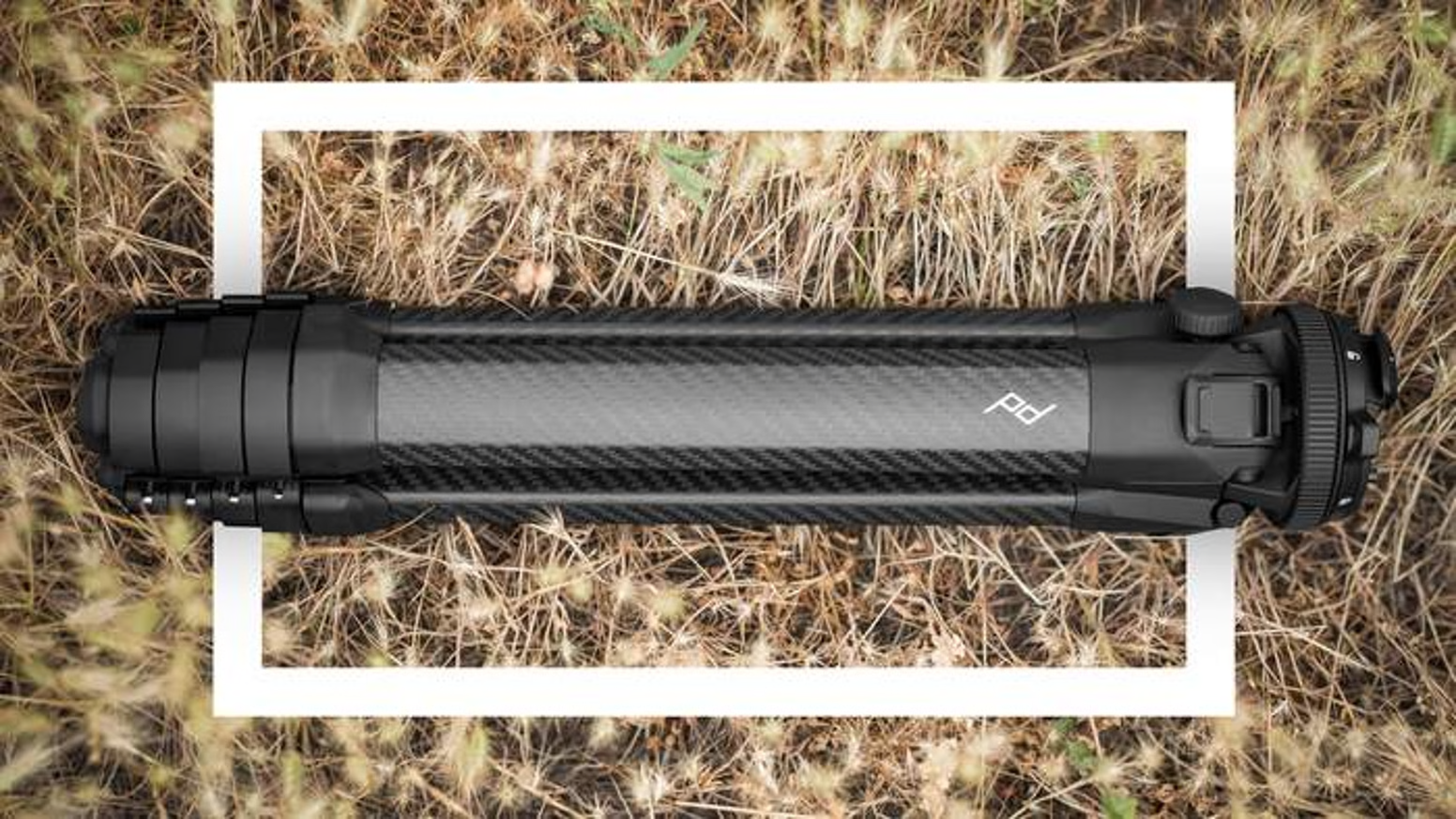
Peak Design’s Travel Tripod campaign shows how a familiar product category can generate massive demand when redesigned around a clear user pain point. The company spent four years rethinking the traditional tripod design, eliminating wasted internal space so the tripod could pack down to the size of a water bottle while still supporting professional cameras. The result was a product that photographers instantly understood and wanted.
How It Raised So Much
- A clear, universal problem statement.
Traditional tripods are bulky and difficult to carry. Peak Design built the entire campaign around solving that single pain point by creating a compact tripod that folds down to half the volume of standard travel tripods.
- Strong brand credibility.
This was Peak Design’s ninth Kickstarter campaign, and the company already had a long track record of delivering products to backers.
- Premium product positioning.
The campaign offered two main versions, an aluminum tripod around $289 and a carbon fiber version around $479, pushing the average pledge to roughly $440+.
- Deep engineering storytelling.
Peak Design shared detailed design breakdowns, testing data, and engineering explanations, helping justify the premium price.
- Influencer and creator validation.
Pre-production units were reviewed by major photography creators on YouTube, including well-known photographers and gear reviewers.
- A strong enthusiast audience.
Photography gear buyers are highly engaged and willing to invest in premium tools that improve workflow and portability.
14. NestWorks C500 - Next-Gen Smartest CNC with Industrial Power
Creator: NestWorks
Year Launched: 2025
Funding Goal: $49,684 (≈ HK$388,633)
Amount Raised: $11,855,105
Number of Backers: 3,180
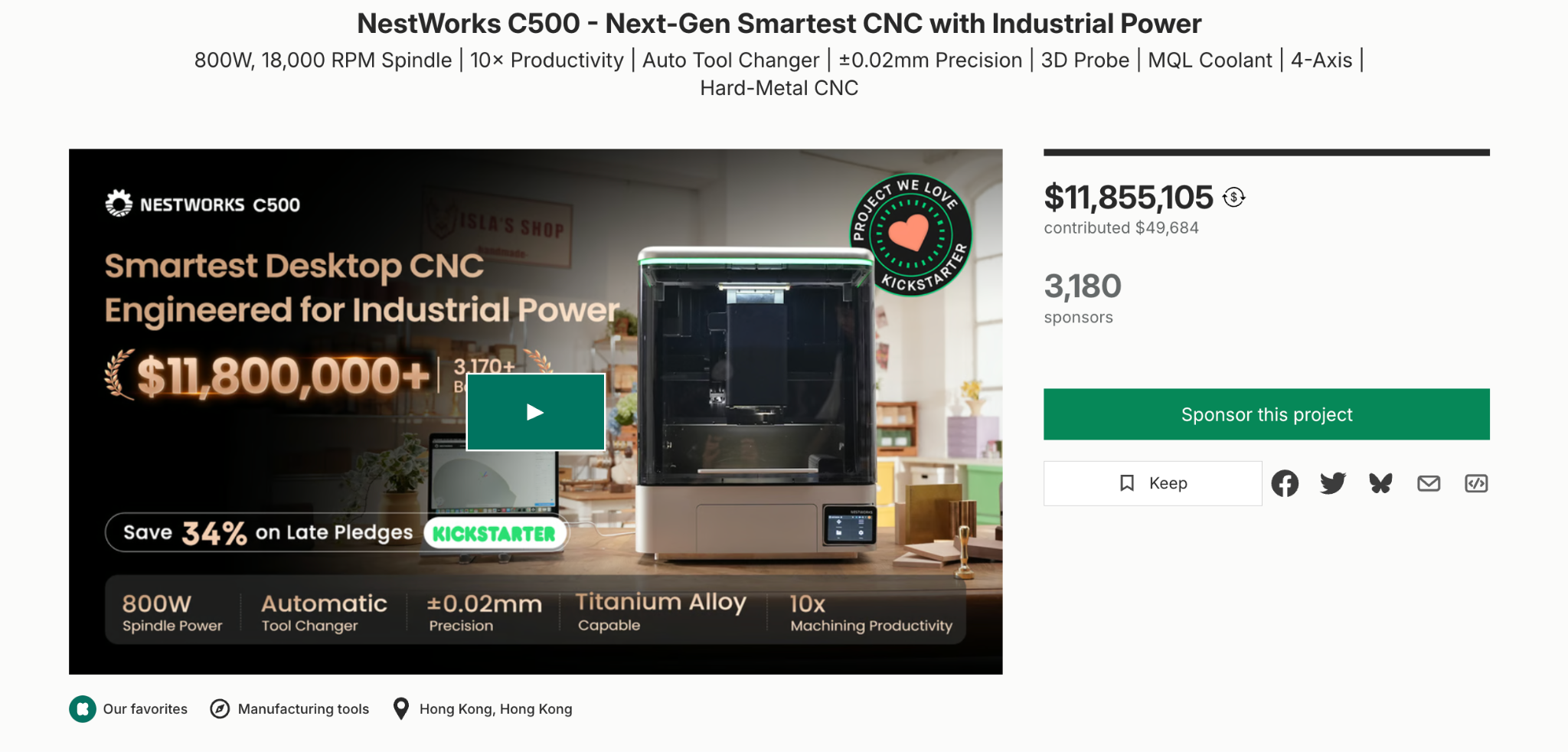
The NestWorks C500 campaign shows how high-ticket professional tools can generate massive crowdfunding revenue with relatively few backers. Instead of chasing mass-market appeal, the campaign targeted serious makers, engineers, and small workshops that already understand the value of CNC machines.
The product promised industrial-grade machining power in a compact desktop format, with features like an 800W spindle, automatic tool changer, ±0.02mm precision, and AI-assisted CAM automation. With many reward tiers priced between $3,000 and $4,000, the campaign achieved a very high average pledge value, allowing it to reach eight-figure funding with just over three thousand backers.
How It Raised So Much
- Extremely high average pledge value.
Most backers pledged between $2,800 and $4,000, with some bundles exceeding $5,000, pushing total revenue far beyond typical hardware campaigns.
- Industrial capabilities in a desktop format.
The C500 positioned itself as a compact CNC machine capable of machining metals like aluminum, brass, and even titanium, appealing to professional users and advanced hobbyists.
- Automation that lowers the skill barrier.
Features like automatic tool changing, AI-assisted CAM software, and visual probing promised to simplify workflows that usually require experienced CNC operators.
- Creator credibility from robotics manufacturing.
NestWorks is backed by Elephant Robotics, a company known for educational robotic arms and hardware engineering.
- Influencer demonstrations in the maker community.
YouTube creators in engineering and hardware niches tested the machine and showcased real machining projects.
- Professional campaign promotion.
The campaign was managed with support from Vinyl, a Kickstarter Expert Partner, which has helped generate hundreds of millions of dollars across hardware launches.
15. Makera Z1 Desktop CNC: Entry-level CNC, Pro-level Power
Creator: Makera
Year Launched: 2025
Funding Goal: $99,309
Amount Raised: $11,424,030
Number of Backers: 7,716
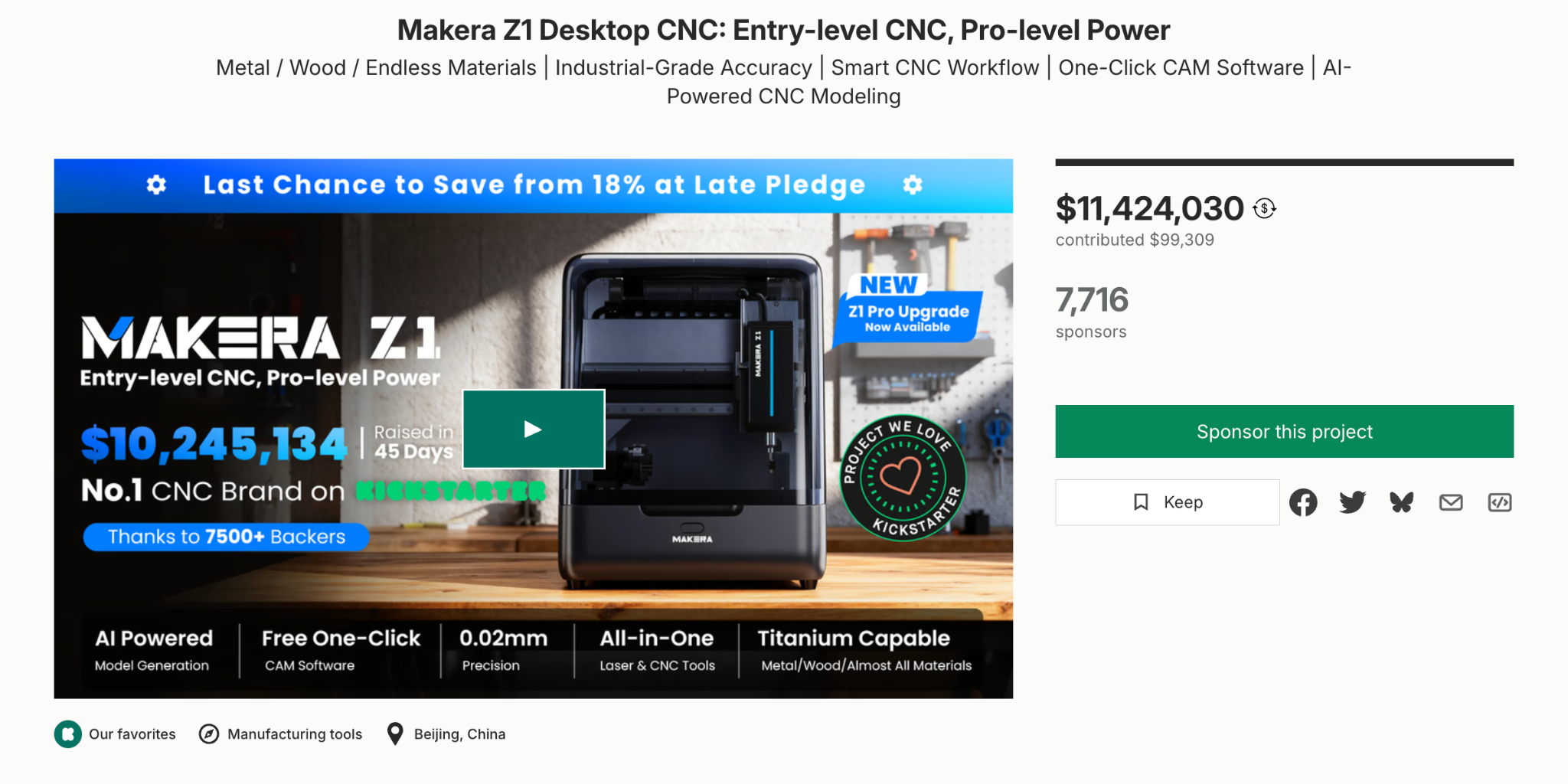
The Makera Z1 campaign proves how powerful accessible pricing can be in professional hardware categories. While many desktop CNC machines cost several thousand dollars, the Z1 positioned itself as a more affordable alternative with industrial-level precision.
Backers could purchase the machine for around $899-$975 during the campaign, dramatically lowering the entry barrier for makers, engineers, and hobbyists. This pricing strategy created a much larger potential audience compared to higher-end CNC machines.
Combined with automation features like AI-powered toolpaths, one-click CAM software, and auto-probing, the Z1 appealed to creators who wanted professional manufacturing tools without needing deep CNC expertise.
How It Raised So Much
- Much lower price than most CNC machines.
The Makera Z1 started around $899 for early backers, making it far more accessible than many competing desktop CNC machines that cost several thousand dollars.
- Large potential audience of makers and hobbyists.
The campaign targeted DIY creators, small workshops, engineers, and makerspaces, dramatically expanding the addressable market.
- Industrial precision in a compact desktop machine.
The Z1 promised 0.02 mm accuracy, a rigid metal frame, and a 13,000 RPM spindle, capabilities normally found in much larger machines.
- Automation that simplifies CNC workflows.
Features like auto-probing, quick tool changes, AI-assisted CAM software, and built-in cameras helped remove the steep learning curve associated with CNC machining.
- A proven product category on Kickstarter.
Desktop manufacturing tools like 3D printers, laser engravers, and CNC machines consistently perform well on crowdfunding platforms.
- Clear value positioning.
The campaign emphasized the message “entry-level CNC with professional power,” which made the product easy for backers to understand.
16. Circular Ring 2: World’s Most Advanced Health Tracking Ring
Creator: Circular
Year Launched: 2025
Funding Goal: $10,000
Amount Raised: $4,078,500
Number of Backers: 13,695
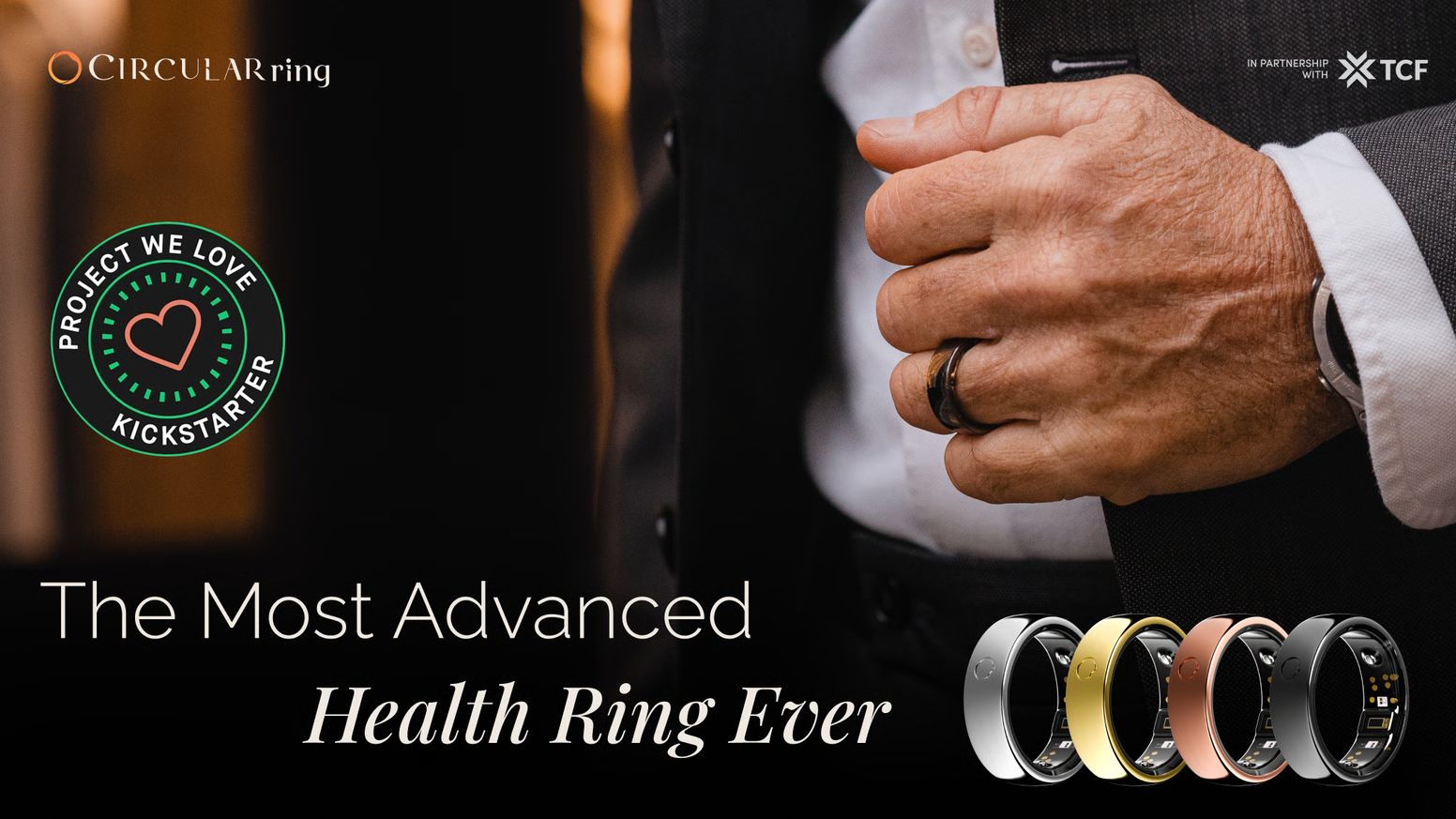
Circular Ring 2 became the most funded health tracking ring on Kickstarter, raising over $4M from nearly 14,000 backers. The product positioned itself as a next-generation smart ring capable of tracking 140+ biometrics, heart rhythm activity, sleep, stress, and recovery, while delivering AI-powered recommendations through its built-in assistant, Kira.
The campaign was managed by TCF, which built the pre-launch audience, pricing strategy, and multi-platform acquisition engine that drove early momentum and sustained growth throughout the campaign.
How It Raised So Much
- Strong pre-launch community building.
Before launch, the team built a 10,000+ person audience through email lists, reservations, and community groups, ensuring immediate traction once the campaign went live.
- Immediate early momentum.
The campaign fully funded in about 4 minutes, which created strong social proof and pushed the project into Kickstarter discovery feeds.
- Pricing optimization through testing.
Pre-launch A/B testing showed that $239 performed better than $209, increasing revenue per visitor by about 14% without lowering conversions.
- Multi-platform acquisition strategy.
Traffic came from Meta, Google, YouTube, Reddit, TikTok, and LinkedIn, bringing in many backers who had never used Kickstarter before.
- Founder-led storytelling.
With limited prototype units available, the founders became the face of the campaign, explaining the product’s science, development process, and vision directly to the community.
- Smart bundle architecture.
Bundles and add-ons such as extended warranty and multi-ring offers pushed the average order value above $300.
17. Kode Dot: The All-In-One Device for Makers, Hackers & Geeks
Creator: Kode
Year Launched: 2025
Funding Goal: $5,000
Amount Raised: $2,831,199
Number of Backers: 13,711
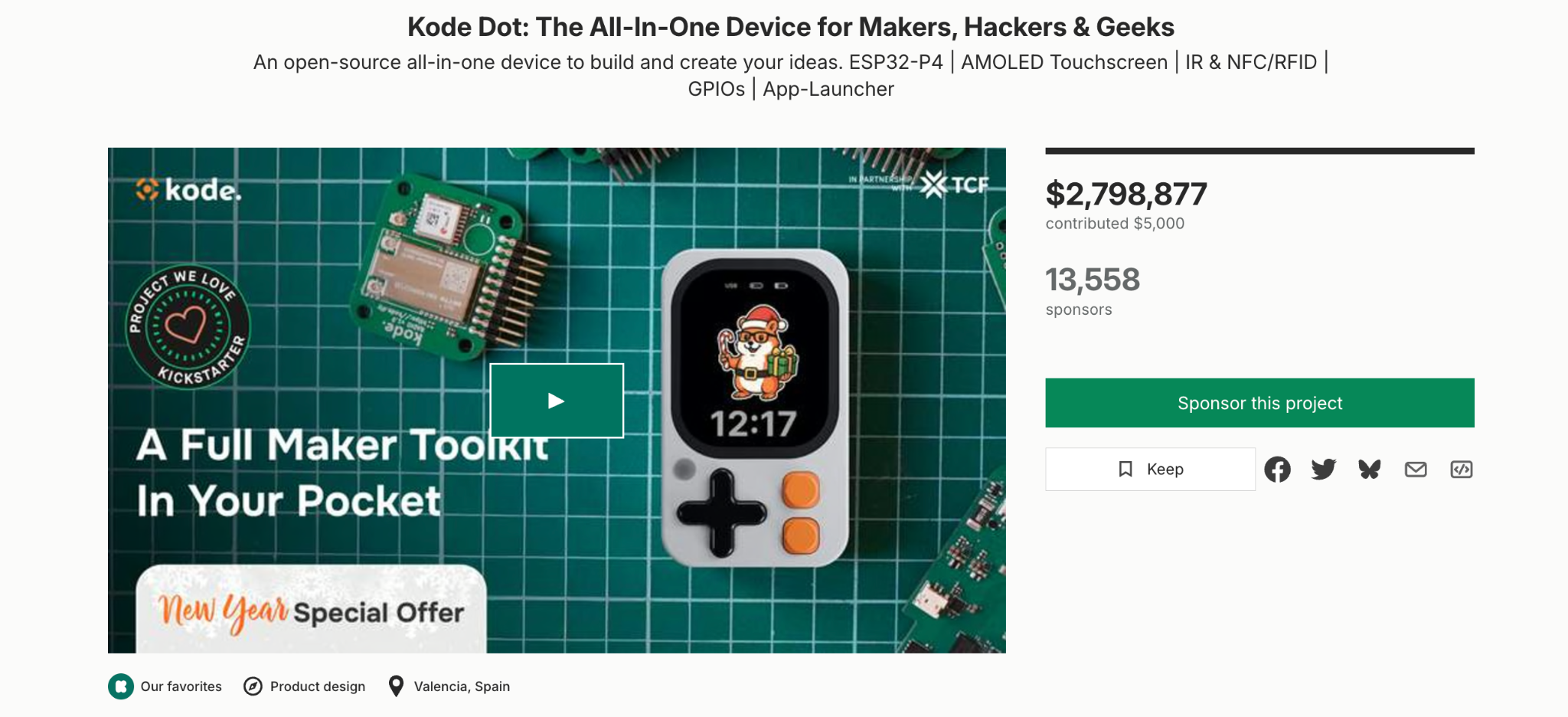
Kode Dot launched as a compact all-in-one maker device designed to simplify electronics prototyping. Instead of juggling breadboards, loose wires, and multiple tools, makers could build and test projects directly on a portable device with a touchscreen, sensors, wireless connectivity, and expansion modules.
The campaign was managed in partnership with TCF, which helped shape the marketing strategy and adapt the campaign based on real-time backer feedback.
How It Raised So Much
- Clear niche targeting.
The campaign focused on makers, engineers, and hardware hobbyists frustrated with breadboards and complex setups, positioning Kode Dot as a portable all-in-one tool for rapid prototyping anywhere.
- Community-driven product improvements.
About ten days into the campaign, surveys revealed strong demand for NFC functionality. Moving it into an earlier stretch goal immediately improved conversions and re-energized the campaign.
- Modular ecosystem design.
The device supported multiple expansion modules, including wireless experimentation and hacking tools, giving advanced users meaningful ways to extend functionality and justify higher pledge levels.
- Bundles that increased pledge size.
Bundles combining the core device with popular modules created logical upgrade paths for backers, increasing the average pledge to roughly $190 without forcing unnecessary add-ons.
- Founder-led content and demos.
The founders regularly shared real projects, experiments, and tutorials using the device, helping potential backers clearly understand its capabilities and building credibility with the maker community.
- Strategic ad scaling.
Once conversion stabilized, TCF gradually scaled paid acquisition, generating about 17.7 million impressions while maintaining roughly 3.7 ROAS and avoiding aggressive spending too early.
18. Kamingo: Turn Your Bike into a 750W E-bike in 10 Sec
Creator: Kamingo Team
Year Launched: 2025
Funding Goal: $10,000
Final Amount Raised: $1,811,387
Number of Backers: 4,530
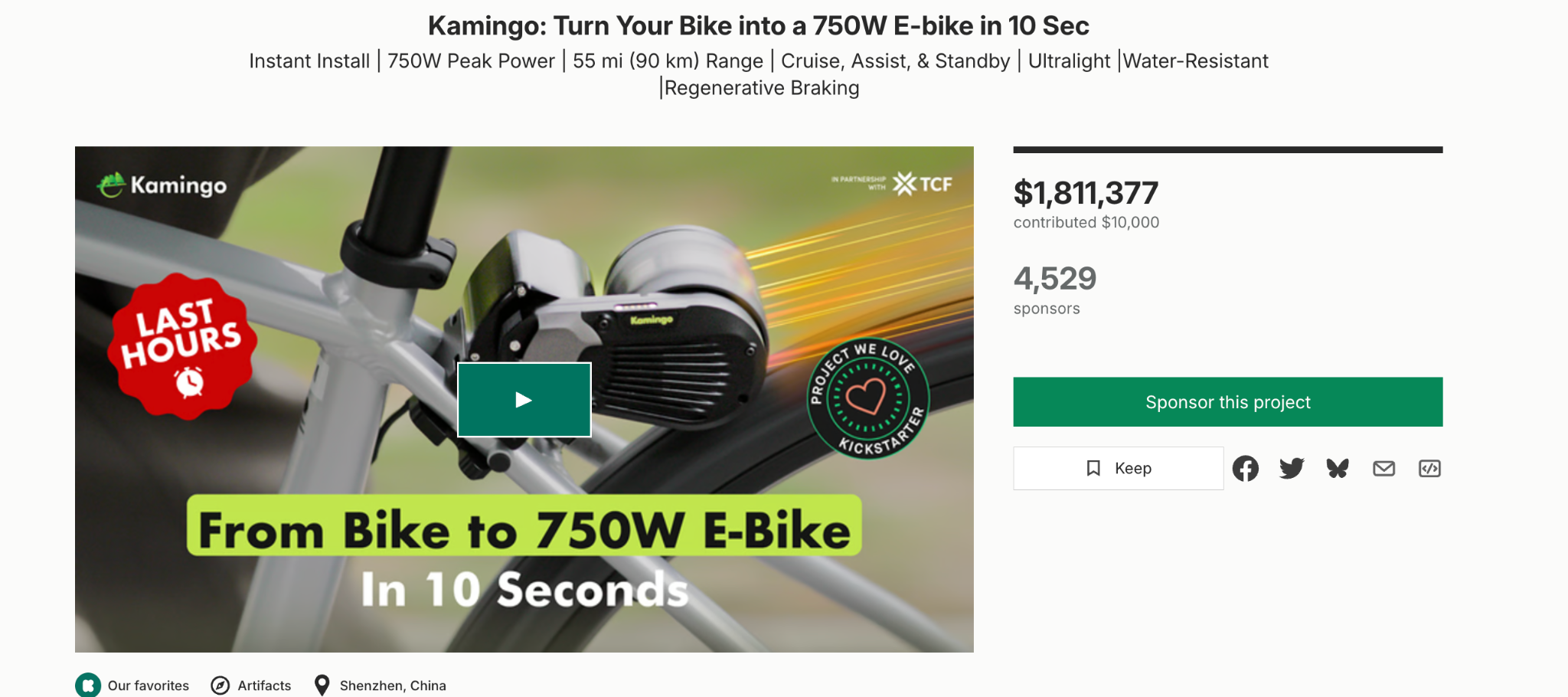
Kamingo succeeded by solving a clear problem for everyday cyclists: how to add electric power without buying an entirely new e-bike. The lightweight converter installs in seconds and keeps the original bike unchanged.
Combined with strong storytelling, strategic PR, and a full-funnel launch strategy executed with TCF, the campaign quickly gained traction among commuters, cyclists, and urban mobility enthusiasts.
How It Raised So Much
- Instant, easy-to-understand value proposition.
“Turn your bike into a 750W e-bike in 10 seconds” communicates the product’s benefit immediately, eliminating confusion and helping potential backers grasp the concept within seconds.
- Accessible pricing compared to full e-bikes.
With early reward tiers around $349 to $375, the product positioned itself as a far cheaper alternative to $1,000+ e-bikes while still offering meaningful electric assistance.
- Strong product design and portability.
The modular system included a motor, battery, and controller weighing only about 2.3 kg, allowing riders to remove it instantly and keep their original bicycle.
- Strategic PR and media coverage.
A coordinated PR push led to coverage across outlets such as Yahoo Finance, New Atlas, Bikerumor, and Netzwelt, boosting credibility and bringing large volumes of qualified traffic.
- Integrated launch strategy executed with TCF.
The campaign combined paid ads, influencer outreach, email marketing, PR, and social media to build early awareness, maintain momentum, and convert interest into pledges.
15 Lessons from the Most Funded Kickstarter Campaigns
Looking across the 18 most funded Kickstarter projects, a few patterns show up again and again. These campaigns span hardware, books, games, consumer tech, and creator products, yet the strategies behind their success look surprisingly consistent.
Here are the most important lessons founders can learn from these record-breaking campaigns.
1. Massive campaigns start long before launch
The biggest Kickstarter projects build demand months in advance. Email lists, reservation campaigns, influencer previews, and community building create the early audience that drives day-one momentum.
Start building your audience at least 90 days before launch. Set up a reservation or pre-interest page, run low-budget paid traffic to grow your email list, and engage your community regularly so they're ready to back on day one.
2. Existing audiences dramatically increase funding potential
Many top campaigns come from creators with established communities. Brandon Sanderson’s novels, Frosthaven, and Pebble all converted loyal fanbases into thousands of backers within hours.
If you don't have an existing audience, build one before launch. Identify where your target backers already spend time (subreddits, Facebook groups, YouTube channels, newsletters) and show up there consistently in the months leading up to your campaign.
3. Clear positioning beats complicated messaging
The strongest campaigns communicate their value instantly. “Turn your bike into a 750W e-bike in 10 seconds” or “portable home battery” tells backers exactly what the product does in seconds.
Write your campaign headline before you design anything else. If you can't explain the product's core benefit in one sentence, keep simplifying. Test your messaging with people outside your industry and see if they immediately understand what it does and who it's for.
4. High average pledge values drive huge totals
Several campaigns crossed $10M with fewer than 20,000 backers. High-ticket hardware like power systems, CNC machines, and projectors pushed average pledges into the $2,000-$3,000 range.
Don't anchor your pricing too low. If your product has premium value, price it accordingly and build bundles that give backers a reason to spend more.
5. Product innovation must be obvious
Successful campaigns clearly solve a real problem. Snapmaker tackled multi-color printing waste, Peak Design redesigned the travel tripod, and EcoFlow reframed portable batteries as home energy systems.
Lead with the problem. Open your campaign page and video by describing the frustration your product solves, then introduce your solution as the direct answer. If the innovation isn't immediately obvious, show it through a demo rather than describing it.
6. Early momentum changes everything
Many record-breaking campaigns raised millions within hours. Rapid funding triggers media coverage, platform discovery, and social proof that attract additional backers.
Treat your launch day like a coordinated event. Send your email list, activate your community, brief journalists in advance, and have influencer content go live the same day your campaign opens. Your goal is to hit 100% funded as fast as possible.
7. Reward tiers should guide buyers toward higher pledges
Well-designed pledge ladders allow casual supporters and power buyers to participate. Bundles, accessories, and premium tiers increase average order value without forcing upgrades.
Design your pledge tiers with a clear logic. Offer an entry-level option, a recommended "most popular" tier, and a premium bundle. Add meaningful accessories or extras to higher tiers rather than just increasing quantity. Make it easy for backers to see why upgrading is worth it.
8. Influencer validation builds trust before launch
Many campaigns seeded prototypes with creators in their niche. Maker YouTubers, photography reviewers, and tabletop channels helped demonstrate products before the campaign opened.
Identify creators your target backers already follow and reach out 30-90 days before launch with early access or prototype units. Aim for honest reviews that go live on or before your launch day, not paid promotions that audiences can detect.
9. A strong product category helps
Certain categories consistently perform well on Kickstarter. 3D printers, creator tools, tabletop games, and consumer electronics already have active backer communities.
Research how your category has performed on Kickstarter before committing to the platform. If your category has a strong history, study the top campaigns, identify what they did well, and find the gap your product can own.
10. Ecosystems increase long-term value
Campaigns that position products as part of a larger ecosystem often generate higher pledges. Accessories, expansions, add-ons, and future upgrades encourage larger orders.
Think beyond the core product when designing your campaign. Identify accessories, consumables, or expansion content that genuinely adds value and offer them as add-ons. This gives committed backers a clear path to spend more without feeling pressured.
11. Pricing strategy matters more than most founders expect
Pricing should be tested before launch. Reservation funnels and paid traffic experiments reveal which price point maximizes revenue per visitor, helping campaigns increase funding without reducing conversions.
Run A/B tests on your pre-launch reservation page with different price points before your campaign opens. Even small differences can meaningfully change revenue per visitor. Let data guide your final pricing.
12. Media coverage amplifies momentum
Large campaigns frequently gain coverage from tech outlets, product reviewers, and niche publications. This visibility expands reach beyond the existing Kickstarter audience.
Build a media list of journalists and publications that cover your category and reach out with an embargo pitch. Give them early access to the product and a compelling story angle.
13. Platform discovery becomes a growth engine
When a campaign gains traction quickly, Kickstarter itself begins driving traffic through “Trending,” “Popular,” and category recommendation feeds.
Prioritize speed in your first 48 hours. The faster you fund, the more likely Kickstarter is to surface your project to new audiences. This is why day-one list activation matters so much.
14. Execution matters as much as the idea
Some viral projects struggled with fulfillment and communication. The COOLEST COOLER campaign remains a major example of how viral demand can outpace operational readiness, highlighting the importance of production planning and transparent communication when running large crowdfunding campaigns.
Before launch, map out your full production and fulfillment plan besides your marketing strategy. Know your manufacturer, your lead times, and your contingency plan if demand exceeds projections. Regular backer updates build the trust that keeps your reputation intact.
15. The most successful campaigns run coordinated marketing systems
The strongest launches combine paid ads, PR, influencer outreach, email marketing, and social media into a unified strategy. Campaigns managed with structured launch frameworks consistently sustain momentum across the entire funding period.
Delegate. Several campaigns on this list, including Circular Ring 2, Kode Dot, and Kamingo, worked with a specialized crowdfunding agency like TCF to coordinate their launch. That expertise is hard to replicate without experience.
Conclusion
Looking at the most funded Kickstarter projects, one thing becomes clear: scale comes from structure.
These campaigns solved clear problems, positioned their products in a way backers immediately understood, and built demand before the launch ever started. Many also increased revenue through thoughtful reward tiers, bundles, and pricing strategies that raised the average pledge value.
The specific products may differ, from smartwatches to tabletop games to CNC machines, but the mechanics behind their success remain remarkably similar.
For founders planning a launch in 2025, these campaigns offer a useful benchmark. Not because every project needs to raise tens of millions, but because they show what strong positioning, real demand generation, and the right support team can achieve on Kickstarter.
[[cta2]]

.avif)
.avif)


.jpg)
%20(1).png)