


In this article
“Don’t cry because it’s over, smile because it happened.”
Great advice… unless you’re a Kickstarter backer who spent $299 and got nothing but updates written like a breakup text.
Kickstarter has produced some incredible products. It’s also produced campaigns that raised millions, then quietly fell apart, sometimes from bad decisions, sometimes from wishful thinking, and sometimes from things that should’ve been obvious way earlier.
The tricky part is this: from the outside, most of these campaigns looked completely legit. Clean pages, convincing demos, strong early traction. Nothing that screams “this is about to go down.”
Until it does.
In this article, we’re breaking down some of the biggest Kickstarter scam campaigns, not (only) for the drama, but also to understand how they unraveled, what they cost these creators, and the lessons every founder needs to know before launching.
Key Takeaways
- Raising millions doesn’t mean the math works. Economic collapse — not fraud — killed most of these campaigns.
- A polished campaign page is not proof of a viable product. The demo and the deliverable are two different things.
- Pricing at scale breaks everything. Shipping, defects, returns, and support will cost more than you planned.
- Backers don’t care about your “intent.” They experience the consequences of your execution.
[[cta2]]
How Kickstarter Scams Actually Happen
Not every scam looks like a scam from the outside. Most of them hide behind one of three following patterns, and knowing them is the difference between building a campaign that delivers and becoming the next cautionary tale.
1. Actual deception
This is the rare but real category. The campaign makes claims that don’t hold up, funds get misused, and communication eventually collapses.
Think projects where:
- the product never really existed beyond visuals
- progress updates become vague or misleading
- money clearly isn’t going toward production
These are the cases that end up with legal action or platform intervention. They’re also the easiest to spot in hindsight, and the hardest to prove early if you’re not looking closely.
2. Execution failure
This is where things get uncomfortable, because this is where most founders actually land.
The idea is real. The team is trying. The campaign works.
But execution falls apart:
- manufacturing turns out harder than expected
- timelines slip, then slip again
- product quality doesn’t hold up at scale
- support and logistics get overwhelmed
From the outside, it’s still la scam.
From the inside, it’s a slow realization that the plan didn’t survive contact with reality.
3. Economic collapse
This one hides the best.
The campaign raises a lot of money. Everything looks successful. Backers feel confident.
But the math never worked.
- pricing didn’t account for real production costs
- shipping, returns, and defects eat into margins
- scaling makes everything more expensive
- cash runs out before fulfillment is complete
This is how campaigns raise millions and still can’t deliver.
Summary of Kickstarter Scam Campaigns
Kickstarter Campaigns That Went Wrong And Why
You’ll notice a pattern pretty quickly.
None of these campaigns looked obviously broken when they launched. In fact, most of them looked better than average, strong visuals, clear value prop, serious traction.
That’s exactly why they worked.
1. Coolest Cooler
Amount Raised: $13.2M
Number of Backers: 62,642
Category: Product design/consumer hardware
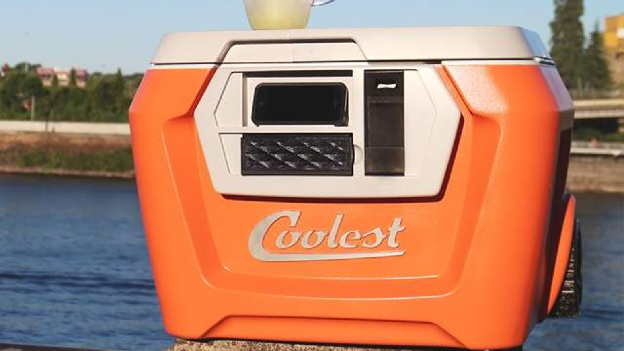
A “portable party” cooler with a built-in blender, Bluetooth speaker, USB charger, and a long list of small features designed to make outdoor hangouts feel upgraded. Wow.
What looked like a breakout hit early on turned into a slow unraveling.
What happened:
It wasn’t demand that broke this campaign, it was the economics underneath it.
Delays started almost immediately as production scaled. Costs were higher than expected, margins were too thin, and the team ended up taking on debt just to keep manufacturing going. At one point, the product was sold on Amazon for profit while thousands of backers were still waiting, which triggered major backlash.
After five years of delays, workarounds, and mounting pressure, the company shut down in 2019. More than 20,000 backers never received their cooler, and some were offered generous refunds of up to $20 on a ~$200 pledge.
2. Pebble 2, Time 2 + All-New Pebble Core
Amount Raised: $12.8M
Number of Backers: 66,673
Category: Wearables/consumer hardware
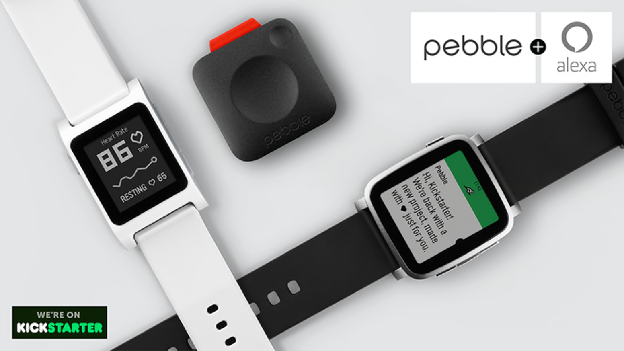
It was a new lineup of smartwatches with heart-rate tracking, plus a small clip-on device designed to replace your phone during workouts with GPS, music, and cellular connectivity.
Where things started to break:
This one broke because the company itself didn’t survive.
Pebble was already an established brand, with multiple successful products and previous Kickstarter wins. But behind the scenes, it was running out of money. By the end of 2016, Pebble sold its assets to Fitbit, which had no interest in continuing the hardware line. Production stopped almost immediately.
Some Pebble 2 units shipped, but the Pebble Time 2 and Core were fully canceled. Backers were promised refunds, though many reported delays or partial payouts, which is where the “this feels like a scam” narrative started to creep in.
3. ZANO NanoDrone
Amount Raised: £2.3M
Number of Backers: 12,075
Category: Consumer hardware/drones
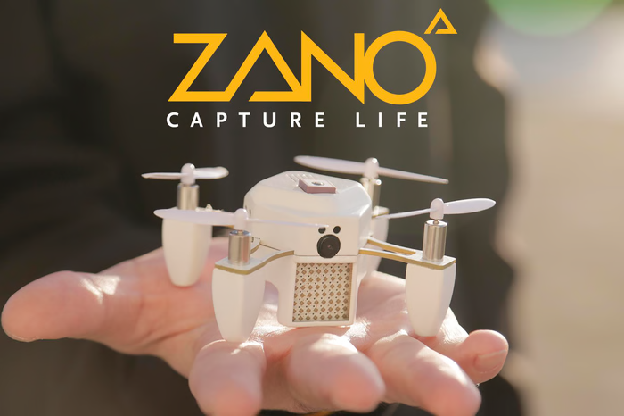
A palm-sized autonomous drone that could follow you, avoid obstacles, take selfies, and basically act like a flying assistant straight out of a sci-fi demo. No piloting needed, just vibes and your phone.
This one collapsed because the product never actually worked.
What happened:
The campaign exploded, raising over 20x its goal, which pushed the team straight into mass production before the drone was stable. Early units barely functioned, some couldn’t fly properly, others crashed or drifted uncontrollably, and key features like autonomy and tracking were missing.
At the same time, the company burned through cash trying to fix hardware, handle refunds, and scale manufacturing. Behind the scenes, investigations later found that parts of the promotional demo were misleading, showing capabilities that weren’t ready or fully real at the time.
By late 2015, the company entered liquidation. Most backers received nothing, and even the few shipped units were unusable once company servers shut down.
Zano became one of the most cited examples of what happens when you sell a finished product that’s still deep in R&D.
4. Skarp Laser Razor
Amount Raised: $4.0M (uncollected on Kickstarter) + $400K+ (Indiegogo)
Number of Backers: ~20,000
Category: Grooming tech/consumer hardware
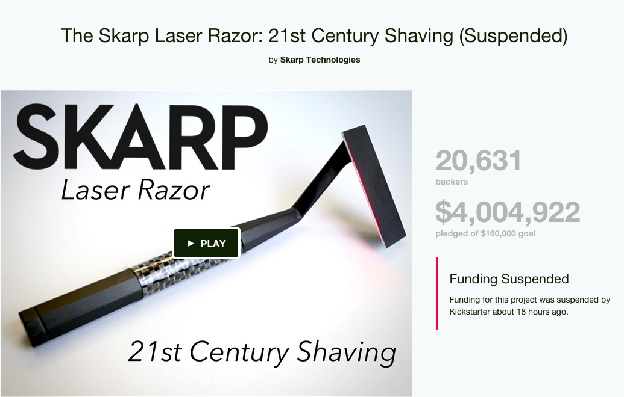
A bladeless razor that claimed to use a laser to cut hair, marketed as irritation-free and way more advanced than traditional shaving. Sounds futuristic. Also sounds like something that should probably exist before being sold.
This campaign got stopped mid-hype.
Where it got exposed:
The campaign launched on Kickstarter in 2015 and quickly raised over $4M. Then Kickstarter suspended it for violating one of its core rules, physical products need a working prototype.
The demo video showed a device that could barely burn individual hairs, nowhere near functioning as a real razor.
Because of the suspension, backers were never charged. The team then moved to Indiegogo, raised another $400K+, and… nothing shipped (shocker.) Indiegogo backers lost money after the product never shipped
The technology wasn't there, and they knew it. Positioning an R&D project as a finished, scalable product is the foundation of every crowdfunding scam.
There were also serious doubts about whether a small handheld laser could even cut hair effectively without safety issues. The “laser blade” turned out to be a fiber optic strand, which didn’t help credibility.
5. Tiko, the Unibody 3D Printer
Amount Raised: $2.95M
Number of Backers: 16,538
Category: 3D printing/consumer hardware
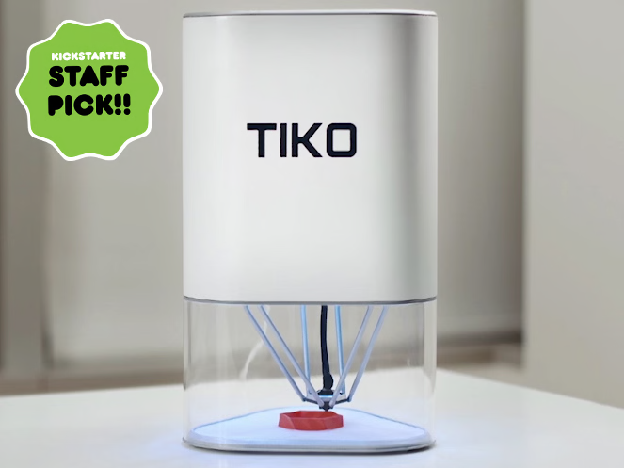
A $179 3D printer that promised to make printing simple, reliable, and accessible, basically positioning itself as the “plug-and-play” version of a notoriously finicky category. That price alone should’ve raised a few eyebrows.
What happened:
The campaign launched in 2015 and gained massive traction, raising nearly $3M.
Then reality showed up.
The product sat in one of the hardest categories to scale, complex hardware with constant calibration, support needs, and failure points. At the same time, it was priced like a simple consumer appliance. That mismatch killed it.
The team locked themselves into bulk manufacturing too early. When design flaws appeared, they couldn’t pivot without burning through cash. From there, it turned into a slow, expensive spiral.
Production delays started stacking up. Only around 4,000 units were ever shipped out of 16,000+ backers, and many of those had serious performance and reliability issues.
By early 2017, the company ran out of money, laid off its team, and effectively shut down, leaving thousands of backers without a product or refund.
6. iBackPack 2.0
Amount Raised: $76.7K (Kickstarter), $800K+ total across campaigns
Number of Backers: 252 (Kickstarter)
Category: Smart accessories/wearable tech
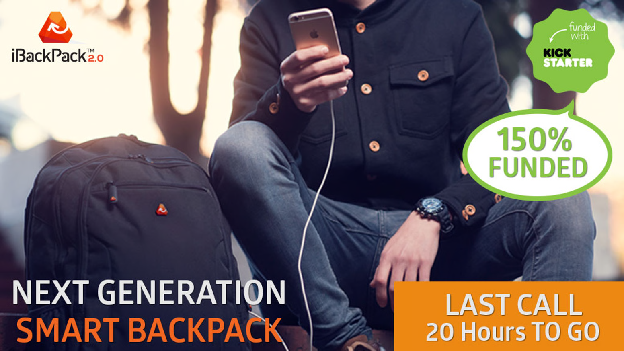
A “smart backpack” packed with everything you could possibly imagine, Wi-Fi hotspot, massive batteries, Bluetooth audio, GPS tracking, even “bulletproof” compartments. It read like someone refused to say no to any feature idea — which should’ve been a clue.
What actually happened behind the scenes:
The creator ran multiple crowdfunding campaigns, raising over $800,000 in total.
The campaign leaned heavily on long feature lists and bold claims, without real proof of development or production progress.
At the same time, investigations later revealed that most of the money was spent on personal expenses, things like credit cards, cash withdrawals, and even Bitcoin purchases, while backers were left waiting.
The situation escalated enough that regulators stepped in.
- FTC investigation and legal action
- Permanent ban from crowdfunding for the creator
7. CLANG
Amount Raised: $526K
Number of Backers: 9,023
Category: Video games

A motion-controlled sword fighting game led by a famous author, promising realistic, one-to-one combat instead of button-mashing. The pitch leaned heavily on authenticity, historical accuracy, and a whole new way to experience combat.
Sounds cool. Playing it… less so.
What happened:
The team built a working prototype and delivered early rewards. The problem was simple. It wasn’t fun.
The core mechanic, the thing the entire game depended on, didn’t translate into an enjoyable experience. On top of that, the Kickstarter budget covered experimentation, not full production.
Development paused while they tried to secure more funding, but no one wanted to invest in a game that didn’t feel good to play. By 2014, the project was officially canceled.
Refunds were reportedly available, but only if backers actively requested them — and most accounts suggest only a small fraction ever received anything back. Most people got nothing.
The Patterns Behind Scam Campaigns
If you strip away the product categories, the hype videos, and the comment section meltdowns, these campaigns start to look very similar.
Different ideas. Same underlying mistakes creators make.
1. Unit economics breaking under scale
This one quietly wrecked some of the biggest campaigns on the list.
Coolest Cooler and Tiko 3D Printer both raised millions. Demand was more than fine. The math was the issue.
Pricing looked attractive on the campaign page. Then reality hit with:
- Increasing manufacturing costs
- defects and returns
- shipping eating margins alive
- piling on support costs
This is where proper crowdfunding research really matters, understanding the numbers, how they hold up once things scale, and how to not end up in the surreal situation where selling more means losing more.
2. R&D sold as a finished product
This is the “it works… kind of… trust me, bro” category.
Skarp Laser Razor and Zano Drone both leaned hard on futuristic demos. The problem was the underlying tech wasn’t ready for real-world use.
What you see:
- clean videos
- confident claims
- “next-gen” positioning
What’s actually happening:
- core functionality barely works
- performance collapses outside controlled conditions
- scaling exposes everything
At that point, backer expectations are already set, and there’s no clean way to reset them without losing trust.
3. Dependency on future funding
This one feels harmless when you read it. It isn’t.
CLANG basically said, “we’ll build a prototype, then raise more money later.”
Translation: this campaign alone cannot deliver the product.
When that next round doesn’t happen:
- development pauses
- teams shrink or disappear
- the project quietly dies
Kickstarter becomes the first step of a plan that never fully existed.
4. Complexity massively underestimated
Hardware founders love to believe their product is “simple.”
Then the product shows up in real life and starts acting like… hardware. No pun intended.
Again, Tiko 3D Printer is the perfect example:
- motors
- heat systems
- firmware
- calibration
- user error
- support tickets from hell
Each layer adds a new way to break. Each break adds cost. Each cost brings you closer to the point where you can't deliver.
By the time you realize how complex it actually is, you’ve already promised thousands of units.
5. Governance and cash flow mismanagement
And then there’s the category that makes everything else look almost wholesome.
iBackPack 2.0 wasn’t a “hard problem to solve.” It was a “money went somewhere else” situation.
This is where things cross into actual deception:
- funds used for personal expenses
- multiple campaigns launched without delivering previous ones
- regulators stepping in
6. The “looks legit” illusion
This is the uncomfortable part. None of these campaigns looked obviously broken at launch.
They had:
- polished visuals
- clear value propositions
- strong early traction
Which is exactly why people trusted them.
Conclusion
Every one of these campaigns started with excitement. People believed in the idea, trusted the team, imagined the product in their hands.
Some of these were built on bad intent. Money misused, promises stretched past reality, accountability disappearing the moment things got hard.
Others were teams that genuinely tried — and still failed, because the math never worked, the tech wasn’t ready, or the complexity turned out to be far beyond what they’d planned for.
Either way, it doesn’t matter.
If you couldn’t deliver, you still took people’s money and left them with nothing.
And every time that happens, it doesn’t only affect one campaign. It chips away at the credibility of crowdfunding as a whole.
This is why campaigns need to be built on something real, numbers that hold, production that’s been pressure-tested, and a plan that survives outside a pitch deck.
Kickstarter marketing agencies like TCF exist for exactly that reason, to make sure what you promise actually holds up when things get messy.
[[cta2]]



.avif)


.avif)


.jpg)
%20(1).png)