How to Leverage Indiegogo Perks for Your Next Crowdfunding Campaign
If you’re reading this article, it means that Indiegogo is no news for you. But whether you’re a first-timer at crowdfunding or have run multiple campaigns before, you might still want a quick rundown of Indiegogo rewards, what they are, and how to leverage them. Being one of the most widely-used crowdfunding platforms on the web, Indiegogo has been the go-to solution for product creators for years. So, in this article, we’ll cover one of the key aspects behind all successful campaigns – Indiegogo rewards. Having been in the crowdfunding industry for years, we’ll dive into what Indiegogo rewards are, what types there are, how to manage them, and discuss the best practices for using them to maximize your success. Let’s roll.
What Are Indiegogo Rewards?
Many people think of crowdfunding as a system where people (backers) pledge their money for a product that does not yet exist to support its production. However, Indiegogo rewards bring some much-needed clarity on that front. A reward (Indiegogo called these perks until its platform upgrade on 16 October 2025) is a specific incentive for the amount of money you, as a backer, pledge for a campaign.
How do rewards work on Indiegogo?
Think of it as any e-commerce platform experience where you add a product to your cart and proceed with your purchase. The same happens here, you select a reward (whether you want a single product or a two-pack, for example), and you pledge money to secure that product for yourself when it goes to mass production after the campaign. Of course, backers can always support any crowdfunding campaign without a specific reward out of sheer goodwill. Still, we’ll be sticking to Indiegogo rewards as a way to thank the community for its support.
Benefits of using Indiegogo rewards
Using Indiegogo rewards effectively convinces a community of backers to support you. You can offer rewards if you want to or think you need something specific to offer your visitors. However, you can get creative with your campaign and still package any offer you have as a ‘reward’ for your community. Many creators create $10-25 rewards that offer a personalized thank-you note from the founder, branded merch, or other items.
Types of Rewards Offered by Indiegogo
When it comes to Indiegogo reward types, the choices are straightforward. You can create a standard reward and an add-on reward. Secret Perks, once the favorite of campaign owners and marketers, were replaced by User Groups and Product Groups (more on that below).
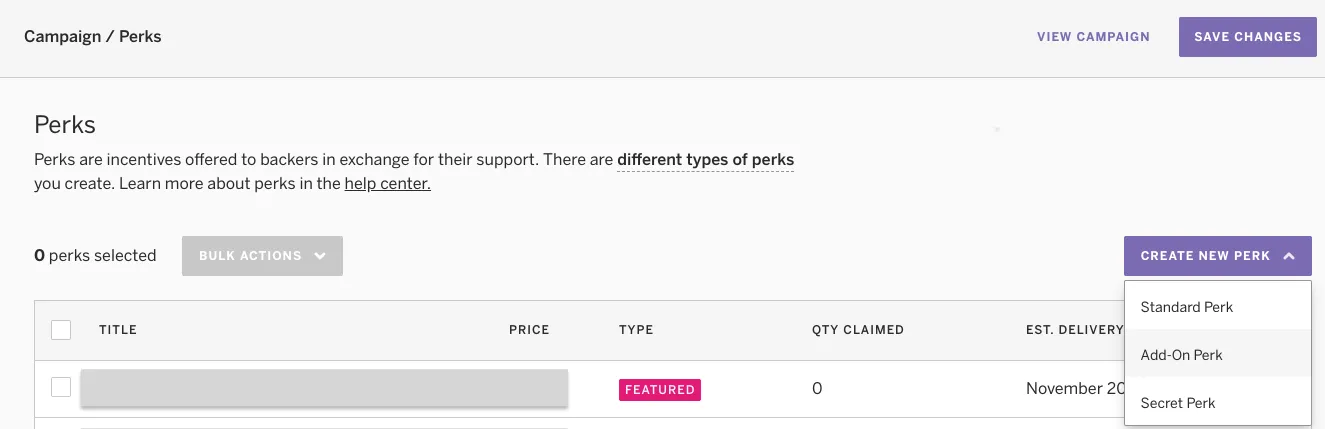
The standard reward is your regular offer – usually, creators set up a few variations of the main flagship product with discounts that apply to various stages of the campaign. For example, you could have a super early bird reward that offers the most significant savings and limited availability. Once that runs out, or your offer expires, you can have the early bird, Indiegogo special, etc. You can apply the same logic to the item quantity. Say your product is a wireless charger; you could have a reward for a single item, a two-pack, or a family pack. Those would all be separate rewards. The main thing to remember with Indiegogo rewards is that you need to have an ironclad strategy of offering enough reward options that a backer can comfortably choose from but, at the same time, keep the quantity and variations simple so they understand. Add-on rewards are incredibly effective for increasing the average order value from backers. They are the replica of Amazon’s “frequently bought together” section, where Amazon offers you complementary products that go well with your primary offering. Sticking to the wireless charger, you also have gift packaging, a travel case, and an extra cable. All those items could be created as add-ons and offered in addition to your main product, increasing average order value and your funding in return. Backers can easily skip this step if they wish to avoid buying add-ons that will only affect the overall user experience. Additionally, you’ll be able to utilize add-ons later if you plan on using a pledge manager to fulfill the orders.
Secret Perks Are Now User Groups and Product Groups
Indiegogo used to let creators add Secret Perks, rewards that only people with a direct link could see. Since the platform upgrade on 16 October 2025, Secret Perks have been replaced by User Groups and Product Groups. Offers aimed at a specific group of backers are useful for several reasons when it comes to crowdfunding marketing tactics:
- Advertise a flash sale or a secret deal that’s not available elsewhere.
- Offer a more significant discount to a specific group of people, like your email list, without affecting other visitors.
- Create customized rewards for various purposes – add a banner with a picture of an influencer about to promote your product, for example.
Targeted offers give you more space to be creative and persuasive with your campaign, with the added flexibility of testing various things without “offending” current backers in case the offer features a more significant discount. We all know that backers often pledge their money to support your campaign in return for paying a significantly lower price. The old Secret Perk option no longer exists, so check how User Groups and Product Groups work in Indiegogo’s help center before you plan an offer like this.
Indiegogo Reward Rules and How They Work
Unlike Kickstarter, Indiegogo doesn’t have too many strict rules when launching your campaign. You don’t have to have a functional prototype, even though it’s a huge advantage. When you’re ready, you submit the campaign for Indiegogo’s review, and the launch date must be at least 7 days after you request it. However, there are still some rules you should adhere to when setting up your campaign page and your Indiegogo rewards. Here are some of the most basic ones, to give you an idea of how they work and what you can do. For example, if you’re running a mask campaign, you should stay clear of messaging that suggests your product can cure or treat something. Indiegogo and Kickstarter have been very strict with this rule since the pandemic. You are also not allowed to offer gambling rewards or lottery experiences to your backers, stocks, and shares in your company. On the list of prohibited items, Indiegogo clearly states that alcohol, controlled substances, vaporizers, and the like are in no way allowed as rewards. Most of these rules are straightforward, so as long as you focus on your Indiegogo rewards strategy, messaging, and pricing, you should be fine as far as the guidelines go. It leads us directly to the next couple of sections of this article.
How to Create Effective Rewards for Your Indiegogo Campaign
Indiegogo rewards are an excellent tool for any campaign owner looking into increasing their raise and incentivizing their community with various offers. From physical products to personalized experiences, you can use rewards to engage with your audience more effectively. Many nuances go into creating and setting up Indiegogo rewards in the most attractive way possible for your potential backers. So let’s go over each step with utmost care and attention. Remember that, as physical product creators, you will already have a complicated logistics process for fulfilling and delivering those products. So go as straightforward on Indiegogo as possible and leave the majority of details for when you conduct your post-campaign survey and pledge management.
Create Reward Items
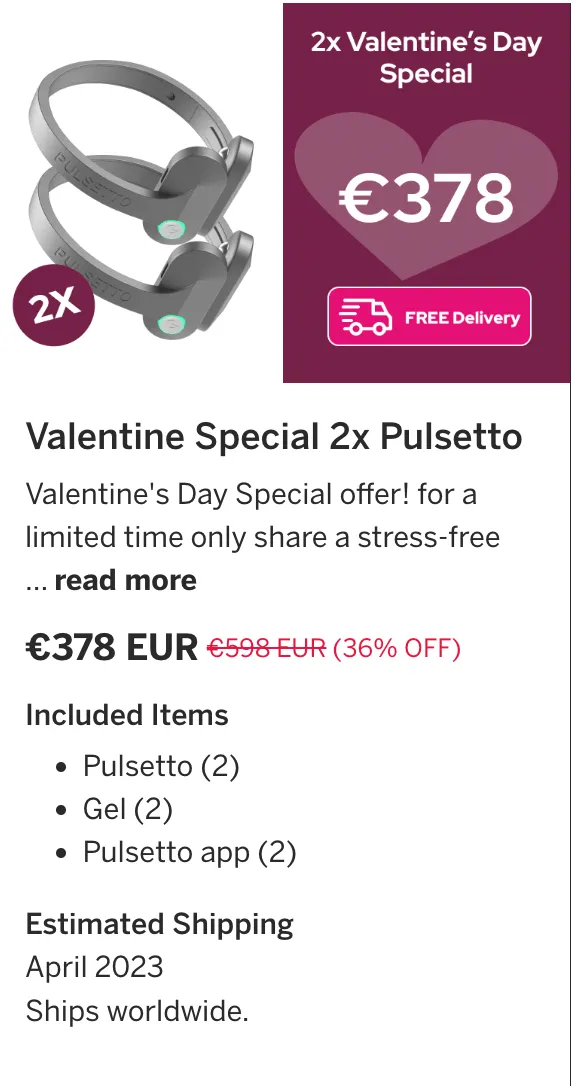
First, you need to start with your items, which are everything the reward will include. Sticking to the wireless charger scenario, what will be included “in the box” the backer will receive? Create your items accordingly since you’ll need to include them in each reward with their respective quantities, i.e., a single charger reward will consist of:
- 1x charging stand
- 1x charging cable
- Branded box
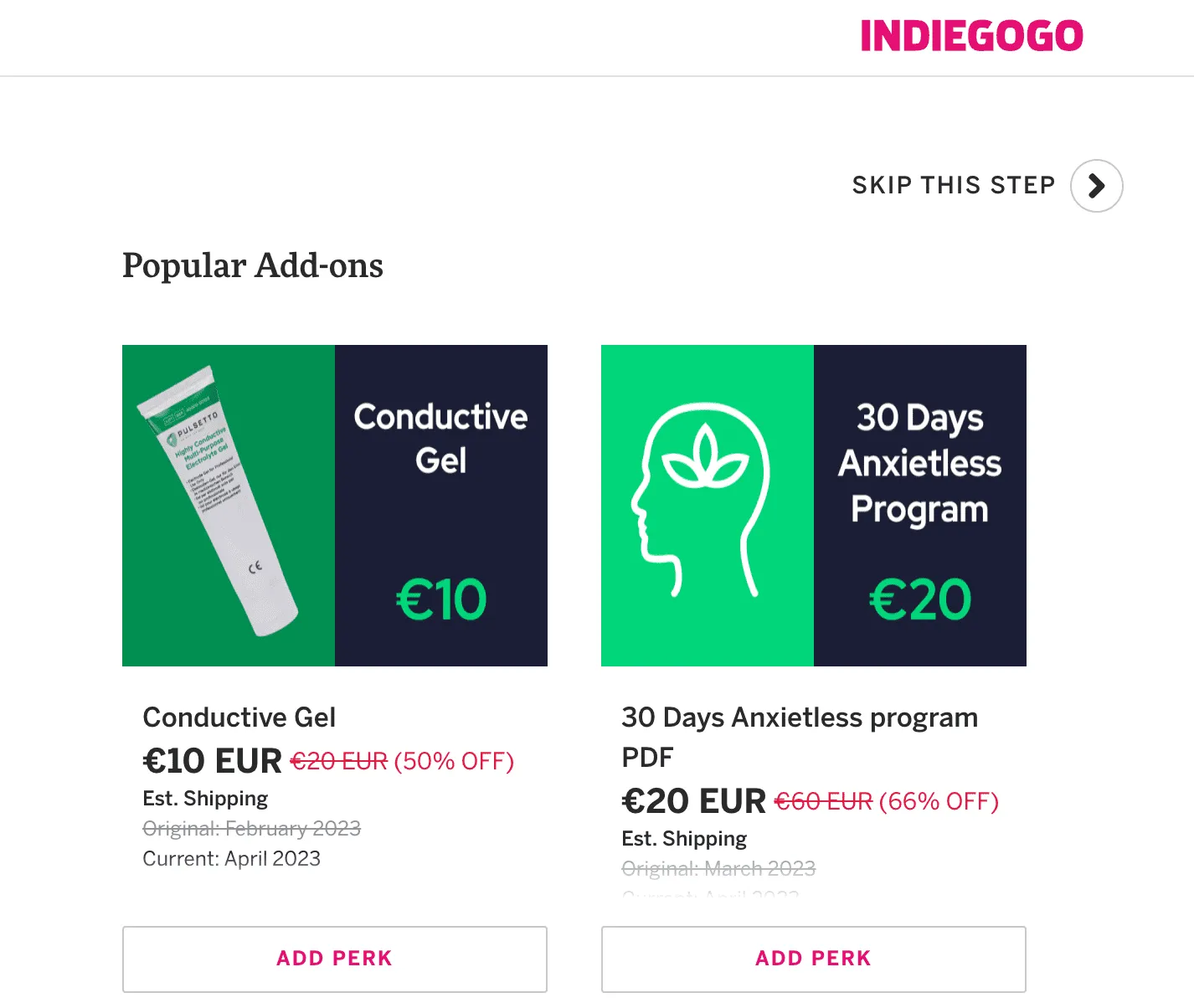
To give you a better visual idea of what’s it going to look like, here’s an example from one of our campaigns, Pulsetto:
Set Options for Colors and Sizes (If Available)
If your product comes in various colors and sizes, you can set those up on Indiegogo so the backers can easily choose their preferred specifications. However, keep the process simpler on Indiegogo and let backers choose those in the post-campaign survey. However, you’ll need to clearly state this beforehand, so the backers know they’ll choose their preferred color or size later.
Set the Prices
To ensure your offer is as compelling to the backer as possible, set the retail price as calculated internally but make sure to offer the best possible discount for Indiegogo users. It’s both required by Indiegogo and recommended by the whole industry. Crowdfunding backers should get the best possible price offer over any future price points.
Reward Title and Description
This section is essential. Since you’re limited in description characters, you’ll have to be as efficient with the space as possible. We recommend not going into detail about the product but instead focusing on necessary information here. Let the backers know what they’re getting, emphasize the discount and include any shipping or other information they need to be aware of.” Your team deserves the best and stress-free life. ➡ Get a company pack bundle of 3 Pulsetto devices today and enjoy 33% off the retail price. ➡ Our special offer also includes FREE worldwide shipping!” Visitors can find the product description and benefits on the campaign page. What they will likely easily miss is the shipping information. If you’re going to charge for shipping, include a shipping table per country/region on your campaign page and mention this in your reward description.
Reward Quantity
Most of the time, you want to have an initial estimate on how much of each item you want to sell on crowdfunding platforms to understand the desired raise amount, production volume, and costs. So while you can set the quantity for each of your rewards on the platform accordingly, we recommend using the Quantity feature of Indiegogo rewards as a marketing tactic. Play with the rule of scarcity and create urgency by setting the available quantity to as little as ten and manually topping it up every time you get close to running out. This process will be dull, so we always recommend automating it with reward management tools like Perkfection.
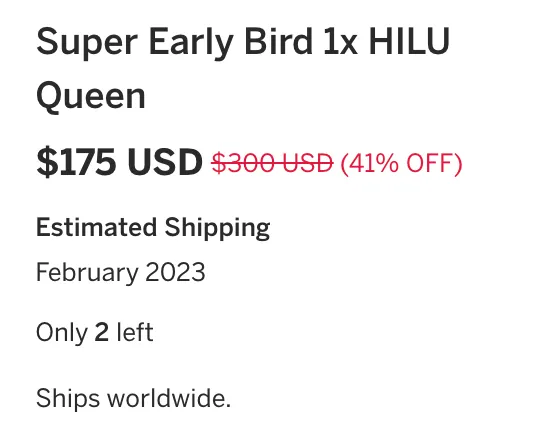
With the scarcity factor in place, backers will see a limited quantity left and psychologically rush to lock their spot with that price.
Managing Indiegogo Rewards
We discussed creating effective Indiegogo rewards for your campaign and pricing tips in the previous section. But what do you do, and how do you manage all your Indiegogo rewards once you’ve launched your campaign?
Managing Indiegogo Rewards after Launch
If you’ve already launched your campaign, there’s little you can do with your Indiegogo rewards as far as editing goes. You can no longer edit the title, the price, the description, etc. The only two fields subject to change will be available quantity and shipping date. In case you made an error or typo in the description or title of your reward, you can hide the existing reward, duplicate it, make your edits, and then publish it as a new one. The hidden reward will no longer be visible on the campaign page, and backers will see the updated one instead. Every time you decide to close down a reward, whether it’s because you want to increase the prices or create a reward for a special occasion for a limited time, you can always duplicate it from the existing rewards and change the variables as needed. Managing Indiegogo rewards is very easy, but it does require attention to detail. Otherwise, backers will quickly lose trust in the brand and the campaign.
Best Practices for Promoting and Delivering Rewards
Now that you know how to create Indiegogo rewards, it’s time we dove into how to make them desirable for backers and promote them effectively. A few default strategies come with crowdfunding campaigns, such as using Early bird rewards. But not everyone can implement them well and squeeze their maximum potential. Let’s take a look at how you should use Indiegogo rewards to raise funds.
Super Early Bird
The most imperative ones are your crowdfunding campaign’s first 24-72 hours. From that point onward, the success of your campaign is either ensured or doomed. So the best strategy for the early days of your campaign, assuming you have done lead generation and gathered enough “early birds,” is to offer backers the most significant discount at a limited availability for the first 24-72 hours. Set a quantity limit to as high or as low as you can comfortably afford while offering your early supporters a huge incentive to back your campaign ASAP. Once the quantity reaches its limit or the time runs out, you can hide this reward and unlock the next level. Typically you want to stick to your word regarding timelines. So if you launched the campaign ten days ago, but you’re still offering the super early bird that should have expired seven days ago, that can be a little icky.
Early Bird
Once you gained momentum and started strong on your campaign with the super early bird discount, close it down and start running the early bird. It still needs to be significantly cheaper than the retail price but more expensive than the super early bird. There’s nothing worse for a crowdfunding campaign than deceiving your super early backers. They won’t be quick to forgive. Indiegogo early bird rewards don’t have to have a limited timeframe. However, if your campaign is performing very well, shut them down after a week or so to keep the momentum and raise more money.
Countdown Timers and Banners
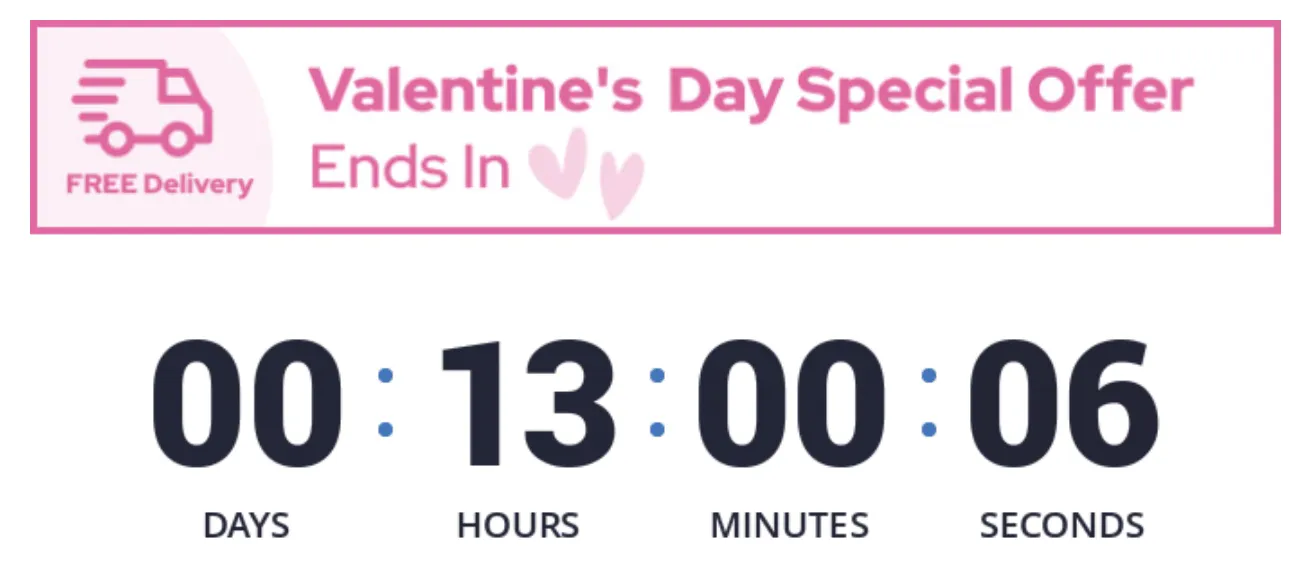
Unlike Kickstarter, Indiegogo rewards don’t offer the option of setting up a built-in timer for the rewards. However, you can still utilize countdowns to increase the sense of urgency for backers. You can always create a banner with a timeclock gif and place it on top of your campaign page, so each visitor sees it. On top of that, you can use platforms like CountdownMail that embed countdown timers straight onto your page.
Multi-Item Packs That Target Human Emotions
We’ve already talked about offering two-packs and such, but the key here is to make the messaging of multi-item packs relatable to the backer. Instead of naming your reward a 2-pack or 4-pack, be a little more creative with your wording. Speak to the backer through your reward titles and banners. Position your rewards as a “family pack” or a “travel buddies pack” – these also make the backer think of gifting your product to loved ones, even if they didn’t initially consider that.
Highlight Savings
While Indiegogo calculates and shows the discount percentage on the rewards by default, it’s always better to tell the backer how much money they’re saving by backing that specific reward. Our brains programmatically see 20% discounts, so sometimes the backers might fail to realize the direct monetary value of their savings. Go ahead and tell the backers they’ll be saving $60, and they’ll appreciate it. You can either highlight this on the reward’s banner or write it in the description of your reward.
Special Occasion Rewards
Use every major or minor occasion to design and create special rewards. From Valentine’s to Earth day, create limited quantity discounted rewards, set them as a “featured reward,” and promote them through advertising, community sharing, email marketing, social media, and all other channels. Find ways to make your rewards more “marketable” to the backers. Everyone loves special deals, even if the deal is only a $5 saving.
Conclusion
As a crowdfunding platform, Indiegogo offers a lot of marketing benefits to product creators, and Indiegogo rewards, with all their differences, are one of them. Knowing how to manage Indiegogo rewards effectively can be the ultimate deciding factor on whether or not your campaign will succeed. If you’ve made it through this article, you should be on your way to creating compelling rewards that sell. So, best of luck!