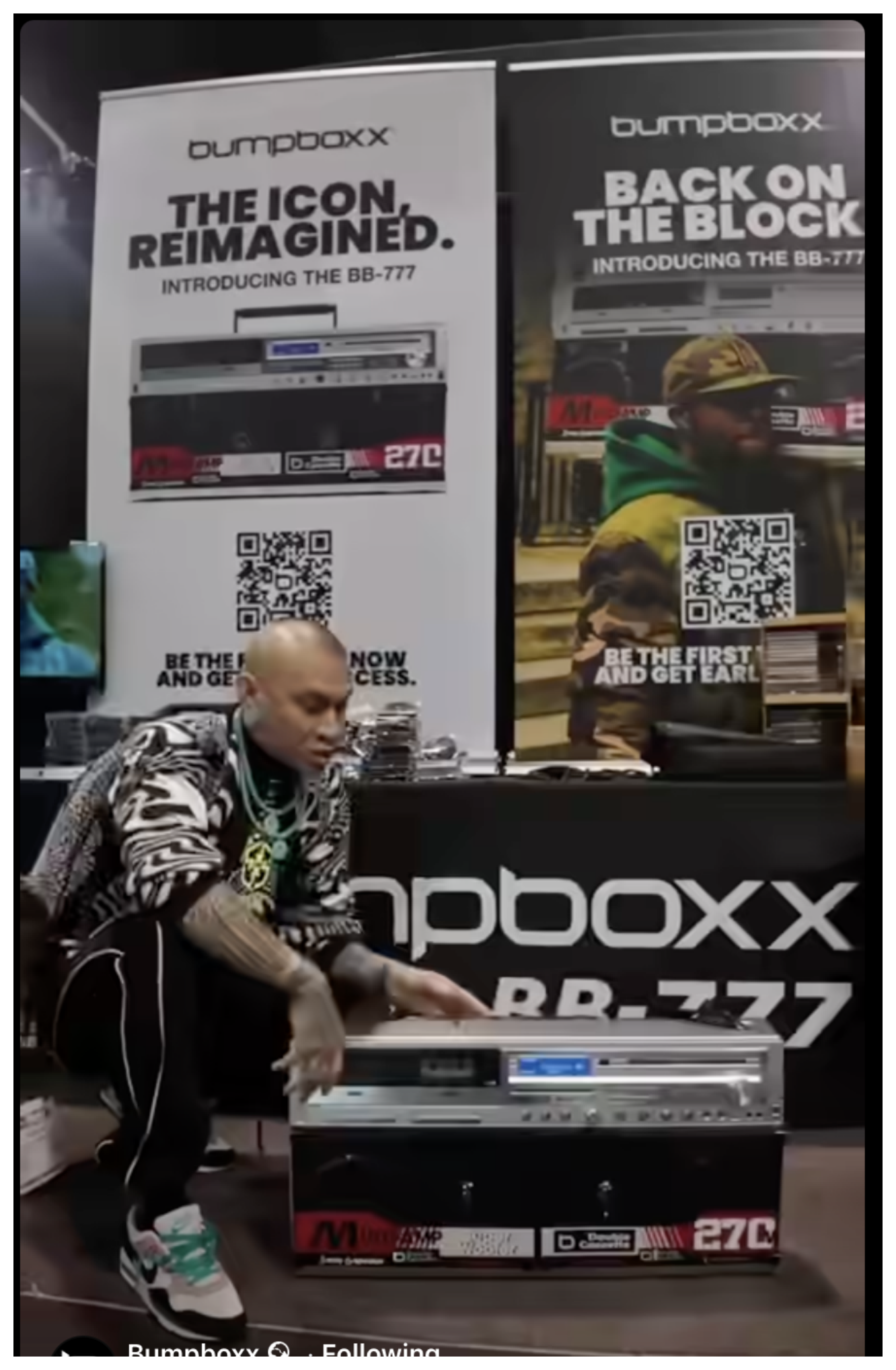
A nostalgic boombox, a first-time Kickstarter audience, and 1.5 months to build momentum. TCF built the community and launch strategy that helped BB-777 raise $1M in its first hour and $7M+ overall.
The complete case study of how one hour, one community, and eight weeks of scaling were built
On launch day the orders came faster than anyone had forecast. More than $1M within the first hour. Even Kickstarter crashed because of the volume of traffic. Demand on a scale most brands will never see.
Bumpboxx saw it because of the work that started months ago, long before anyone clicked back.
This is the full story of how that hour and the scaling strategy behind it were built: every system, every decision, every week, every number, exactly as it happened. If you are a creator preparing a launch of your own, read it as a working document. Everything here is repeatable, and all of it took a team running it end to end.
The outcome, before the story
$7M+ raised on Kickstarter
$1M+ in the first hour of the campaign
4.4 return on ad spend across the live campaign
4.72 return on ad spend during the hardest scaling phase
$151K in late pledges at a 6.5 return on ad spend
Those numbers are the end of the story. The story itself starts with a kid who wanted a boombox.
Stage 1: The Product and the Dream
Rob Owens grew up with a boombox. It made the stories of his childhood, the ones with his father in them. Decades later, when he started his own business, he built the boombox that could take him back to those memories. The BB-777, a modern recreation of the GF-777, the most iconic boombox ever made.
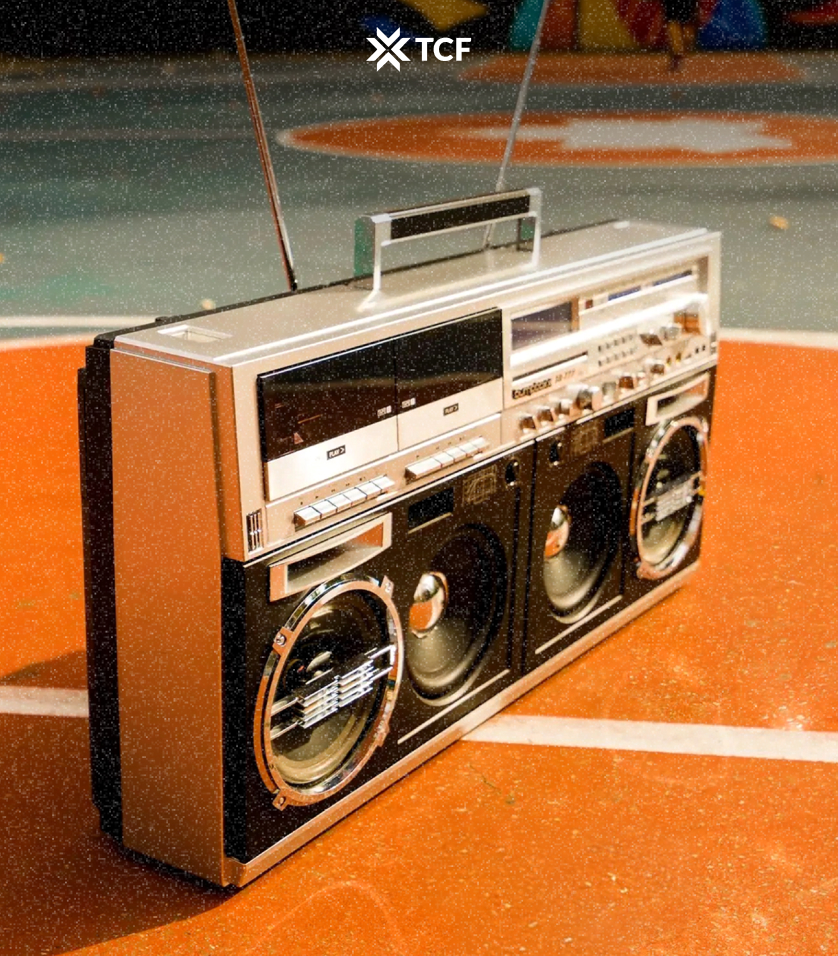
It is a full system. 270 watts. Six speakers. Dual cassette decks. A CD player. Bluetooth. A battery that runs fifteen hours and swaps out when it dies.
Rob spent three years on it and put his own savings into the engineering.
The standard unit would sell for $649. The Founder's Edition for $749.
A great product does not fund itself
Here is the first lesson of this case study, and it applies to every creator reading it. The campaign around a product is a separate thing from the product, and it has to be built with the same care.
Bumpboxx had something most founders dream of: a real community. And even that was not enough on its own. The job was turning people who loved the brand into people who would pledge on a platform they had never used. That gap is where campaigns live or die.
Everything that follows is the work of closing that gap, and then pushing far past it.
The product had the story, the audience, and the potential to make a major impact on Kickstarter. But turning that potential into a launch-ready campaign meant solving two problems before launch day.
The challenge
Stage 2: The Asset and the Problem
Bumpboxx came to us with a great product and a story that hit a precise nerve. The audience for it was out there: men mostly 45 to 55 years old. They grew up with boomboxes on their shoulders. They missed cassettes and CDs and the feeling of owning music instead of renting it.
That was the asset: a buyer we could describe down to the memory. But an audience that exists somewhere in the world is not a community you can launch with. The powerfully engaged community that would carry the launch, the hype, and the word of mouth did not exist yet. We built it during the prelaunch, lead by lead, before Kickstarter ever saw the product.
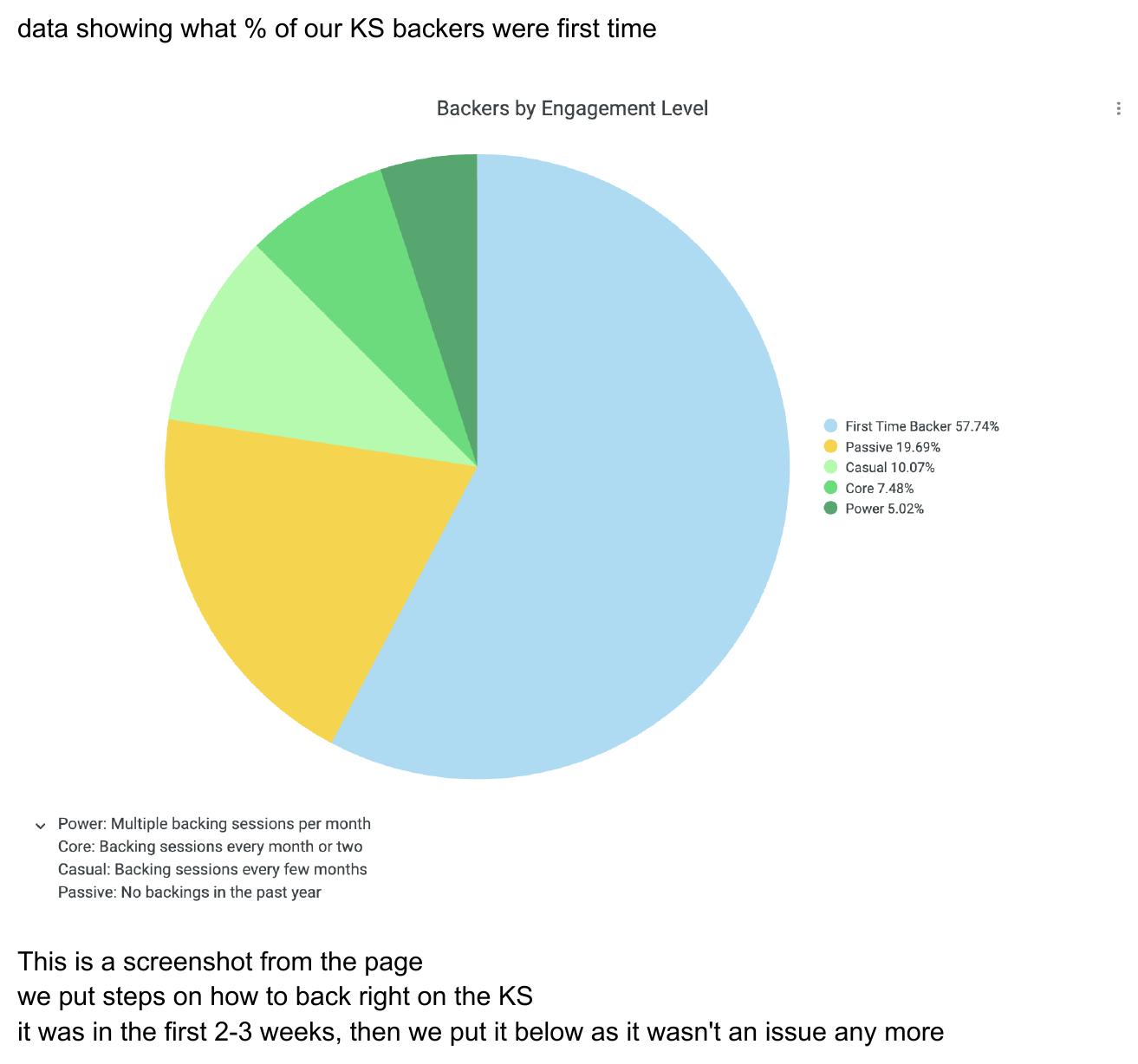
There was a second problem. Almost none of this audience had backed a Kickstarter before.
Why does that matter so much? Kickstarter is not a store. There is no order button. At checkout, the platform reminds backers that a pledge is not a guaranteed purchase. For a first time user ready to spend $749 on a collector's piece, that one line is enough to stop the click.
So the situation, stated plainly:
The launch needed an engaged, ready-to-pledge community that did not exist yet, so prelaunch lead generation had to create it: not random traffic, but exactly those 45+ men with those memories, found and qualified one by one.
The audience did not yet know how to do the one thing the whole campaign depended on.
Both problems had to be solved before launch day, because launch day is too late to solve either one.
With only 1.5 months before launch, there was no time to leave either problem unresolved. The focus was clear: build the community, remove the friction around Kickstarter, and create the momentum needed for launch day.
TCF's approach
Stage 3: The Prelaunch Begins
We had 1.5 months before launch. In that window, we built the machine that would carry the first hour.
The VIP inner circle
The center of it was a VIP system. Dedicated WhatsApp groups became the inner circle: roughly 2,300 of the most committed fans. We ran them alongside the Bumpboxx team.
What went into those groups:
Manufacturing photos and backstage footage, posted by the team
Polls and questions, run by us
Daily conversations, all of them handled
The volume was heavy, and we handled all of it. The content was close and personal, the kind of thing that builds trust no ad can buy.
By launch day, these 2,300 people did not feel like an email list. They felt like insiders, because they were.
The tiered email and SMS system
Around the inner circle ran email and SMS. Every VIP locked a reserved price during prelaunch, and every price tier got its own track:
$549 reserved tier
$649 reserved tier
$749 reserved tier
Someone holding a $549 reservation read different messages than someone at $649. Different countdowns. Different urgency. All of it in parallel. Nobody received a generic blast, because a generic blast treats a superfan and a stranger the same, and they are not the same.
Across the full project, this grew into a tiered email and SMS system across 174 sequences. That number is worth pausing on. It is the difference between "we sent emails" and a segmentation machine where every audience heard exactly what it needed to hear, exactly when it needed to hear it.
The Question That Hung Over Everything: Will They Actually Pledge?
A reserved price is not a pledge. The real question hung over the whole prelaunch. When the day came, would a 52-year-old who had never used Kickstarter actually complete a $749 checkout on an unfamiliar platform?
We answered it by removing every reason to hesitate. We assumed nothing.
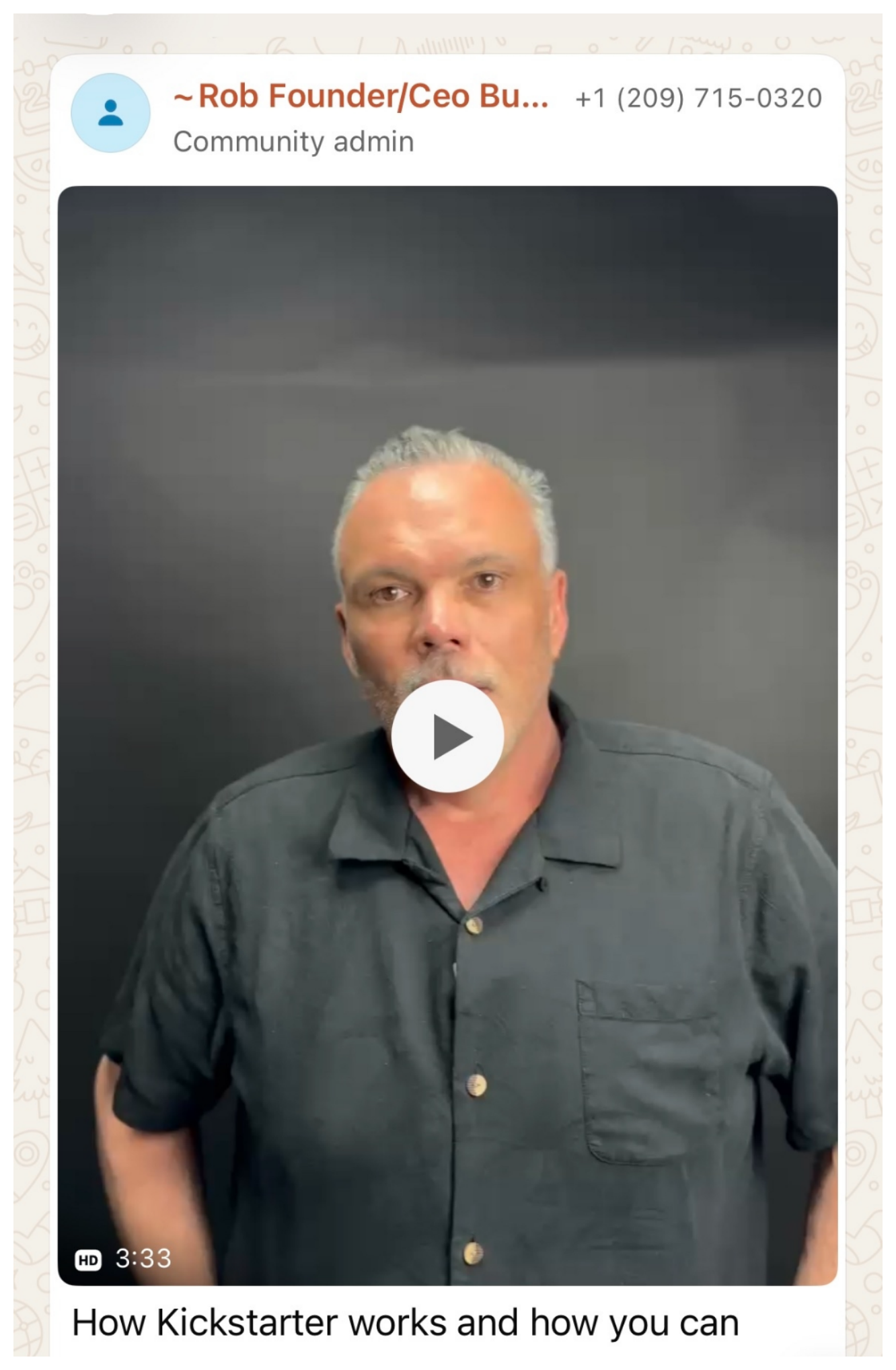
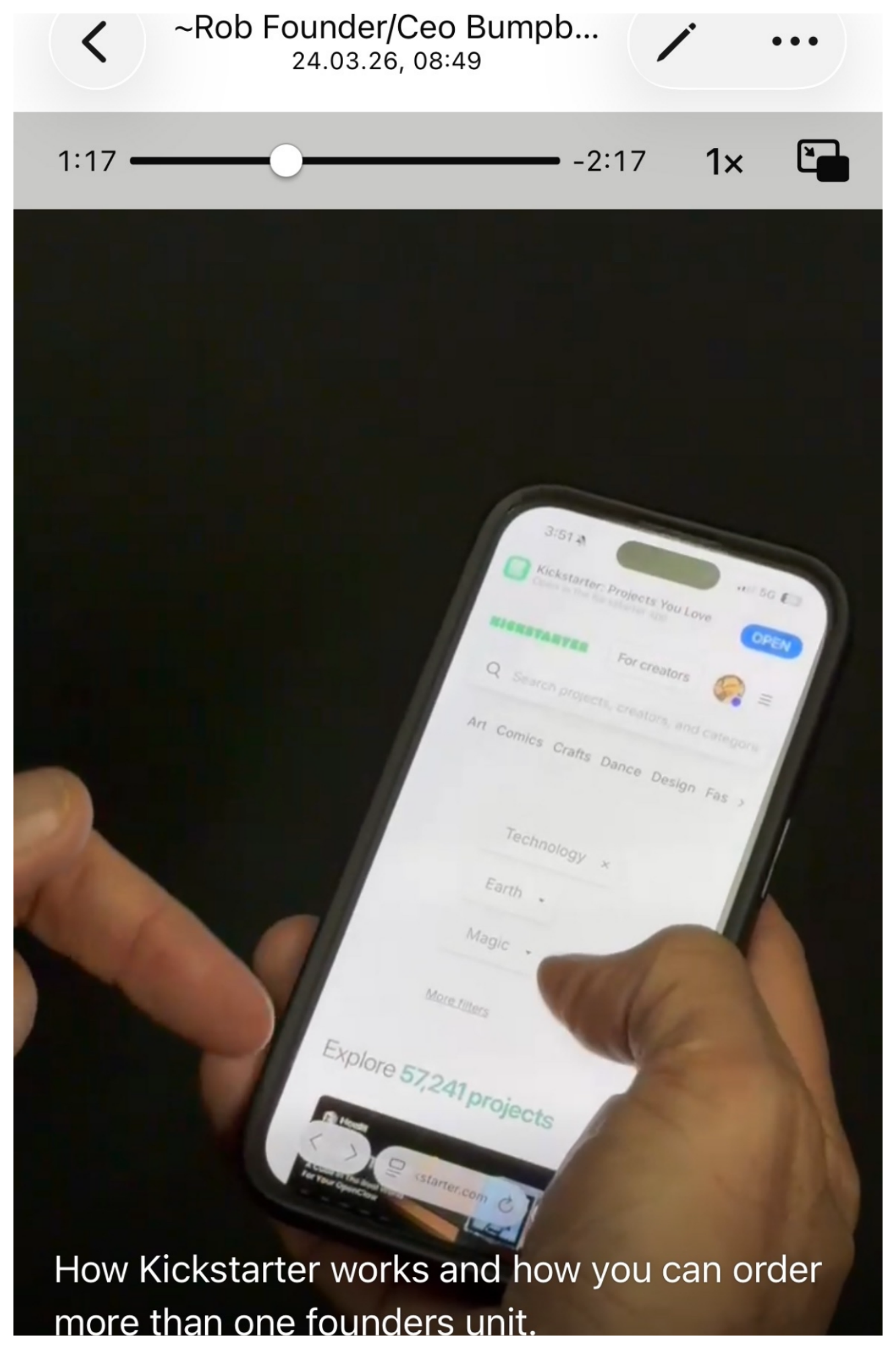
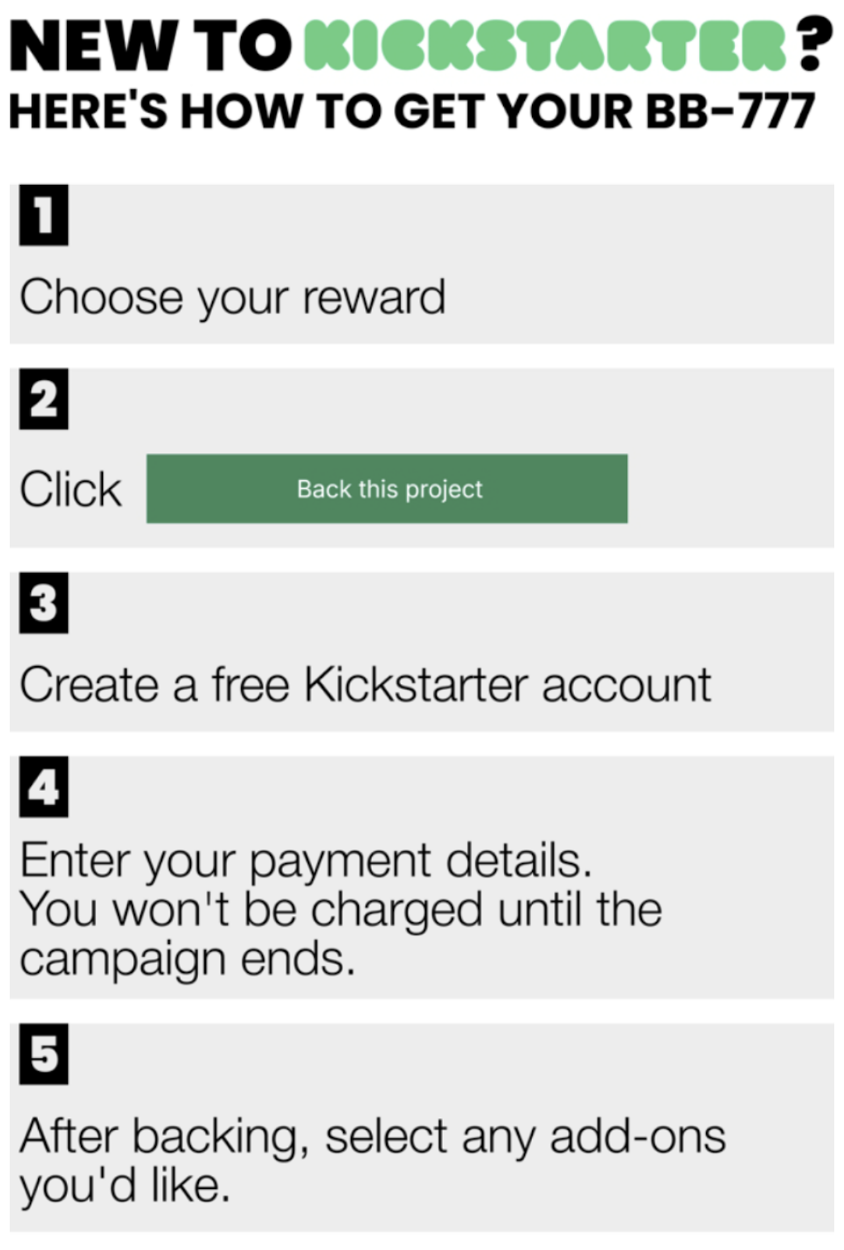
We published step-by-step guides on what Kickstarter is, what a pledge means, how checkout works, and what happens after you back. We ran the same education inside the WhatsApp groups and across social. The goal was simple: make pledging $749 on a platform you have never seen feel as natural as adding something to a cart.
Before the launch
Emails pushing people to go, create a free account on Kickstarter, and hit the "Notify me" button during the prelaunch stage
A support specialist monitoring for anyone who needed help
WhatsApp video and image content walking people through the platform
During the live stage
The how-to-back steps went on the campaign page itself, above the fold, for easy scanning
A support button sat right after the steps, in case people still needed help
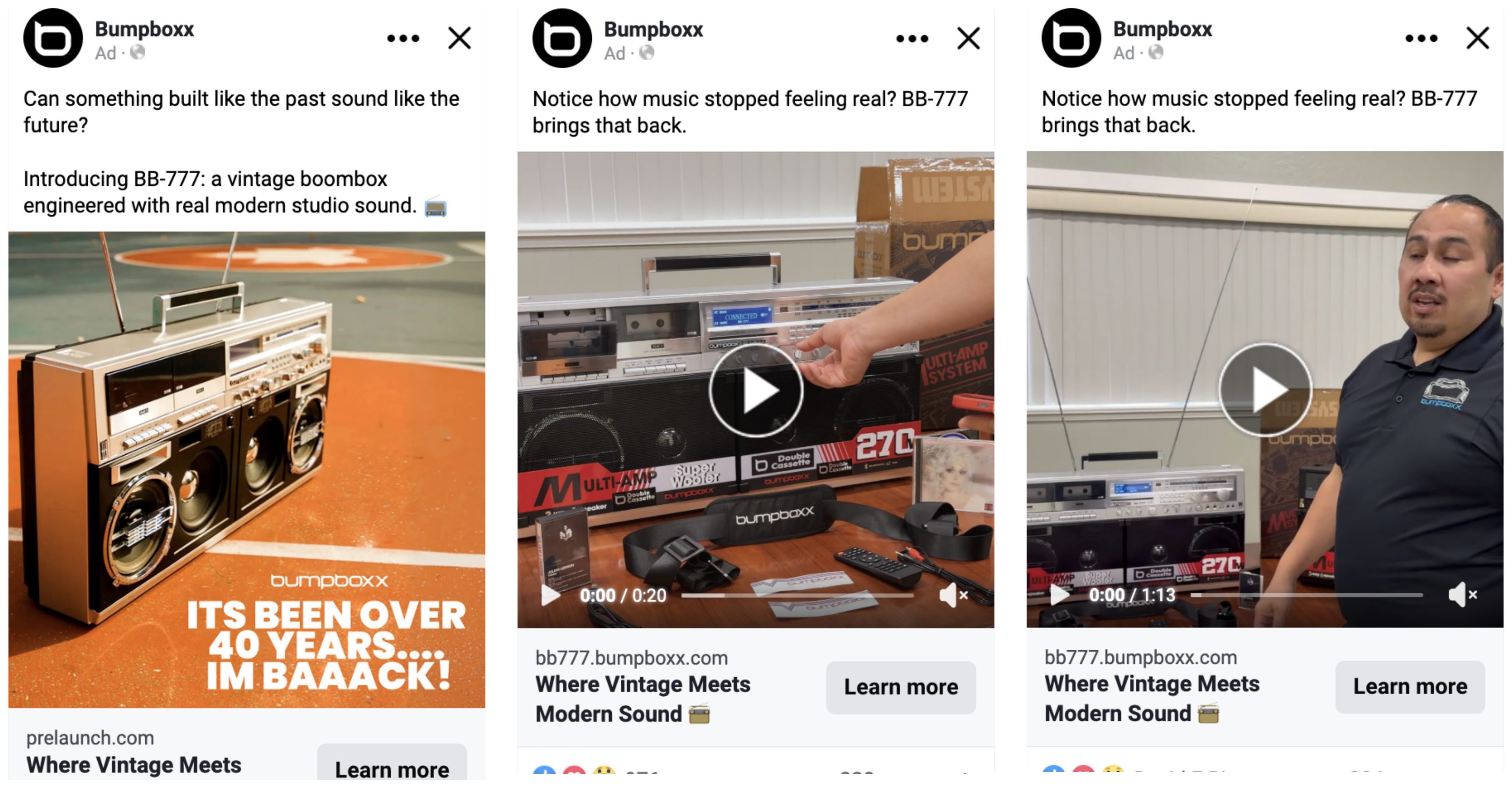
Retargeting ads taught people how to back
On those retargeting ads, the detail matters. We ran 2 different ads on how to back: a carousel and a video. Both worked almost equally well. The video brought a few more sales than the carousel. The lowest ROAS any of these ads had was 4.8. The full range ran from 4.8 to 6.8, specifically for these retargeting ads.
Read that again, because it is one of the quiet lessons of this campaign. Ads that did nothing but teach people how to use Kickstarter returned between 4.8 and 6.8 on spend. Education turned out to be one of the highest performing investments in the whole project.
The Prelaunch Creative
We made more than 30 different variations of the ad visuals and more than 10 different videos to target the audience through various angles.
Thirty visual variations means thirty tests. Every angle, every hook, every frame earned its place or got cut. By the time the launch arrived, we were not guessing which creative would carry the spend. We already knew, because the prelaunch had told us.
Stage 4: The Content Engine
The product sold on feeling, so every asset led with feeling. Four pillars carried the content strategy, and each one earned its place.
Pillar one: founder content
Rob told his story. The kid who could not afford a boombox, the man who spent three years building the best one ever made. It was true, and it landed. Founder-led posts became the strongest content of the campaign.
The founder content ran deep, not thin:
5 long videos on YouTube
At least 15 videos inside the WhatsApp community
Around 10 videos tested in ads
Several videos across social media: the brand's page, boombox group posts from the founder himself, his own page content, and more
Pillar two: Kickstarter education, reshaped for the feed
The same education program described above, rebuilt as native social content so it reached people where they scrolled.
Pillar three: the collectors
Real boombox collectors shared their own stories and impressions. Their word carried weight that brand content cannot fake. We had 4 collector videos that we used various ways, organic and in ads.
Pillar four: ASMR (the one that surprised us)
The mechanical click of a cassette deck. The hum of the dial. The sounds of the eighties pulled at something, and that content converted as paid ads. Nobody plans for ASMR to become a performance channel. The audience decided it would be, and we followed the audience.
What the best prelaunch ads did
The best working ads of the prelaunch sold the story. Story first, product second. That order held for the entire campaign.
We Met the Audience Where It Lived
This demographic skews boomer to millennial, so Facebook carried real weight. We joined groups and communities and posted there. We ran Reddit. We worked the niche forums. And we changed the message for each room, because a boombox forum and a Reddit thread do not speak the same language.
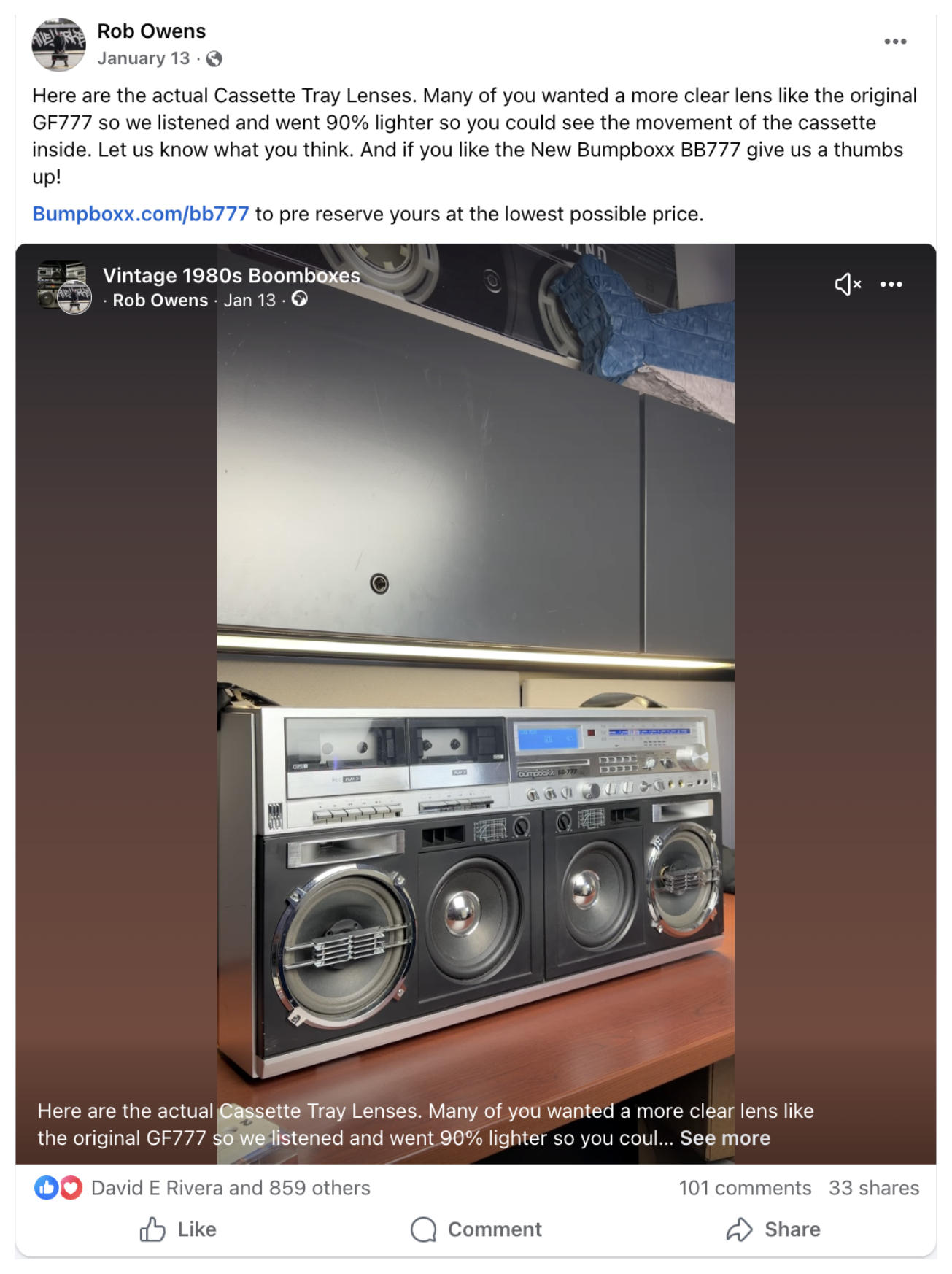
The founder and some of the collectors were very active in boombox Facebook groups. That presence was steady, genuine participation, and the community could tell the difference.
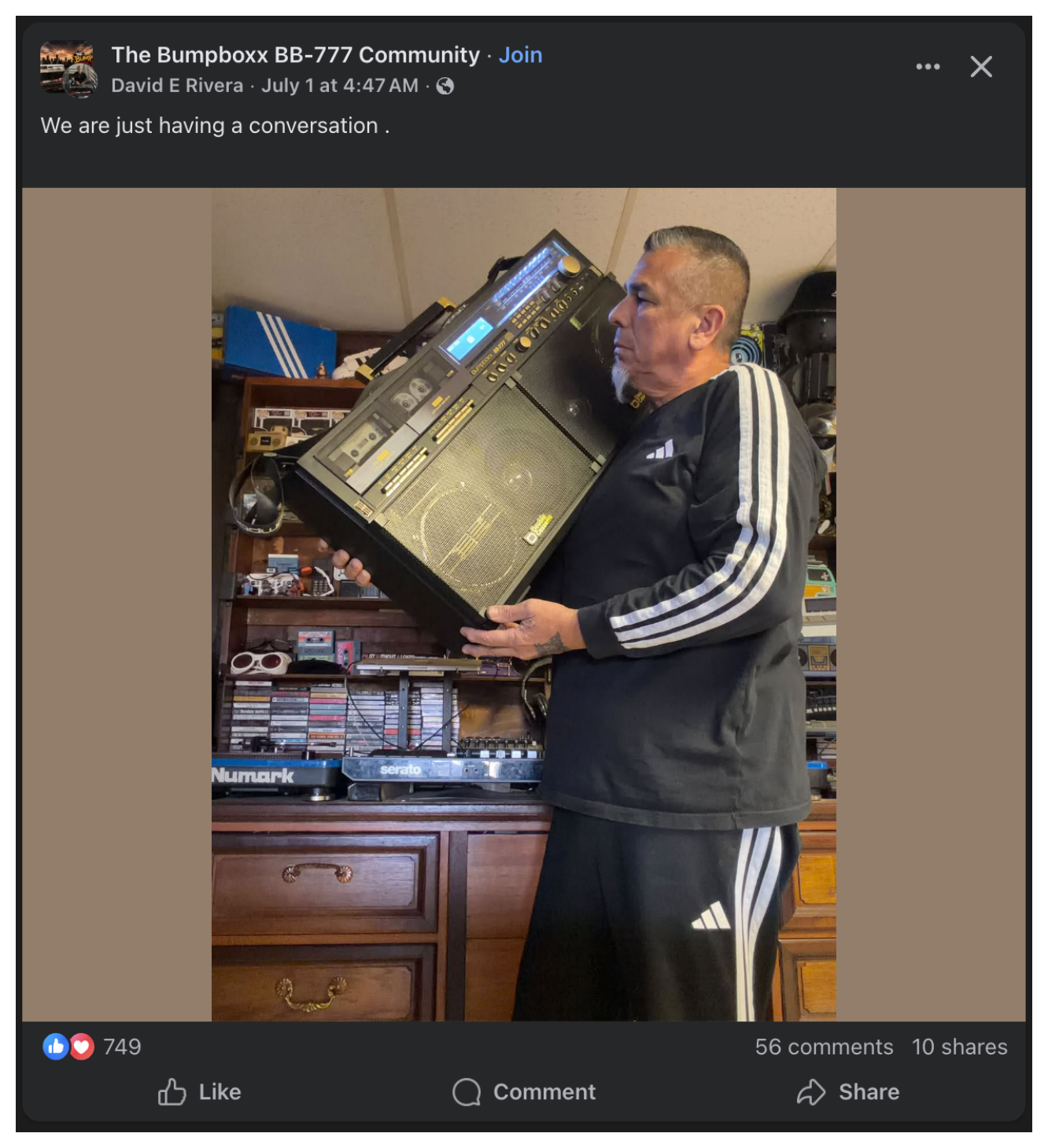
Then something happened that money cannot buy. Backers created 2 separate Facebook groups specifically for BB-777, on their own. Almost 5k people combined. During the live campaign, one of the groups had more than 50 posts and more than 100 different discussions a day.
When your backers build their own rooms and fill them with a hundred conversations a day, the campaign has stopped being a campaign. It has become a movement, and movements convert.
The Community Feedback Loop: The Community Tells You Everything
Halfway through, one question kept surfacing in the community. Why buy this when I can buy a real vintage boombox?
We did not answer it with a paragraph. We answered it with a live stream.
Rob and a group of serious collectors went live and compared the BB-777 against an original vintage unit, side by side. More power. Cleaner sound. The collectors said so themselves, on camera, in real time, with almost 500 people watching the stream live at that moment.
Then we cut the live into clips and ran them as ads and social content. The objection became the campaign's best proof.
This is the discipline that matters, and it is worth stating as a rule any creator can carry away. The community always tells you what it wants and what holds it back. The team's job is turning that into content that converts. An objection you hear once is a support ticket. An objection you hear ten times is your next best ad, waiting to be made.
Stage 5: The Launch "Crash" Effect
Then the prelaunch pressure released all at once.
On launch morning the VIP emails opened above 70 percent. Depending on tier, between a third and half of recipients clicked straight through to the campaign. The average ecommerce email gets around 2 percent. These were the numbers of an audience that had been waiting and knew exactly what to do, because we had spent 1.5 months making sure of both.
The velocity:
Hour 1: $1M, beating our most aggressive forecast
Hour 5: $2M
Hour 40: $3M
Day 11: past $4M
The synced launch machine
A first hour like that is not one action. It is every channel firing at once, in an order planned weeks ahead. Here is the full launch-day sequence that produced the first $1M in an hour and $2M in five:
Ads started heavily promoting the Founder Editions and the launch. Ads began scaling immediately on launch day. The first week's best-performing ad was the Founder Edition ad.
Influencer marketing delivered content speaking about the product
Emails went to VIPs immediately, and to the leads gradually, in batches.
SMS went to VIPs a few hours after the emails.
Kickstarter sent its notification email to every community member who had hit the Notify me button, the button our prelaunch emails had been driving people to for weeks.
Social media management started posting on the brand's socials.
The Bumpboxx team, including the collectors, started posting in various communities and Facebook groups.
WhatsApp posts went out with instructions, links, and videos from the founder.
The support team replied across social media, WhatsApp, email, and the Kickstarter internal messenger, all at once.
Several PR coverages went live in the first few hours.
Backer community promotions and newsletters were live immediately.
A countdown went on the page to increase the urgency of the first 48 hour draw.
Twelve channels, one hour, zero improvisation. That is what a launch looks like when the machine is built before the door opens.
The Countdown and the Founder's Edition Strategy
The goal was explicit: sell out all Founder Editions in the first 24 hours. Goals that specific force real plans. Here was ours:
Create demand for the regular version first
Come up with the right pricing for the Founder Edition
Reinforce the story of the Founder's Edition: the 10th anniversary, the first 777 units of production carrying special collection value and features
Build a 5 day, 3 day, and 24 hour email sequence around urgency and the Founder Edition's special perk
Produce several images and video pieces with the founder himself speaking about the Founder Edition
Start last-days urgency emails and public messaging with a new special launch deal, the Founder Edition
Set the draw plan for the first 48 hours in motion
The Founder's Edition drove the early surge because the scarcity was real:
777 units per colorway, in red, silver, and black
A numbered badge on every unit
A gold-plated rear plate
Rob's signature in wet ink
A holographic authentication mark
A certificate of authenticity
Priced $100 above the standard, and it sold out first.
Collectors know the difference between a gimmick and the real thing, and they paid for the real thing.
How fast it went:
Silver: sold out in roughly 2 hours
Black: sold out on day 1
Red: sold out in 1 week
The Twist: The 48 Hour Founder Draw
Success then created a problem nobody had planned for.
Kickstarter processes pledges in batches, and that meant nobody could promise who would receive serial number 001 or 777, the two most wanted units in the whole run. Collectors flooded the team with messages. Assign them randomly and you risk disappointing your most loyal superfans on day two.
So we turned the puzzle into a second campaign. The 48 Hour Founder Draw. Anyone who pledged a Founder's Edition in the first 48 hours was entered to win number 1 and number 777 in their color.
A scheduling quirk became a fresh wave of urgency, right when the first wave was cresting. This is what operating a live campaign actually means. Problems arrive daily. The teams that win are the ones that convert each problem into momentum before the day ends.
Stage 6: The Stall and the Scale
Every crowdfunding campaign hits a wall. Anyone who tells you otherwise has not run one. Ours came after the first surge, around the two-week mark. The pledges slowed. The momentum that had felt unstoppable started to settle.
Two forces pushed against us at once.
Force one: the ad engine straining under its own weight
Paid media drove the majority of conversions in this campaign, around $2.5M in attributed revenue, built on the exact creative the community had already proven. The live clips. The Founder's Edition banners. The ASMR cuts.
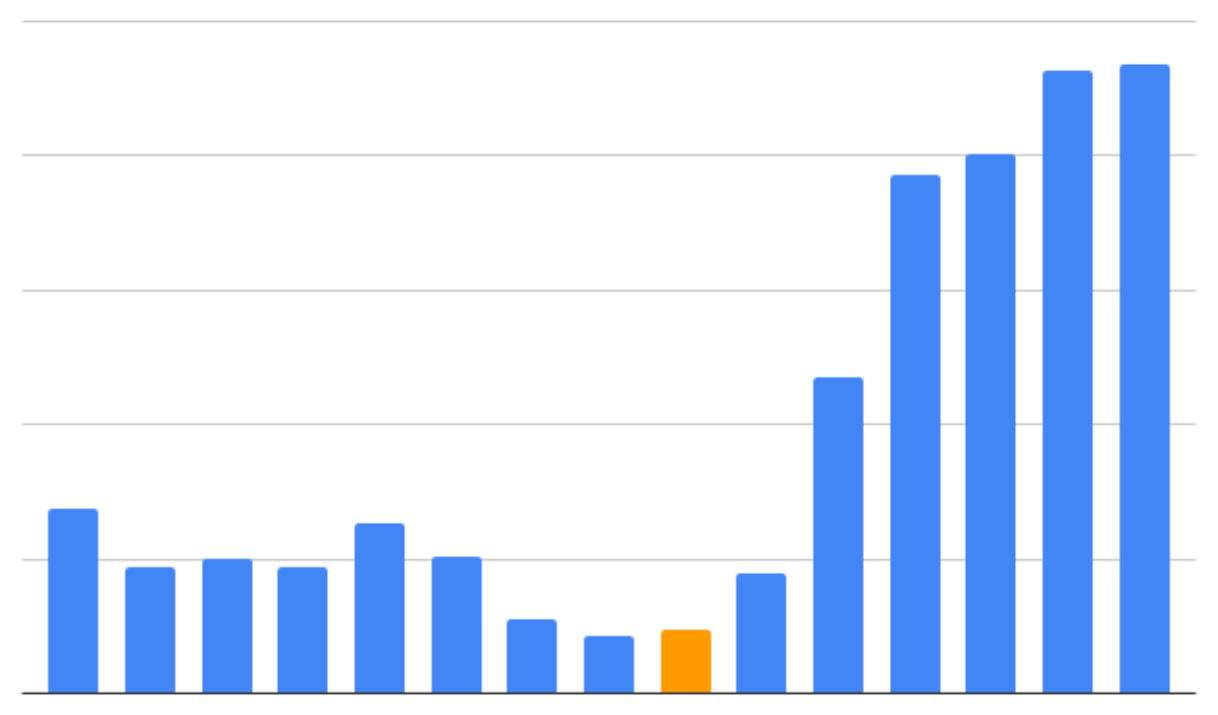
But scaling spend breaks efficiency. As the budget climbed, return on ad spend slid from above 4 toward 2. Doubling the budget meant two weeks of hard testing, and the testing cost money and nerve. This is the part of scaling nobody shows you: the stretch where you spend more, earn less per dollar, and have to hold the line anyway because the testing is the only path to the other side.
Force two: doubt
Backers wanted third-party reviews before risking $649, and with no production units to ship, influencers had nothing to test. The campaign needed proof it could not yet hand out.
What follows is how we worked through both forces, week by week. This is the section to study closest, because the first hour of a campaign is won in prelaunch, but the final total is won here.
The Scaling Weeks, One by One
Week 1: prep pays off
Our main activities, the ones we had prepped for the launch, were already done and firing. The campaign hit $3.5M in the first week.
Week 2: the scale test begins
Doubled the ad spend. The ROAS dropped to a reasonable level, exactly the tradeoff we had planned for.
Started using $3,500,000 as a credibility point in ads and everywhere else. The raise itself became the proof.
Worked with Kickstarter for an additional push through various promotions.
Sent a survey to the audience. The number one reason holding people back: cost. That single answer shaped the next four weeks.
Our monitoring showed the best-performing prelaunch visuals were already generating fatigue, so we started producing new visuals before the fatigue could bite.
Week 3: breaking the price barrier
This was the pivotal week of the middle campaign.
First, an operational fix that most teams would never catch. Our monitoring showed that people were not using Facebook Messenger for support, which was our main support channel on the page, but they were far more active on WhatsApp. So we replaced Messenger with WhatsApp, added a "chat with us" button to the page, and the messages multiplied. Support volume is demand. Making it easier to ask a question makes it easier to buy.
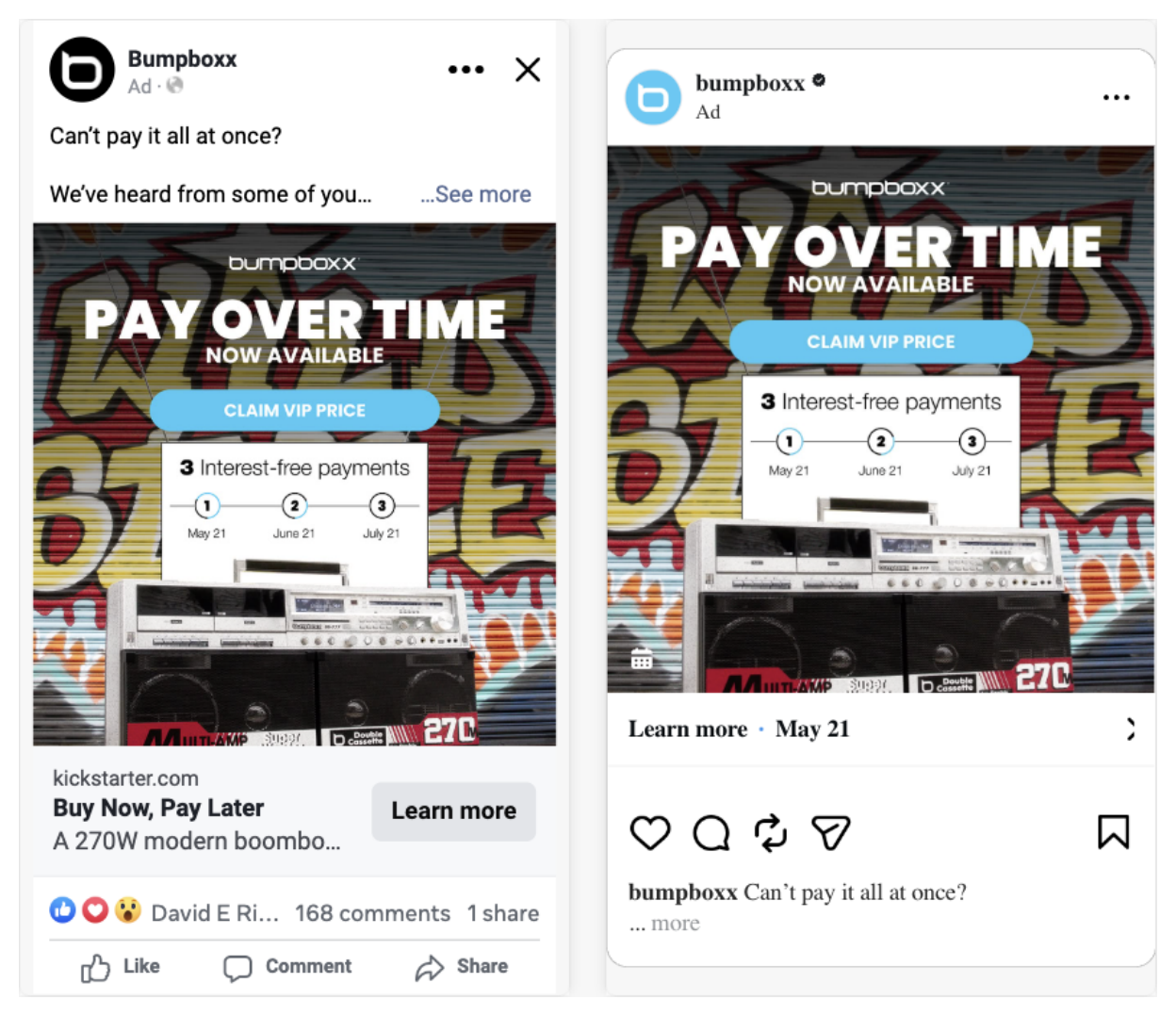
Second, the quiet test that changed the campaign. We enabled Pay over time, but did not promote it widely. We wanted to test first. When we saw the sales team winning back refunds and closing more at-the-edge buyers, we made it public.
The logic ran deep. The survey had told us cost was the number one objection. The most emotional buyers, the people who wanted this most, were often the ones who could not put $649 down in one payment. Nostalgic lovers without large incomes. The want was there. The lump sum was not.
Kickstarter built its own Pledge Over Time feature for exactly this reason. The platform introduced it in early 2025 as its answer to the upfront cost barrier in crowdfunding, letting backers split a pledge into equal, interest-free payments with no added fees and no third-party loans. Kickstarter's own beta data made the case plain: backers who used it pledged more than double those who paid in full, and the option drove a meaningful share of total project funding.
For the BB-777 the effect was immediate. The installment option pulled hesitant buyers off the fence, and retargeted audiences, the people who had already viewed and clicked, converted best of all. The stall broke. For any high priced crowdfunding product, this is now a tool we reach for early instead of late.
Third, a full refresh of the ad creative:
ASMR videos moved into paid
A video from one of the collectors, which had pulled 3M+ views on Instagram, "borrowed" straight from him
Ads promoting the $4M raise itself
Content from the famous rapper Trae the Truth, with more than a million followers
An unboxing video
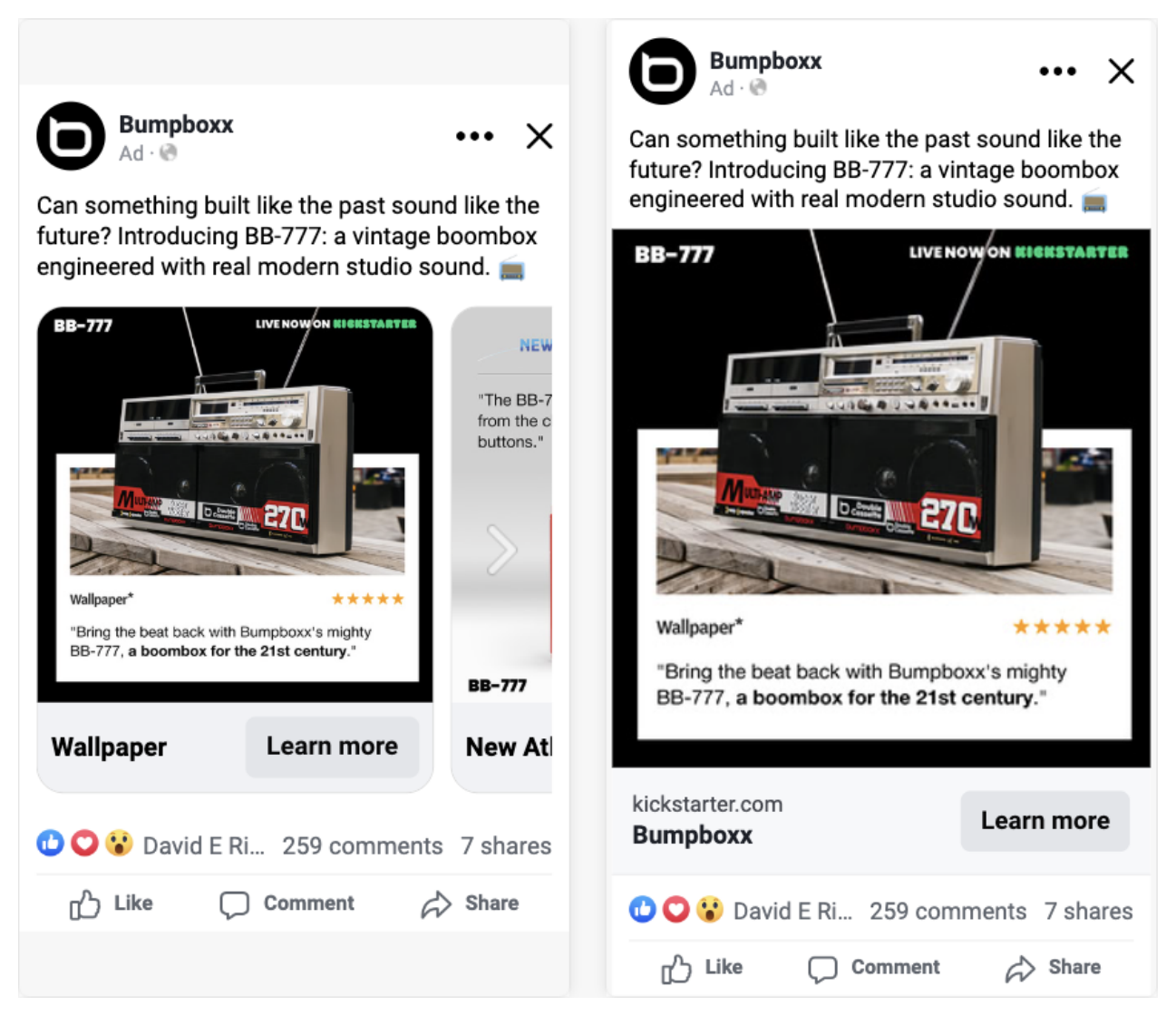
PR quotes layered onto ads. We ran these PR-quote ads until the end of the campaign at 4+ ROAS.
Week 4: KOLs, stretch goals, and momentum
Started publicly promoting Pledge Over Time and put it on the page.
Got a product review from Flossy Carter.
Hit the $5M stretch goal and unlocked a new feature, free to every backer.
Ran a giveaway, open only to backers, built around sharing one of our best-performing ad content pieces. The backers became the distribution.
Got a post from Juvenile, the famous rapper with more than 1M followers. He posted about the red version, and the red Founder's Edition sold out within a few hours of his post.
Pushed the new KOL content into ads, optimized the targeting strategy, scaled spend a bit more, and increased the ROAS while doing it.
Week 5: Pay over time goes live everywhere, scarcity kicks in
Pay over time went live in the ads.
Increased the ROAS again.
Optimized the retargeting strategies further.
Sent an email to leads and VIPs about pay over time. This email got the highest sales of any email in the campaign, excluding only the launch email itself. The cost barrier really had been the wall, and this was the sound of it coming down.
Introduced a limited-time offer to increase scarcity.
Week 6: prices will go up, AOV climbs
After seeing the demand, we planned to create urgency and increase the prices, raising the AOV at the same time. The calibration mattered: not so large an increase that it would hurt demand, but enough to create real urgency and lift price and revenue together.
Added a "Prices will go up" banner and promoted the scarcity. The conversion rate of the landing page went up. The overall ROI increased.
Survey insights showed that Techmoan was the number one reviewer people wanted to see cover the product. So we sent a unit to him. The audience had told us whose word they trusted; we simply listened.
In ads: more focus on retargeting with the urgency and scarcity messages, continued pay over time promotion, and prospecting ads driving the same story through different angles and different content, including visuals with the collectors.
Week 7: Techmoan lands, price urgency holds
The Techmoan review arrived, the exact third-party proof the audience had asked for by name.
Prices were increased, as promised. The urgency had been real, which is why it worked.
Price urgency kept performing through the whole week.
Week 8: the close
All about urgency, last days, and sooner shipping.
Heavily focused on retargeting in ads.
Ran the "last days, last chance" email sequences: 4 emails across the last 10 days.
Booked newsletters and Kickstarter promotions for the final days, so the campaign closed with a push, not a fade.
Results
Kickstarter funding
$7M+
Launch-day performance
$1M+
Overall return on ad spend
4.4X
The Recovery and the Close
The whole team moved together through the scaling window, creative and media in lockstep, until the numbers came back.
During the scaling phase, the campaign held a 4.72 return on ad spend.
The live stage closed at 4.4 overall.
The campaign finished above $7M.
Then the work kept going, because a campaign ending is a beginning. Late pledges brought in another $151K at a 6.5 return on ad spend, the most efficient stage of the entire project.
From there, the path runs to preorders on the brand's own store, and from preorders to long-term brand building. The boombox was the launch. The brand is the business.
What It Took: The Full Span
No single channel made this campaign. The channels made each other work. The community fed the ads their best creative. The emails supported the first million. The collectors gave the page its credibility. The payment plan saved the middle.
The full system, in one view:
Community building and platform education before launch
A tiered email and SMS system across 174 broadcasts
Founder led social across Facebook, Reddit, and the niche forums
A collectible strategy with real scarcity
A draw that turned a scheduling quirk into urgency
An ad engine that held strong returns through a hard scaling window
A payment solution that broke the price barrier
Late pledge optimization and a clean handoff to ecommerce
One team ran all of it, end to end, as a Kickstarter Premier Partner.
Rob brought a product worth fighting for and a story worth telling. We brought everything else.
What This Means for Your Campaign
Strip away the boombox and the lessons stand on their own. They are the reason this document exists.
The campaign is a product of its own. Build it with the same care as the thing you are shipping. A real community was not enough on its own here, and yours will not be either.
Solve the platform before the platform meets your audience. The highest performing retargeting campaign ads were the ones that taught people how to back, at 4.8 to 6.8 ROAS. We know how to get an insight and use it efficiently and effectively on retargeting. Never assume your audience knows how to buy.
Segment like you mean it. Three price tiers, separate tracks, different countdowns, 174 campaigns. The first hour's 70 percent open rates came from that discipline.
The community writes your best ads. The vintage-comparison live stream, the collector video with 3M+ views, the ASMR cuts: every one came from listening, not brainstorming.
Scarcity works when it is true. 777 numbered units, wet ink, a gold-plated rear plate. Collectors paid $100 more because the limit was real.
The wall is coming. Plan for it. Around week two, every campaign slows. The difference between $4M and $7M+ was everything this team did from week two onward: the surveys, the payment plan, the creative refreshes, the price moves, the KOLs.
A launch like this is a machine, built early, run daily, and scaled deliberately until the product reaches its full potential.
Your Product Could Be Next
We work with a limited number of brands each quarter. If you have a product people will love and a real story behind it, let's talk.