

There’s a moment in every DTC brand’s life where growth needs CPR.
Growth is still alive at that point. Revenue comes in, dashboards update, meetings stay busy. The issue shows up in the rhythm. Every result needs prompting. Every dip needs attention. Progress depends on constant pressure, like compressions that keep things moving but never let the system breathe on its own.
In this article, we’ll break down how several DTC brands handled that phase. We’ll also show you how to apply those strategies to your own brand, and call out the common mistakes that quietly stall growth at this stage.
Key Takeaways
- Many brands stall because they chase short-term spikes instead of building systems they can repeat
- Growth becomes unstable when acquisition scales before there’s clarity on why customers return
- Stacking tools and dashboards increases complexity without improving decision-making
- When ads become the main driver of growth, every performance drop creates pressure
- Turning a product into an everyday purchase can unlock repeat buying and higher customer frequency
- Podcast-style trust channels combined with a strong membership model can significantly increase customer value
- Retail experience, word-of-mouth, and controlled distribution can build demand without heavily relying on paid ads
- A well-structured membership program can drive the majority of revenue and create predictable growth
- Creator-driven awareness can translate directly into retail demand and stronger in-store performance
- Combining credibility, status, and a subscription layer can turn a product into an ongoing service
[[cta5]]
The Most Common Growth Mistakes DTC Brands Make
This is the phase where brands don’t usually break. They just get… heavier.
Everything technically works, but progress starts costing more focus, more money, and more explanations than it should.
Here’s where that usually comes from.
- Chasing spikes instead of systems
Short-term wins become the goal. A campaign pops, a creator hits, a promo lifts revenue for a week, and suddenly the team is trying to recreate the moment instead of building something more sustainable. The business moves from decision-making to reaction management.
- Scaling before understanding repeat behavior
More spend goes out before there’s real clarity on who comes back, why they return, and how often. Acquisition gets louder while retention stays fuzzy. Growth feels active, but it rests on customers the brand hasn’t fully figured out yet.
- Overbuilding the stack
New tools keep getting added to solve symptoms. Attribution tools on top of analytics tools on top of dashboards no one fully trusts (and let’s be honest, understands.) Complexity increases, confidence drops, and every answer starts with “it depends.”
- Treating paid media as the business
Ads carry too much responsibility. Instead of accelerating a system, they become the system. Any fluctuation in performance triggers panic because there’s nothing underneath doing real work.
- Optimizing everything except the bottleneck
Teams tweak creatives, landing pages, flows, offers, and sometimes, all at once. Lots of motion, little direction. The real constraint stays untouched because it isn’t obvious or exciting to work on.
I admit, none of these mistakes look super dramatic at the moment. That’s why they linger. The bill arrives later, in slower growth and harder calls.
Case 1: Mejuri
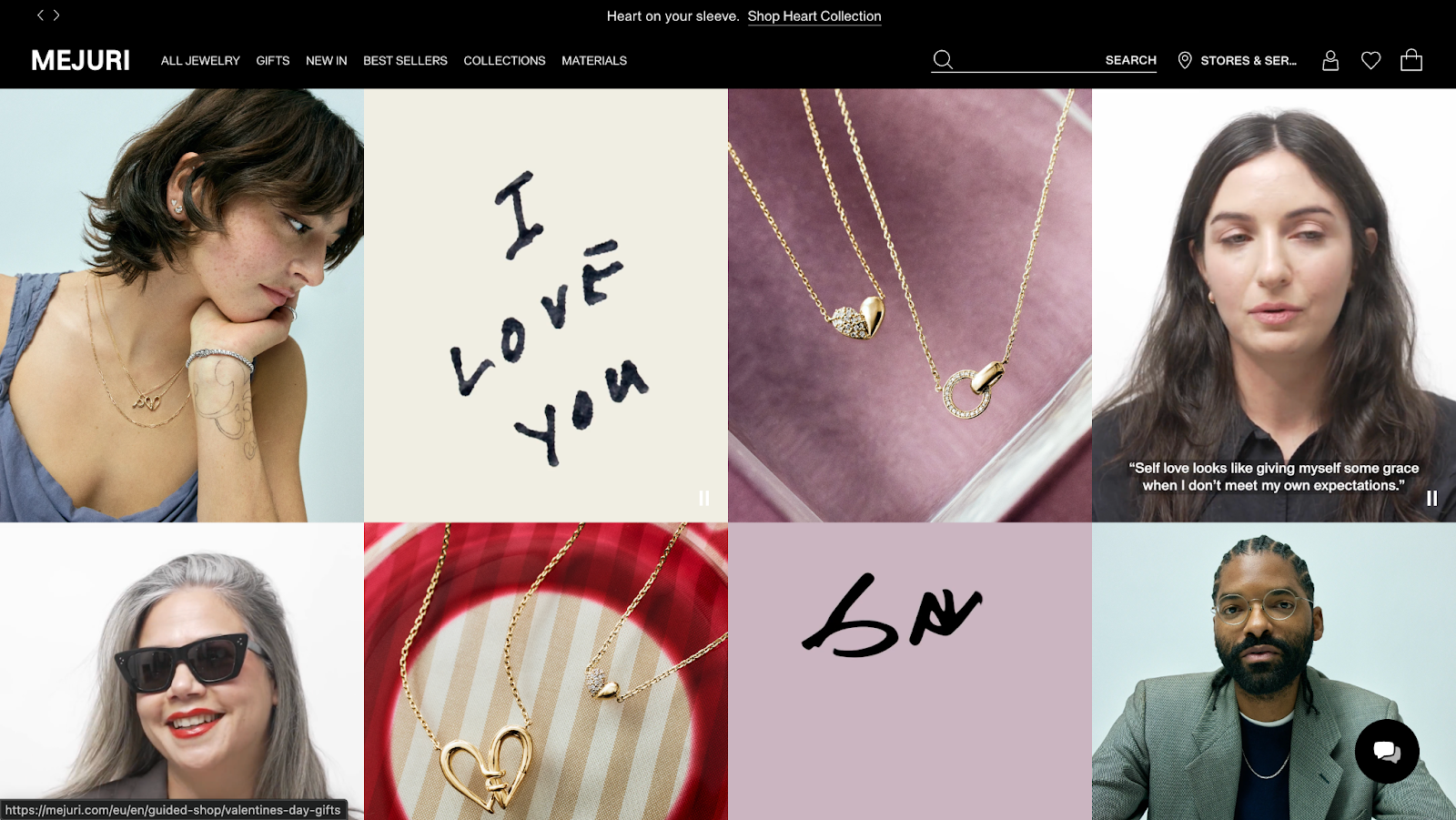
Mejuri is a DTC fine jewelry brand known for turning traditionally occasional purchases into everyday essentials, built for repeat buying rather than one-time gifting.
The core strategy
Founded in 2013 and relaunched in 2015, Mejuri built its growth by reframing fine jewelry as an everyday purchase rather than an occasional gift. That shift expanded frequency, broadened the audience, and increased repeat behavior.
The positioning was not aesthetic only. It was behavioral. Noura Sakkijha, the founder of Mejuri, started it with one goal in mind: to redefine fine jewelry as an everyday expression of self, and to encourage women to buy it “for their damn selves”.
This shift unlocked recurring demand instead of one-time gifting revenue.
How Mejuri built demand
- Self-purchase as the default behavior
The behavioral shift translated into measurable demand. By 2023, Mejuri’s hoop earring category alone generated over $60 million in annual revenue. The brand sold approximately 600,000 pairs of hoops across 37 countries that year.
During the November 13-29 holiday window, Mejuri sold 100,000 pairs of hoops at a rate of roughly five per minute. In early 2024, 41% of new customers purchased hoops as their first product.
This concentration signals something important. Mejuri did not grow through scattered SKUs. It built category authority around repeatable, stackable products that anchored customer entry.
- Influencer relationships that aged well
Early growth leaned on micro-influencers who felt adjacent to the customer. Many of those creators grew alongside the brand, which created continuity and credibility over time. UGC stopped being just a temporary campaign fuel and became an ongoing demand infrastructure.
- Community as visibility
Tagging, reposting, referrals, and social proof did a large share of the awareness work. Customers saw the product worn by people they already trusted, which reduced friction without heavy persuasion.
How growth stayed consistent
- A predictable product cadence
Instead of seasonal jewelry collections, Mejuri adopted a bi-weekly drop cadence, an approach more common in fashion than fine jewelry.
This cadence did three things:
- Maintained constant engagement without relying on deep discounting
- Generated ongoing feedback loops from sell-through and waitlists
- Encouraged stacking behavior, where customers returned to build collections over time
- Early growth leaned on micro-influencers.
By 2019, the brand had been tagged in over 130,000 Instagram posts. Some products reportedly built waitlists exceeding 100,000 customers.
- Feedback loops over big bets
Sell-through, waitlists, and customer response shaped what scaled next. Assortment decisions followed demand signals instead of forecasts alone.
- Offline expansion that reinforced trust
Pop-ups and stores acted as showrooms and content engines. The brand aesthetic stayed consistent across digital and physical spaces, which strengthened credibility rather than distracting from it.
What changed as the brand scaled
Mejuri added reach without resetting the system.
Higher-profile ambassadors and larger campaigns arrived later, once the foundation was stable. Those partnerships extended visibility but followed the same tone, community logic, and product rhythm that already worked.
Growth remained manageable because the underlying mechanics stayed familiar.
Case 2: MeUndies
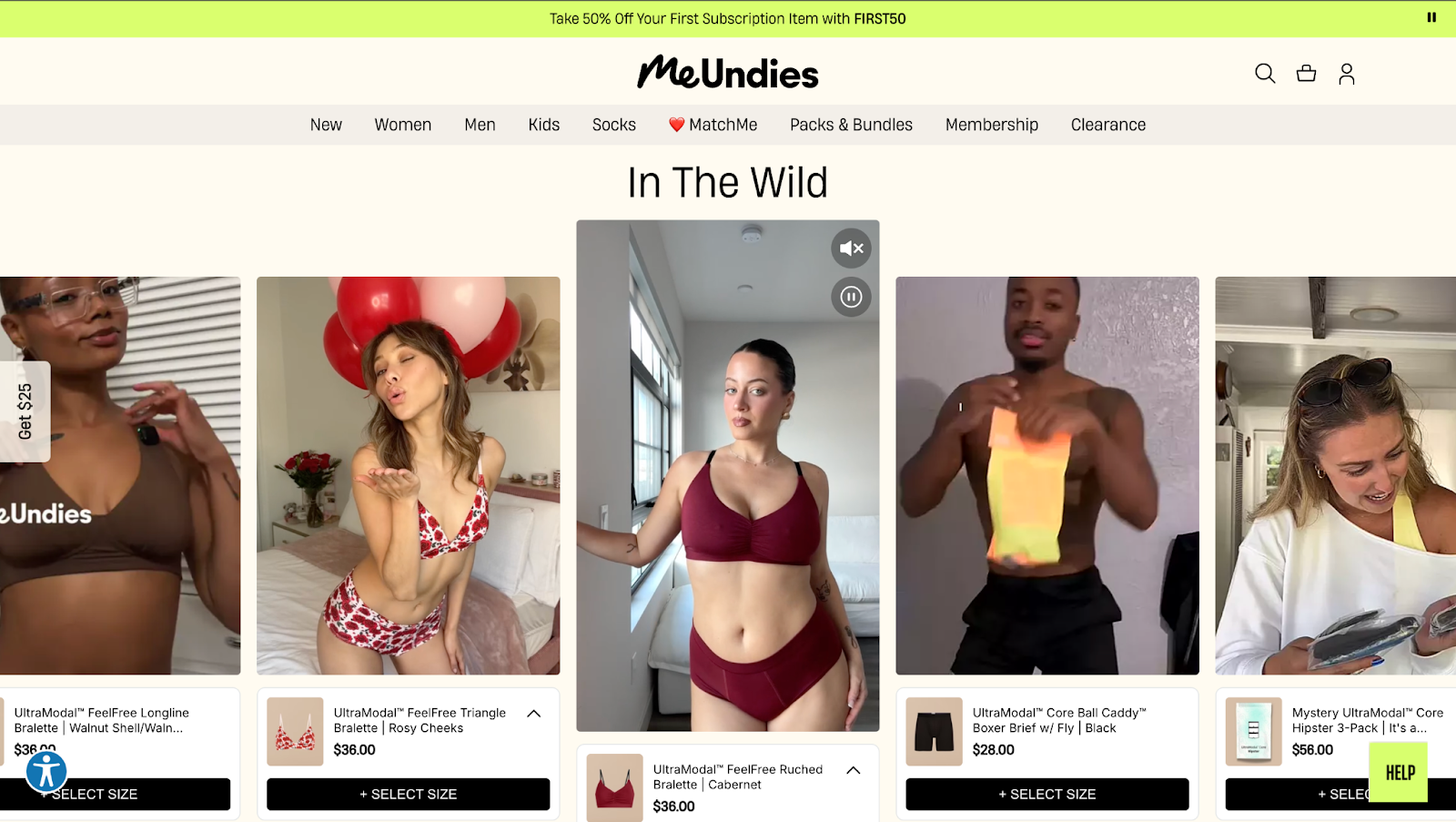
MeUndies is a DTC underwear and loungewear brand that built mass appeal around comfort, personality, and repeat purchasing in a traditionally low-excitement category.
The core strategy
MeUndies launched in 2011, and between roughly 2014 and 2017 grew 1,583%, reaching an estimated $60M in annual revenue. That acceleration did not come from constant channel expansion. It came from turning a low-excitement product into a repeat behavior engine.
Comfort anchored the positioning. Personality made it memorable. Membership turned it into infrastructure.
From the start, the brand positioned itself around one clear promise, exceptional comfort, and wrapped it in humor, inclusivity, and everyday relatability. Underwear became less of a chore purchase and more of a brand people liked interacting with.
How MeUndies built demand
- Comfort-first positioning
Everything pointed back to the product experience. Fabric quality, fit, and feel were emphasized relentlessly, reducing hesitation around trying a new underwear brand online.
- Personality in a boring category
Bright prints, playful copy, and a casual tone turned a functional product into something people talked about. The brand felt friendly, not transactional.
- Trust-heavy acquisition channels
Around 2014, MeUndies aggressively invested in podcast sponsorships, becoming one of the earliest ecommerce brands to treat podcasts as a core acquisition channel. Founder interviews later credited podcasts as a primary growth driver during its early acceleration phase.
Rather than generic ads, MeUndies relied on host-read endorsements, embedded inside trusted, long-form conversations. Dedicated landing pages per show, auto-applied discount codes, and simplified checkout flows improved conversion from listener to buyer.
At one point, podcast advertising reportedly accounted for a significant share of customer acquisition. More importantly, these customers demonstrated stronger long-term value, reinforcing the brand’s retention-first model.
How growth scaled efficiently
- Podcast advertising as a growth engine
MeUndies was early to podcasts and treated them as a core channel. The format allowed for authentic product stories, which translated into strong conversion and long-term customer value. For many customers, a podcast host was their first introduction to the brand.
- A built-in referral loop
Referral incentives were simple, visible, and easy to share. Customers were encouraged to invite friends, rewarded for it, and publicly recognized at times, turning referrals into a meaningful acquisition channel rather than a side feature.
- Community-led visibility
UGC, social sharing, and customer features made existing buyers part of the brand’s marketing surface. Customers participated, posted, and brought others in.
How retention became the growth lever
- A flexible membership model
In late 2017, MeUndies pivoted from a mandatory subscription model to a flexible membership structure. This shift reduced acquisition friction while preserving retention mechanics.
The results were material. According to Digiday:
- Roughly 50% of customers became members
- Approximately 40% of first-time buyers opted into membership at checkout
- Members spent 3x more than non-members on average
This transformed membership from a discount feature into a revenue backbone. Instead of relying on constant acquisition, MeUndies anchored predictable revenue in a loyal member base. Word-of-mouth subsequently became the brand’s second-largest acquisition channel, reinforcing a compounding growth loop.
- Frequent product drops
New prints and limited editions gave customers reasons to return regularly. Familiar products stayed fresh without needing entirely new categories.
- Customer experience as a differentiator
Generous guarantees, easy returns, and a playful support team reduced risk and built goodwill. These details mattered more over time than any single campaign.
What changed as the brand scaled
MeUndies didn’t abandon its early channels or brand voice as it grew.
Podcast advertising stayed relevant. Referrals stayed visible. Membership deepened relationships. As new categories like loungewear expanded the business, they followed the same logic, comfort, personality, and repeat behavior.
Growth stayed sustainable because the system rewarded loyalty instead of constantly chasing new attention.
And after opening its first Los Angeles store, MeUndies reported a 20% increase in online sales within the surrounding market. Retail did not cannibalize ecommerce. It amplified it. The store functioned as a physical acquisition and education hub for membership, strengthening both conversion and retention in the region.
Case 3: Aesop
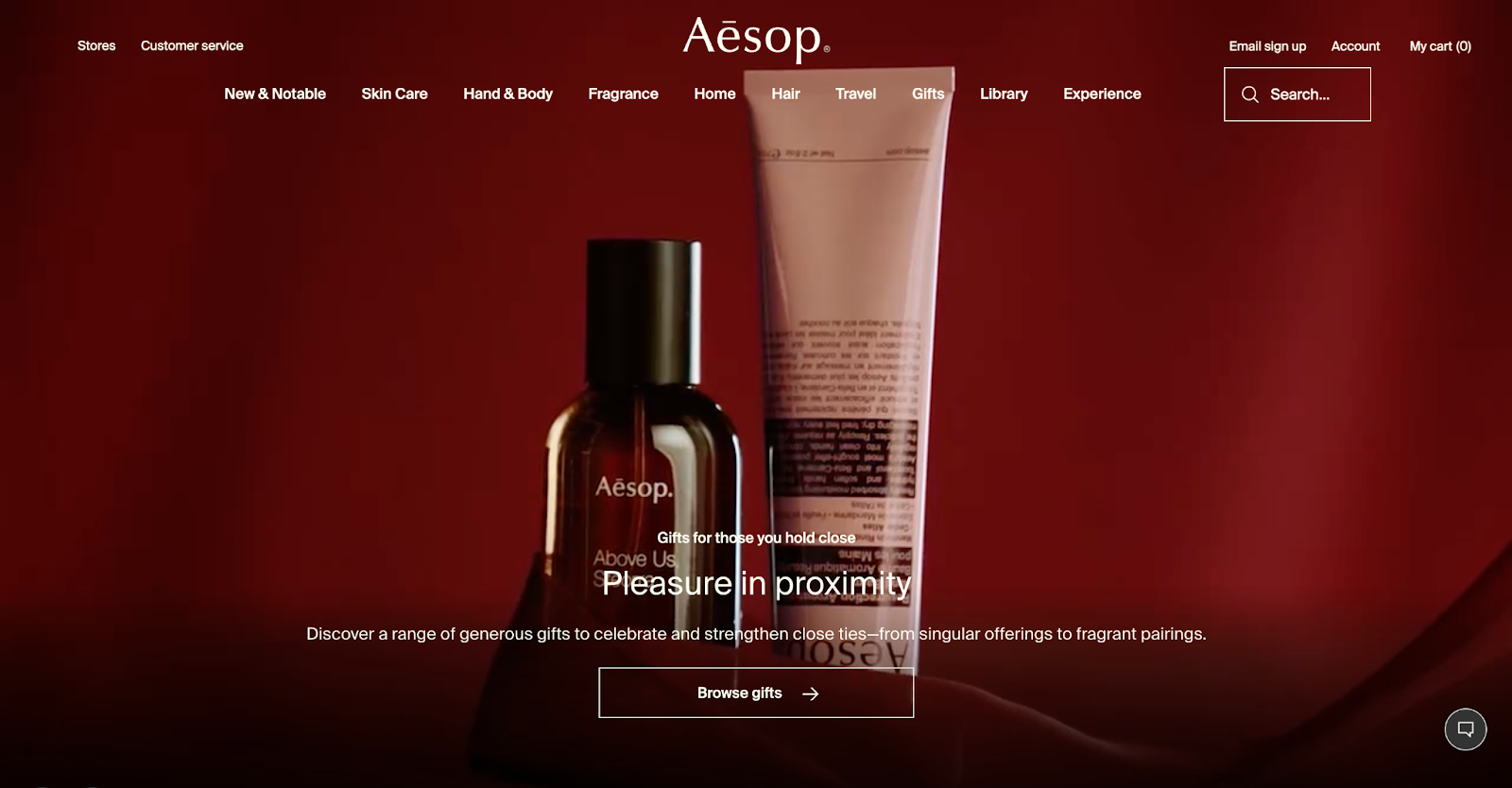
Aesop is a global skincare brand that built cult-level demand through restraint, sensory experience, and word-of-mouth, while largely avoiding traditional advertising.
The core strategy
Aesop built global scale while deliberately avoiding traditional advertising. The brand has long maintained that discovery should happen through word-of-mouth rather than paid media.
Despite this restraint, Aesop reported approximately 30% year-over-year growth during its international expansion phase, scaling from just two stores in 2006 to 69 globally within several years.
How Aesop built demand
- No traditional advertising
Aesop deliberately avoided celebrity endorsements, billboards, and performance ads. Discovery happened through personal recommendation, retail experience, and cultural proximity. That absence created credibility and mystique.
- A distinct visual and verbal identity
Minimal packaging, apothecary-style bottles, and literary language made the brand instantly recognizable. Products looked intellectual, timeless, and out of step with trend-driven beauty marketing.
- Cultural alignment instead of campaigns
Collaborations with fashion labels, designers, and artists functioned as storytelling. These moments generated buzz inside niche circles that cared deeply about taste and craft.
Beyond stores, Aesop seeded products into high-end restaurants, hotels, and cultural spaces. The now-iconic brown apothecary bottle became a fixture in upscale bathrooms globally.
This placement created repeated, sensory brand exposure inside environments already associated with taste and quality. Diners encountered Aesop in moments of indulgence, then associated that memory with the product.
This hospitality saturation functioned as silent distribution. Customers discovered the brand organically, often purchasing their first bottle after experiencing it in a restaurant.
How growth was engineered quietly
- Retail as the primary marketing channel
Aesop treats retail as its largest marketing investment. Each store is architecturally unique, designed in collaboration with local architects, and tailored to reflect its neighborhood.
There are no price tags. Consultants guide purchases through conversation rather than transactional signage.
By 2013, Aesop operated 69 stores globally, with 43 in Asia-Pacific alone and plans to open 15 additional locations that year. Expansion was selective. The brand avoided markets that conflicted with its ethical standards, including those requiring animal testing.
- Strategic product seeding
Aesop placed products in influential environments, upscale restaurants, hotels, boutiques, and airlines. Customers encountered the brand in real life, often in moments that felt indulgent and memorable.
- Controlled distribution
Aesop has historically avoided entering markets that required compromising its stance on animal testing or operational philosophy. The brand delayed expansion into certain high-growth markets despite clear demand.
This discipline reinforced credibility. Scarcity and selective availability elevated perceived value without aggressive discounting.
In 2023, L’Oréal acquired Aesop, validating the commercial strength of a brand built primarily on experience, restraint, and cultural alignment rather than heavy paid acquisition.
How loyalty drove scale
- High-touch customer experience
In-store consultations, generous sampling, and thoughtful follow-ups turned first-time buyers into long-term customers. Service felt personal, not transactional.
- Content that educated
Emails, in-store materials, and product descriptions focused on formulation stories, routines, and ideas. The brand spoke slowly and confidently.
- Repeat behavior over reach
Aesop invested in depth of relationship rather than volume of acquisition. Customers returned regularly, expanded routines over time, and introduced the brand to others organically.
What changed as the brand scaled
Growth stayed principled.
International expansion followed the same logic as early growth, flagship-first, culturally aligned, and paced. New markets opened only when conditions matched the brand’s standards.
That discipline ultimately made Aesop more valuable, culminating in its acquisition by L’Oréal, largely on the strength of its brand equity and global footprint.
Case 4: Fabletics
Fabletics is a DTC activewear brand that scaled to over $1B in annual revenue by turning membership into its primary growth engine.
The core strategy
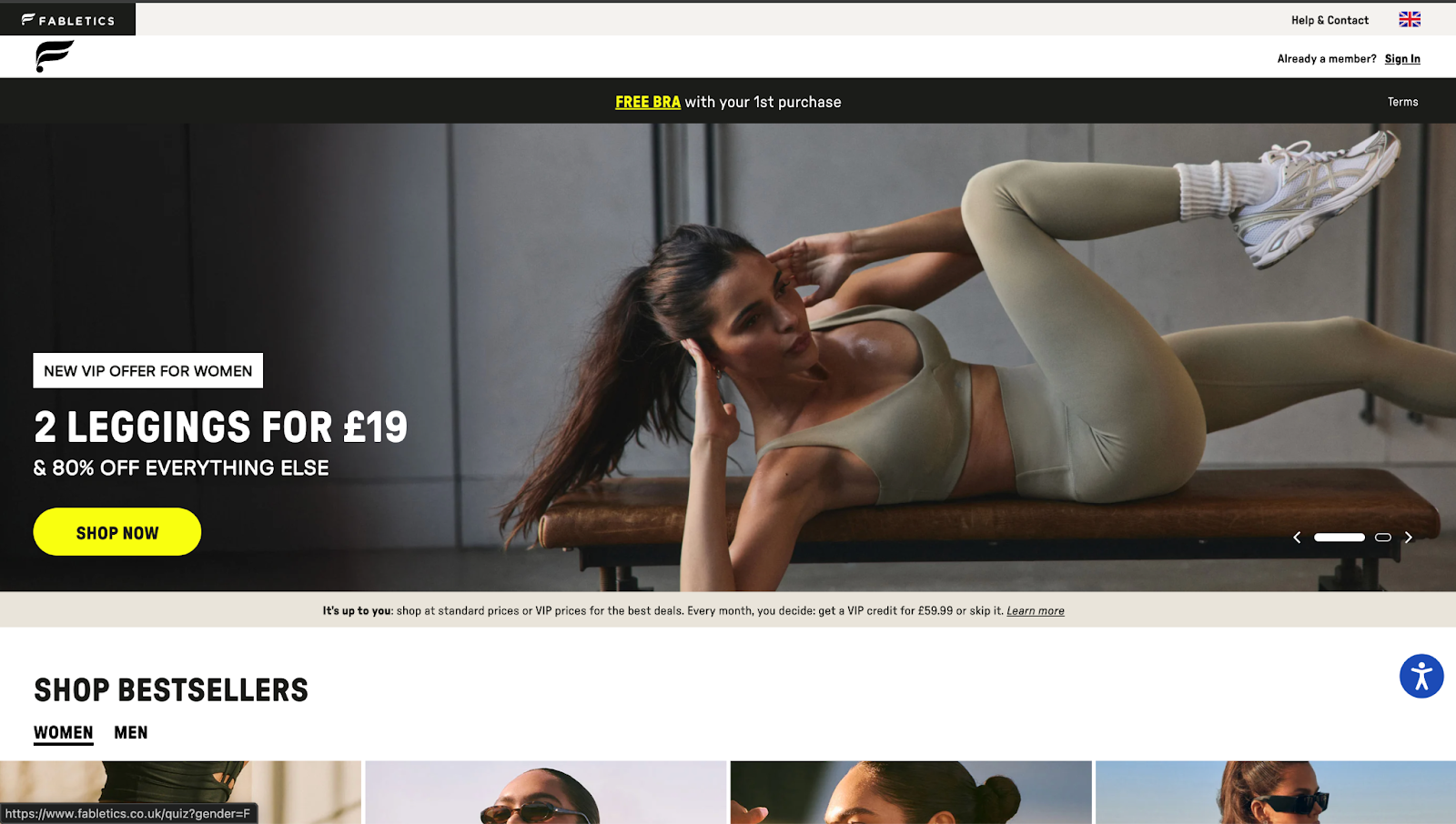
Fabletics built its business around a flexible membership model rather than pure transactional ecommerce.
In 2025, the brand surpassed $1 billion in revenue while growing 18% year over year. It now serves more than 3 million active customers, with approximately 2.7 million enrolled in its VIP membership program.
Members are responsible for more than 95% of revenue.
How Fabletics built demand
- Pricing as the hook
Intro offers like “2 leggings for $24” made the value immediately tangible. The price gap between member and non-member purchasing framed joining as the obvious choice.
- A clear membership narrative
Marketing emphasized savings, exclusivity, and belonging. Customers were buying activewear and they were joining a club that made premium feel accessible.
- Celebrity credibility at launch and beyond
Kate Hudson’s role as co-founder gave the brand instant recognition and a relatable face. Later partnerships expanded reach into new audiences without changing the core offer.
How growth scaled through membership
- A high-conversion sign-up funnel
From quizzes to checkout flows, everything guided shoppers toward VIP. Online and in-store experiences were designed to make the benefits feel immediate and hard to pass up.
The VIP program costs $69.95 per month and provides access to exclusive drops, daily discounts of 20%-50%, and a monthly merchandise credit.
Nearly half of members have remained with the brand for more than two years.
This retention base transforms acquisition math. Instead of optimizing for single purchases, Fabletics optimizes for lifetime membership value.
The model also creates predictable monthly revenue flow, reducing volatility common in apparel.
- Stores as membership showrooms
Physical locations functioned as acquisition hubs. Staff were trained to educate visitors on VIP perks, resulting in roughly half of store visitors converting into members.
- Data-driven personalization
Member preferences informed email, app, and in-store recommendations. New drops felt tailored, keeping engagement high.
How AOV and LTV increase became the revenue engine
- Flexible membership mechanics
Customers could skip months, customize shipments, or bank credits. This reduced friction while still encouraging long-term commitment.
- Built-in reasons to return
Monthly credits, early access, and exclusive collections gave members recurring incentives to stay active.
- Expansion guided by member behavior
New categories, including men’s activewear and loungewear, followed demand signals from existing members rather than speculative launches.
- Search and Merchandising Proof
Fabletics also invested in improving product discovery online.
According to Athos Commerce, after implementing a search optimization platform, the brand saw:
- 102% increase in revenue from search
- 21% increase in AOV from search
This matters because in a catalog-heavy apparel business, product discovery efficiency directly impacts revenue per session.
What changed as the brand scaled
Fabletics extended the same logic into new markets.
Men’s lines, celebrity-led capsules, and wholesale partnerships broadened reach, while the membership model remained central. Store expansion followed data, with each new location expected to generate both sales and subscribers.
Growth stayed predictable because revenue was anchored to an engaged member base rather than one-off transactions.
Case 5: Olipop
Olipop is a modern beverage brand that scaled rapidly by reframing soda as both nostalgic and better for you, then letting culture, creators, and retail demand do the distribution work.
The core strategy
Olipop launched in 2017 as a prebiotic tonic positioned around gut health.
By 2021, the brand was generating roughly $30M in revenue. In 2022, revenue reached $70M. In 2023, Olipop surpassed $200M.
That represents nearly 3x growth from 2021 to 2023, before the brand launched major TV or out-of-home campaigns. And it occurred before major TV or out-of-home campaigns.
Growth was driven primarily by creator-led awareness that translated into measurable retail velocity gains.
How Olipop built demand
- Familiarity before functionality
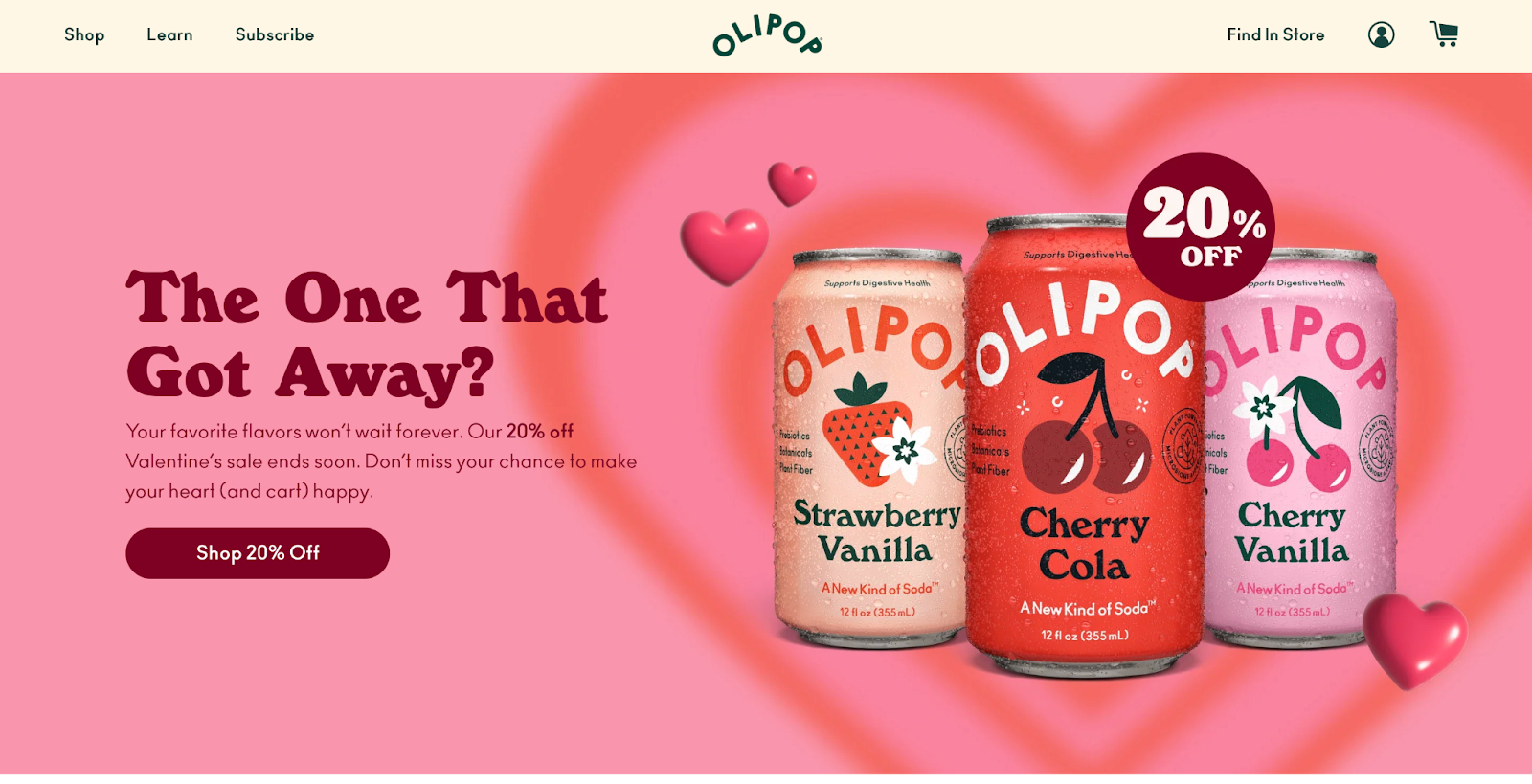
Retro flavors, colorful cans, and classic soda cues made the product approachable. Health benefits were present, but they did not dominate the experience.
- Creator-led brand voice
Instead of paid ads, Olipop invested early in organic social and influencers, especially on TikTok. The brand behaved more like a creator than a company, with a consistent, human presence posting daily.
- Entertainment and education together
Content ranged from humor and lifestyle clips to recipes and wellness explanations. Different formats served different stages of awareness without feeling segmented.
How growth accelerated organically
- Influencer volume at scale
Hundreds of creators, across sizes and niches, featured Olipop naturally in their content. The result was massive reach, sustained visibility, and repeated exposure without traditional media buys.
According to founder interviews, Olipop generated approximately 1.3 billion views on TikTok at an estimated $0.61 CPM. The hashtag #olipoppartner alone has accumulated over 1.6 billion views.
- Cultural relevance as fuel
Limited-edition flavors and pop culture tie-ins kept the brand in conversation. Celebrity investors and collaborators added reach while staying aligned with the brand’s tone.
- Search and demand lift
Social visibility translated into measurable demand lift. Organic search volume reportedly increased from roughly 20,000 monthly searches to over 150,000. The store locator became one of the brand’s most visited pages, signaling offline purchase intent rather than DTC checkout behavior.
How retail became the multiplier
- Demand-led retail expansion
Early DTC traction and social buzz helped Olipop secure shelf space in natural and mainstream retailers. Once on shelf, strong trial rates drove repeat purchases. In major retail accounts, velocities reportedly increased 2-3x following TikTok-driven awareness spikes.
- Winning in-store presence
Packaging stood out visually, and taste delivered on expectations. Sampling, displays, and visibility reinforced momentum rather than compensating for weak demand.
- Scale without channel dependence
As retail expanded, social continued feeding awareness. Neither channel carried growth alone. They reinforced each other.
What changed as the brand scaled
Olipop added reach without changing its voice.
Paid media and larger campaigns came later, in 2023, once the brand had already crossed $200M in revenue and established retail momentum. Creator partnerships remained central. Product development followed audience feedback. New flavors and collaborations reflected what customers already wanted.
Case 6: Oura
Oura is a premium wellness wearable brand that turned sleep tracking into a lifestyle signal, combining science, status, and subscription-driven scale.
The core strategy
Oura grew by making health tracking aspirational.
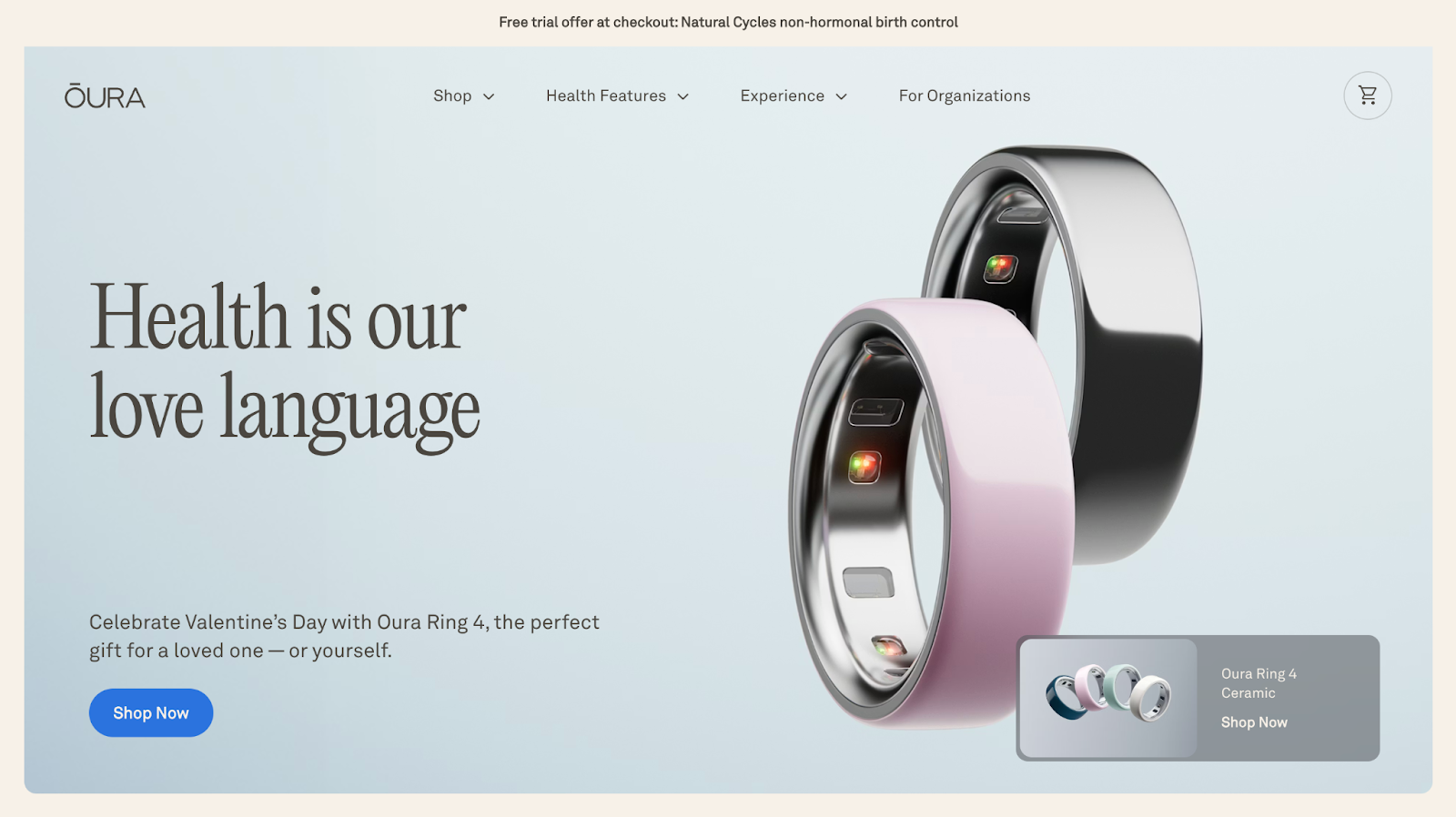
The ring was positioned as more than a device. It became a symbol of self-optimization, recovery, and modern luxury. Science provided credibility. Design and restraint created desire.
Wellness became something you wore.
Founded in 2013 and launched via Kickstarter in 2015, Oura has since sold more than one million rings across 98 countries and raised over $148 million in funding. The Generation 3 model, released in 2021, generated more sales than all prior versions combined.
How Oura built demand
- Premium wellness positioning
Minimal design, elevated visuals, and a calm, authoritative tone placed Oura closer to luxury accessories than fitness gadgets. Health tracking was framed as an investment in oneself.
- Status through association
Oura gained visibility by appearing on the hands of elite athletes, tech founders, and cultural figures. The brand gained mainstream visibility when the NBA purchased 2,000 rings for players during the 2020 Orlando bubble. Public appearances by figures such as Prince Harry and Jennifer Aniston further expanded cultural awareness.
- Credibility-first messaging
Accuracy, sleep science, and readiness metrics anchored the product in legitimacy. Emotional appeal followed, built on performance, recovery, and self-awareness.
How influence and credibility worked together
- Organic celebrity adoption
High-profile users appeared naturally across tech, sports, and culture. When names surfaced, Oura amplified the attention through PR and media coverage rather than traditional ads. Visibility felt earned, not orchestrated.
- Tiered influencer ecosystem
Beyond celebrities, Oura partnered with doctors, trainers, biohackers, and wellness creators. This mix reinforced trust while expanding reach across very different audiences, without changing the core message.
- Community visibility
Users shared scores, routines, and progress publicly. Sleep and readiness data became social, turning personal improvement into a shared language that normalized wearing the ring.
- The NBA inflection point
Adoption by the NBA during the 2020 bubble positioned Oura as a serious health tool on a global stage. Institutional validation reinforced credibility beyond consumer wellness trends and introduced the brand to audiences who may not have discovered it through DTC channels. The moment accelerated awareness, trust, and adoption across both consumer and institutional segments.
- Subscription as the retention layer
Rings retail between approximately $299 and $549, with a paid monthly membership unlocking deeper data insights and software features. The subscription layer reportedly accounts for a meaningful portion of revenue, transforming the product into an ongoing service rather than a one-time purchase.
Continuous insights, feature updates, and deeper data kept users engaged long after purchase and added recurring revenue.
- Product-led storytelling
New features, women’s health tools, and accuracy improvements created steady proof points. Innovation doubled as marketing, keeping the brand relevant and newsworthy as it scaled.
- Retail expansion as mainstream unlock
After years as a primarily direct-to-consumer brand, Oura entered physical retail through a Best Buy partnership, expanding into 850 locations. In-store sizing tools reduced one of the largest friction points for wearable jewelry purchases: fit uncertainty. Retail broadened awareness while maintaining premium positioning.
What changed as the brand scaled
Oura added reach while protecting perception.
Retail, subscriptions, and partnerships expanded the business model, but the brand continued to emphasize calm authority, product quality, and long-term health outcomes.
Growth stayed controlled because trust stayed intact.
How to Apply These Strategies to Your DTC Brand
The point of these case studies is translation instead of plain replication.
Different categories, different channels, different constraints. The underlying moves stay consistent. Here’s how to pressure-test them against your own brand.
Start with the behavior you want to repeat
Every brand above built growth around a behavior customers were willing to repeat without incentives piling up.
Ask yourself:
- What does a second purchase look like for us?
- How long does it realistically take to happen?
- What makes someone come back without needing a promo?
If repeat behavior feels vague, scaling acquisition will magnify the problem.
Decide what carries growth and what supports it
In every case, one engine did the heavy lifting.
- Mejuri leaned on product cadence and community.
- MeUndies leaned on referrals and podcasts.
- Aesop leaned on retail experience and word-of-mouth.
- Fabletics leaned on membership.
- Olipop leaned on creators and retail pull.
- Oura leaned on credibility and subscription depth.
Everything else supported that engine.
Map your stack and be honest about which channel actually compounds, and which ones are there to keep things moving.
Reduce before you add
Most of these brands simplified before they scaled.
- Fewer channels with clearer ownership.
- Fewer tools with better data trust.
- Fewer launches with a more predictable rhythm.
If growth feels fragile, complexity is usually part of the reason. Remove noise first. Scale second.
Treat retention as infrastructure
Retention shows up everywhere in these cases, even when it isn’t branded as such.
- Memberships.
- Product drops.
- Community participation.
- Ongoing product value.
If retention lives in a dashboard and not in product, experience, or cadence, it will not carry growth.
Use paid media only as an accelerator
Paid worked best when it amplified something already resonating. It struggled when it had to invent demand.
Before increasing spend, ask:
- What is paid media accelerating right now?
- Would this system still function if spend paused for a month?
If the answer is no, that’s a signal to fix the system, not the ads.
Operationalizing this usually requires coordination across CRO, lifecycle email, paid media, influencer/UGC, and SEO, not as isolated tasks, but as one connected system. Some brands build that internally. Others work with unified, end-to-end ecommerce teams that handle strategy and execution under one roof, with shared KPIs and transparent reporting across channels.
At TCF, this is structured as a single cross-functional team responsible for aligning acquisition, retention, and conversion rather than optimizing them in silos.
Conclusion
Every brand in this article reached a point where growth stopped feeling impressive and started feeling exhausting.
The winners responded by getting boring in the best way possible. Clear systems. Repeatable behavior. Fewer emergencies. Fewer Slack messages that start with “quick question” and end in a two-hour meeting.
They knew what drove growth, what supported it, and what simply added noise. Retention lived inside the product and the experience. Paid media amplified momentum instead of carrying the emotional weight of the business.
This stage rewards brands that stop chasing energy and start building structure. Growth becomes calmer. Decisions get easier. The team sleeps better. So do the founders.
When the system works, growth stops demanding constant attention. It shows up, does its job, and lets everyone move on to the next real problem.
[[cta5]]



.avif)


.avif)