.jpeg)

The Crowdfunding Formula x Bristly: The Most Funded Dog Campaign
We hit the funding goal in under 24 hours and raised $1,000,739 on Kickstarter and Indiegogo.
May 10, 2026
Partner: Kode Dot
Service: Full Campaign Management
Goal: $500K
Platform: Kickstarter
Live: Nov 4 - Dec 23, 2025
Final Raise: $2,745,921(with late pledges)
Kode Dot started with limited data and a very niche idea: an all-in-one device for makers who were tired of dealing with breadboards and loose wires. The founders had first-hand experience with the problem. They built Kode Dot for themselves, and once they saw how useful it was, they decided to launch on Kickstarter to reach more makers like them.
From day one, every decision was focused on making the product better for the community. The commitment to community That level of commitment shaped everything that followed.
Pre-launch data showed interest, but nothing pointed to a breakout. We set an internal target of $500K and entered the campaign with a simple plan: test, listen, adjust. No grand predictions.
What happened next surprised everyone. TCF worked closely with founders who were willing to listen and adjust along the way. By staying connected to the community and turning feedback into action, the campaign evolved in a way that felt natural to backers and meaningful to the people building the product.
We launched before Black Friday, which many people consider a mistake. In reality, that timing became an advantage.
By the time Q4 ad costs started rising (especially around late October and into Black Friday and Cyber Monday) the campaign was no longer trying to introduce itself to a cold market.
The audience had already been built, the messaging had been tested, and the ads had gone through long term tuning on Meta. They were recognizable, trusted, and already converting.
That mattered a lot during Black Friday and Christmas. While many brands were entering the market for the first time and paying high CPMs just to get noticed, we were able to scale ads from a position of strength.
Because ROAS was already stable, we could afford to spend more on customer acquisition without hurting performance. Throughout the peak Q4 period, ROAS stayed around 3.7 to 4. The foundation had been built early, which is why performance held.
Seasonal bundles played a supporting role. They gave existing backers and warm audiences clear reasons to increase their pledges at the right moment. The focus stayed on adding value for people who already understood the product, rather than forcing urgency onto audiences seeing it for the first time.
Q4 does not automatically hurt campaigns, but it is unforgiving. Ad costs begin rising as early as September, remain manageable for a short window, and then spike sharply toward late October and Black Friday.
If you plan to launch or scale during that period, you need to start early, build audience trust, stabilize performance, and validate your ads before competition intensifies. This way you will not burn all of your budget trying to get your ads visible.
Timing is never the strategy alone. Preparation is.
And when it came to preparation, our social media and community strategy became the real trust source for this campaign.
For a product in this niche, social media was the primary channel. Traditional mass exposure would have been useless.
Kode Dot was built for engineers, coders, and makers who enjoy experimenting and building. Reaching them required precision, not volume.
Our social and influencer teams focused on finding where these people already spent time. Meta platforms performed strongest, with Instagram standing out.

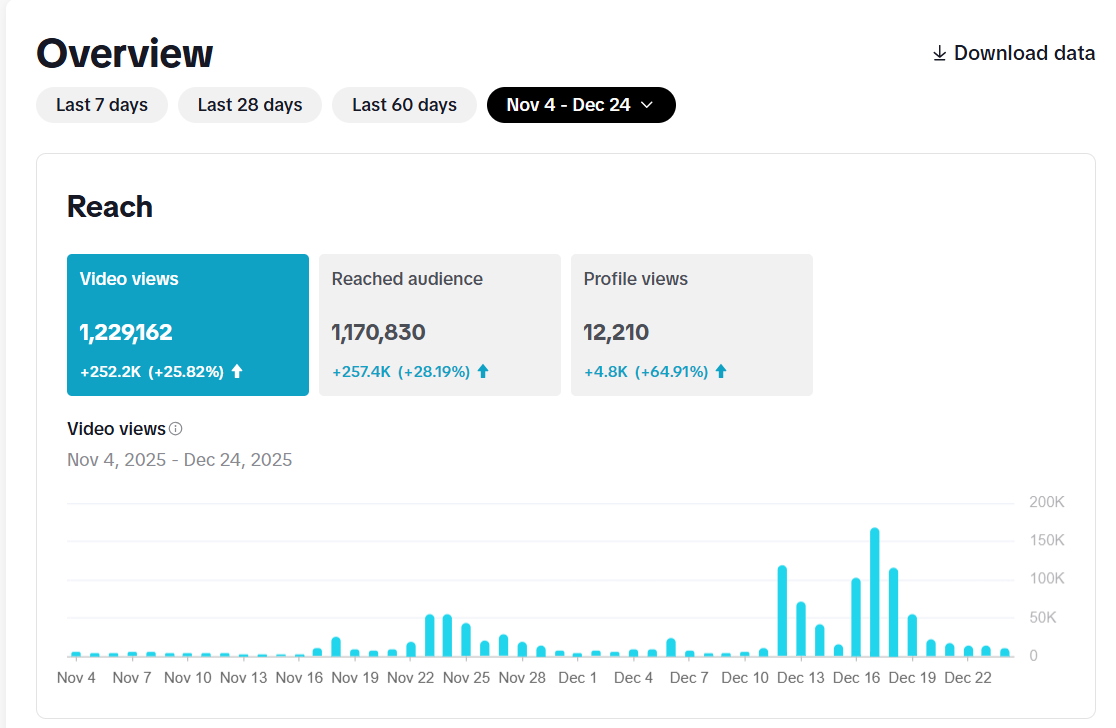
Over the course of the campaign, the Kode Dot Instagram account grew from an early stage presence to 64K followers, driven by content that showed the product in real use. Several posts went viral along the way, reaching millions of people organically, which helped bring the project to a much wider but still highly relevant audience.
Several short form videos crossed into the million view range:
The founders played a big role in making this campaign work. As makers themselves, they naturally showed how Kode Dot could be used in real projects. They recorded use case videos, walked through builds, and shared what they were actually working on.
That kind of content couldn't be faked, and it helped people immediately understand what the product was for and who it was made for.
At the same time, this was a shared effort. We worked closely with the founders to shape the overall content plan and make sure their work reached the right audience in the right way.
The social media team helped define which use cases to focus on, suggested formats, prepared prompts, and turned raw ideas into a steady flow of content that could be reused across social media, ads, emails and the campaign page.
TCF also created and published content directly, managed distribution, and boosted what was performing best. While the founders focused on building and explaining the product, our role was to structure the story, keep the messaging consistent, and make sure each piece of content served a clear purpose.
For niche products, seeing founders actively use the device creates co-creation. That's more powerful than polished ads.
Behind the scenes, we handled full community management across Instagram, Facebook, and Reddit. No question went unanswered. Over time, Kode Dot stopped feeling like a campaign page and started functioning like a community.
This level of founder involvement unlocked scale on the content side. Because the founders were willing to share their expertise and introduce new features, we produced 180+ visual assets throughout the campaign, reused strategically across social, ads, PR, and updates.
Influencer marketing followed the same philosophy. We worked with a small number of highly relevant creators who were the people who genuinely enjoy this type of hardware. Several created in depth tutorials and walkthroughs.
A few liked the product enough to ask to keep it and produce content without sponsorship fees.
Here are some examples of the content from the influencers on Youtube and Instagram:
That response signals product quality and long term advocacy.
PR worked similarly. One journalist discovered Kode Dot through Reddit, explored it in depth, and published an article in a niche publication read by exactly the right audience. Other placements followed the same pattern: organic discovery, not mass pitching.
For a product like Kode Dot, appearing in smaller, highly targeted outlets delivered far more value than broad exposure in large publications with audiences unlikely to engage.
The campaign was supported by trust, relevance, and genuine community involvement. And the results reflected that.
When the campaign closed on December 23rd, 2025:
But the numbers aren't the real outcome.
Kode Dot entered crowdfunding as an idea surrounded by uncertainty. It exited with proof, a committed community, and a product shaped in real time by the people who paid for it.
In the final week, as the campaign hit #1 in Popularity and organic traffic surged, the founders posted a video thanking their backers. Not a polished thank you speech. Just two people in their lab, genuinely surprised by what the community had built with them.
And the community shared the same excitement for each stretch goal and the project's success as the creators and us.
That comment captured it. Kode Dot didn't win by predicting success early. It won by staying honest long enough to change direction when the community asked for it.
Most campaigns aren't willing to do that.


