
.jpg)
Would you still buy from us if we were a worm?
That’s basically how a lot of Valentine’s Day beauty campaigns sound. Heavy on sentiment, light on logic, hoping emotion alone carries the sale.
Valentine’s Day gives beauty brands a rare chance to sell a feeling on purpose. Desire, confidence, indulgence, connection. The campaigns that work pair that emotion with clear strategy.
In this article, we’ll break down how beauty brands can approach Valentine’s Day marketing with intention. We’ll cover how to choose the right emotional angle, how to structure offers that make sense for beauty products, and how to build a cohesive campaign across email, paid media, influencers, and social pages.
You’ll also see real Valentine’s Day beauty campaign examples, with a focus on what made them work and how to adapt those ideas to your own brand.
[[cta5]]
3 Core Components of a High-Converting Valentine’s Day Campaign
Across high-performing Valentine’s campaigns, three components consistently do the heavy lifting and shape everything that follows:
- A clear emotional angle customers can instantly recognize
- An offer that feels made for gifting
- A campaign structure that stays consistent from first touch to checkout
4 Proven Valentine’s Day Campaign Directions Used by Beauty Brands
Romantic gifting
This speaks to buying for someone else. Partners, situationships, FWBs why not, situations where the buyer wants the gift to feel thoughtful and safe. It works best for fragrance, skincare sets, and hero products with broad appeal. Clear gift language and reassurance matter here.
Self-gift and indulgence
This frames Valentine’s Day as permission to treat yourself. It performs well for skincare, tools, and products tied to rituals. The key is positioning indulgence as well-deserved.
Friendship and shared moments
This leans into Galentine’s energy. It works well for brands with playful voices or social-first communities. The risk is going too cute without giving a reason to purchase.
Playful or unexpected
This breaks from traditional romance. Humor, irony, or anti-Valentine’s framing can stand out in crowded feeds. It works best when the brand already owns that tone and execution stays tight.
So, Which Valentine’s Campaign Direction to Choose?
The right angle is the one that aligns with your product, your audience’s buying behavior, and your brand voice. If it feels forced, customers sense it immediately.
A quick gut check helps:
- Who is most likely buying this product during Valentine’s Day?
- What emotion naturally connects to using it?
- Would this message still make sense if you removed the hearts and pink?
If the answer feels clear, you have your focus. If not, the campaign needs more thinking before it needs more assets.
Valentine’s Day Offers That Convert for Beauty Brands
Once the angle is clear, the offer does the heavy lifting.
Valentine’s Day can’t be farther from browsing calmly. They’re choosing under pressure, often buying for someone else, sometimes buying late, and always second-guessing if it’s “good enough.” Your offer needs to remove friction, not add more decisions.
Curated bundles
Bundles reduce decision fatigue and raise AOV naturally. They work best when they feel intentional. A routine, a look, or a ritual always converts better than a grab bag.
If the bundle answers “What should I get them?” you’re doing it right.
Examples:
- “Date Night Glow Kit”, cleanser, serum, glow primer, lip product. One clear use case, one clear moment.
- “Self-Love Sunday Set”, mask, body oil, candle, sleep mist. Skewed toward indulgence, perfect for self-gifting.
- “Best Friend Energy Bundle”, playful shades, mini fragrance, limited pouch. Framed for Galentine’s, not romance.
Gifts with purchase
GWP works when the gift feels thoughtful. No one wants to feel like getting a leftover inventory. Travel sizes, exclusive minis, or seasonal add-ons perform well because they feel like a bonus.
Tie the gift to Valentine's focus. Romance, indulgence, confidence, friendship. The emotional throughline matters.
Examples:
- Free mini lip oil in a Valentine-only shade with any $75+ order.
- Deluxe travel-size moisturizer added automatically to gift bundles.
- Limited pouch or vanity bag designed specifically for Valentine’s season.
Limited editions or seasonal exclusives
Scarcity works on Valentine’s Day because the date is fixed. Seasonal packaging, limited shades, or Valentine-only sets give shoppers a reason to act now without racing to the bottom on price.
Examples:
- Bestselling serum in pink or red packaging, available only in February.
- A Valentine-exclusive blush shade bundled with a hero product.
- “Only available until Feb 14” sets with visible countdown messaging on product pages.
Personalization or choice-based offers
Build-your-own sets, shade selection, or “pick your free gift” mechanics give shoppers a sense of control. That matters when gifting anxiety is high.
Examples:
- Build-your-own trio from a short, curated list of bestsellers.
- Gift quizzes that end with a pre-filled cart and optional tweaks.
A Quick Checklist to Evaluate Valentine’s Day Beauty Offers
Before locking anything in, ask:
- Does this make gifting easier?
- Does it feel tied to Valentine’s Day emotionally or just visually?
- Would someone still want this if they weren’t price shopping?
If the answer is yes, the offer can carry the campaign.
Once the offer is set, the next step is making sure every channel tells the same story. That’s where structure comes in.
How to Keep Your Valentine’s Campaign Consistent Across Channels
Valentine’s Day campaigns often lose impact at the structural level. The idea exists, the assets exist, and the effort is there, but the story shifts as it moves across channels.
• Email sets one tone.
• Paid ads highlight something else.
• Influencers interpret the message loosely.
• Social posts show up inconsistently and never quite reinforce the message.
From the customer’s perspective, the campaign feels scattered.
High-performing Valentine’s Day campaigns read as one continuous conversation from first touch to checkout. The emotional thread stays cohesive. The offer stays clear. The reason to buy stays obvious.
How Email Sets the Emotional Context in Valentine’s Day Beauty Campaigns
Email is where the campaign’s emotional direction gets established and repeated. This is the channel that explains why Valentine’s Day matters for the brand and what kind of moment the customer is stepping into.
High-performing Valentine’s email flows usually follow a clear progression over time rather than trying to say everything at once.
- Introduce the angle early
The first Valentine’s email should set the emotional direction clearly. Romance, self-gift, friendship, indulgence. Pick one and name it. Subject lines, hero copy, and visuals should all point to the same feeling.
At this stage, the goal is recognition. Customers should immediately understand what this Valentine’s campaign is about and who it’s meant for.
- Reinforce the offer with clarity
The next sends focus on the offer itself. What’s included, why it’s valuable, and how it fits the Valentine’s context.
This is where bundles, gifts with purchase, or limited editions need to be explained simply. Use repetition intentionally. Seeing the same offer framed the same way across multiple emails builds familiarity and reduces hesitation.
- Increase urgency as the date approaches
As Valentine’s Day gets closer, emails shift toward timing and availability. Delivery cutoffs, limited quantities, or final chances to receive the gift in time become the focus.
The emotional angle stays steady. The message tightens around action. Customers already know what the campaign is, and now they know it’s time to decide.
Across all sends, the core message stays steady. Subject lines evolve, visuals refresh, but the emotional promise and offer logic remain the same. That consistency is what turns attention into confidence and clicks.
How Paid Ads Drive Purchase Decisions During Valentine’s Day Campaigns
Paid ads introduce the campaign to new audiences and reinforce it for returning ones. Their role is to make the Valentine’s offer immediately understandable and easy to choose.
Effective Valentine’s ad structures stay simple and repeatable across the campaign window rather than changing direction every few days.
- Lead with the emotional angle
The first wave of ads should communicate Valentine's strategic direction in a single idea. One message per ad set works best here.
Visuals, headlines, and opening frames should make the feeling clear within seconds. Shoppers should understand who the campaign is for and what kind of Valentine’s moment the brand is offering before they read any details.
- Anchor on one clear offer
Each ad should highlight a single offer and stick to it. Bundles, limited editions, gifts with purchase, or seasonal sets all work when the value is obvious at a glance.
Avoid rotating offers too frequently. Repetition across ads builds recognition and speeds up decision-making, especially during a crowded seasonal moment.
- Use targeting to match buying intent
Targeting should reflect how people shop for Valentine’s Day.
Warm audiences respond best early. Previous purchasers, email subscribers, and recent site visitors already know the brand and need clarity, not education.
Prospecting works best when it stays broad and message-led. Instead of over-segmenting, align creative with intent. Gifting for likely gift buyers, self-gift for returning customers, and confidence-driven messaging for hero products.
As the date approaches, shift budget toward high-intent segments. Retarget viewers, cart visitors, and engaged users with the same offer framed around timing and availability.
- Shift emphasis toward timing as the date approaches
As Valentine’s Day gets closer, ads focus more on availability and timing. Final days to order, limited quantities, or Valentine’s-only access become the main hook.
The message stays steady throughout. Only the urgency layer changes. This helps ads feel familiar while prompting action.
- Keep creative refreshes intentional
Creative updates should refresh visuals or formats, not rewrite the message. Swapping imagery, UGC styles, or hooks keeps ads from fatiguing without breaking consistency.
When paid ads stay aligned with email and social media, customers encounter the same story wherever they see the brand. That repetition reduces friction and improves conversion across the campaign.
How Influencers Reinforce Valentine’s Day Campaign Messaging for Beauty Brands
Influencers, too, work best on Valentine’s Day when they reinforce the same emotional angle and offer logic already set by the brand. Their role is to translate the campaign into real-life context and remove hesitation through relatability.
High-performing influencer campaigns are planned.
- Choose creators based on context, not reach
Valentine’s Day content needs situational relevance. Prioritize creators whose audience and content naturally align with the idea you’re leading with.
For romantic gifting, creators who speak to relationships, lifestyle, or couples perform better.
For self-gift or indulgence, creators known for routines, rituals, or personal care resonate more.
Follower count matters less than whether the product fits naturally into the creator’s content environment.
- Brief the emotional angle clearly
Creators need to understand the feeling behind the campaign beyond the product.
The brief should answer:
- What emotion are we leading with?
- Who is this product meant for during Valentine’s Day?
- What should the viewer feel after watching?
Avoid giving multiple directions in the same brief. One clear emotional direction produces more continuous content.
- Align content with the offer
Influencer content performs best when it reflects the same offer customers see elsewhere.
If the campaign centers on a bundle, the bundle should be shown and explained.
If there’s a gift with purchase, the gift should appear naturally in the content.
If timing matters, creators should mention it clearly.
Misalignment here creates confusion and drop-off.
- Guide format without scripting
Structure matters more than scripts.
Effective Valentine’s influencer content often follows a simple flow:
- Set the moment
- Show the product in use
- Connect it to the Valentine’s angle
- Close with a clear reason to buy
Let creators use their voice while keeping the narrative coordinated.
- Plan for sequencing and reuse
Influencer content should roll out in phases.
- Early content builds awareness and emotional context.
- Mid-campaign content reinforces the offer.
- Late content highlights timing and urgency.
Plan ahead for how content will be reused across paid ads, email, and social pages. Influencer content that performs organically often works even better when amplified.
When influencer messaging aligns with the rest of the campaign, it feels like social proof. That consistency is what turns engagement into sales.
How Social Media Builds Trust During Valentine’s Day Beauty Campaigns
Social media does not need to explain the campaign, push the offer, or drive urgency from scratch. Its real job during Valentine’s Day is to make the campaign feel normal, expected, and socially validated.
People scroll social to sense-check decisions. They want to see how something fits into real life before committing.
- Make the campaign feel visible
During Valentine’s Day, customers notice patterns. Seeing the same products, sets, or moments show up organically in-feed builds comfort.
Social content should make the campaign feel present:
- A routine that keeps appearing
- A product that feels widely used
- A gift that looks socially acceptable to give
This repeated exposure lowers hesitation without needing explanation.
- Show the product in everyday Valentine’s moments
Social performs best when it answers quiet questions buyers don’t articulate.
- How big is the set really?
- Does this feel like a “real” gift?
- Would I feel good giving this?
Content that shows products on vanities, in bathrooms, during get-ready moments, or as part of casual routines does more work than polished hero shots.
- Normalize the buying behavior
Valentine’s Day buying comes with self-doubt. Social helps neutralize it.
Self-gift content makes treating yourself feel normal. Friendship content makes non-romantic gifting feel valid. Casual “this is what I’m using lately” posts remove pressure from the purchase.
This is especially important for beauty brands selling higher AOV sets or tools.
- Let repetition do the persuasion
Social media works through accumulation.
Seeing the same product appear in different contexts, on different days, in different formats, quietly builds confidence. No single post needs to convert. Together, they move the decision forward.
- Support last-mile reassurance late in the campaign
As Valentine’s Day gets closer, social becomes another reassurance layer.
Stories and posts showing packaging, delivery arrival, unboxing, or real-life use reduce anxiety. These moments answer “Will this arrive in time?” and “Is this worth it?” without saying it out loud.
When social media does this job well, it doesn’t feel like marketing at all. It feels like confirmation. And that confirmation is often what tips Valentine’s Day shoppers into buying.
Valentine’s Day Beauty Campaign Examples and What Brands Can Learn From Them
Good Valentine’s campaigns have a very specific vibe. They feel planned. They feel confident. They do not feel like someone added hearts at the last minute and called it a day.
These examples work because the brands knew what they were doing and committed to it all the way through.
Philosophy
Angle: Self-gift, emotional reassurance
Philosophy built their Valentine’s campaign around a rom-com parody featuring Lacey Chabert, framing skincare as the most reliable long-term relationship in her life. The campaign leaned into humor and comfort rather than traditional romance.
The product stayed central. The story served the cleanser, not the other way around.
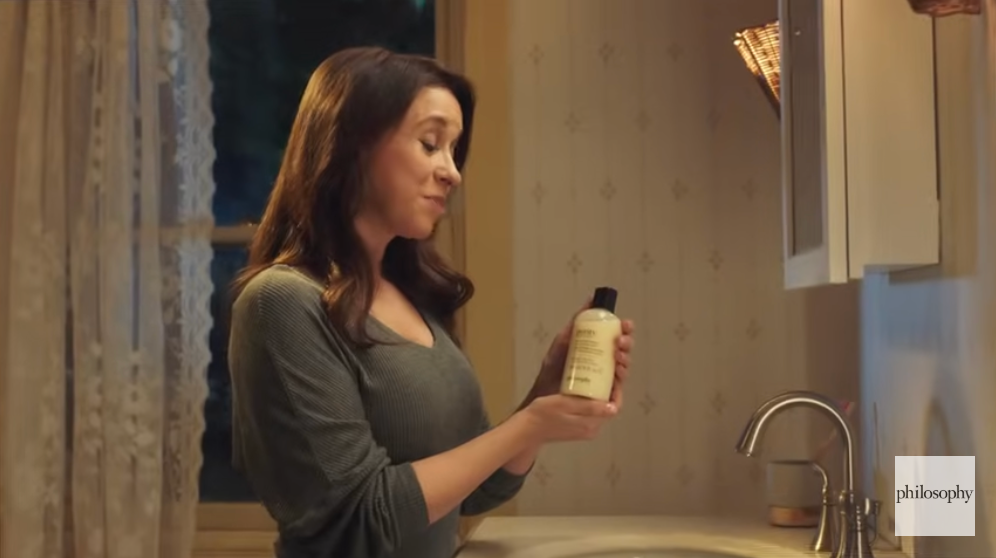
The emotional angle matched the product category. Skincare as ritual, reliability, and self-care feels natural. The tone felt warm and self-aware, which lowered resistance and made the message memorable. That made it powerful for:
- lapsed customers who once used Purity
- millennials re-entering skincare with different needs
- multi-generational buyers shopping for themselves or others
By casting Purity as the dependable relationship, the campaign removed the pressure to discover, upgrade, or experiment. The purchase felt dependable and reassuring under pressure.
That also explains why the celebrity choice worked. Lacey Chabert was recognizable, consistent, and emotionally adjacent to the audience’s past. And the nostalgia reinforced trust.
What smaller brands can adapt: You do not need a celebrity. You don’t need a rom-com budget. You need emotional clarity. Position the product as a dependable part of someone’s routine and life. Use narrative to reinforce product value, not distract from it.
Lush
Angle: Indulgence and experience
Lush launched limited-edition Valentine’s products that leaned fully into sensory indulgence. Heart-shaped bath bombs, chocolate-scented shower gels, playful names. The products felt temporary, fun, and experience-driven.
They supported the launch with in-store moments and social content that showed usage, not perfection.
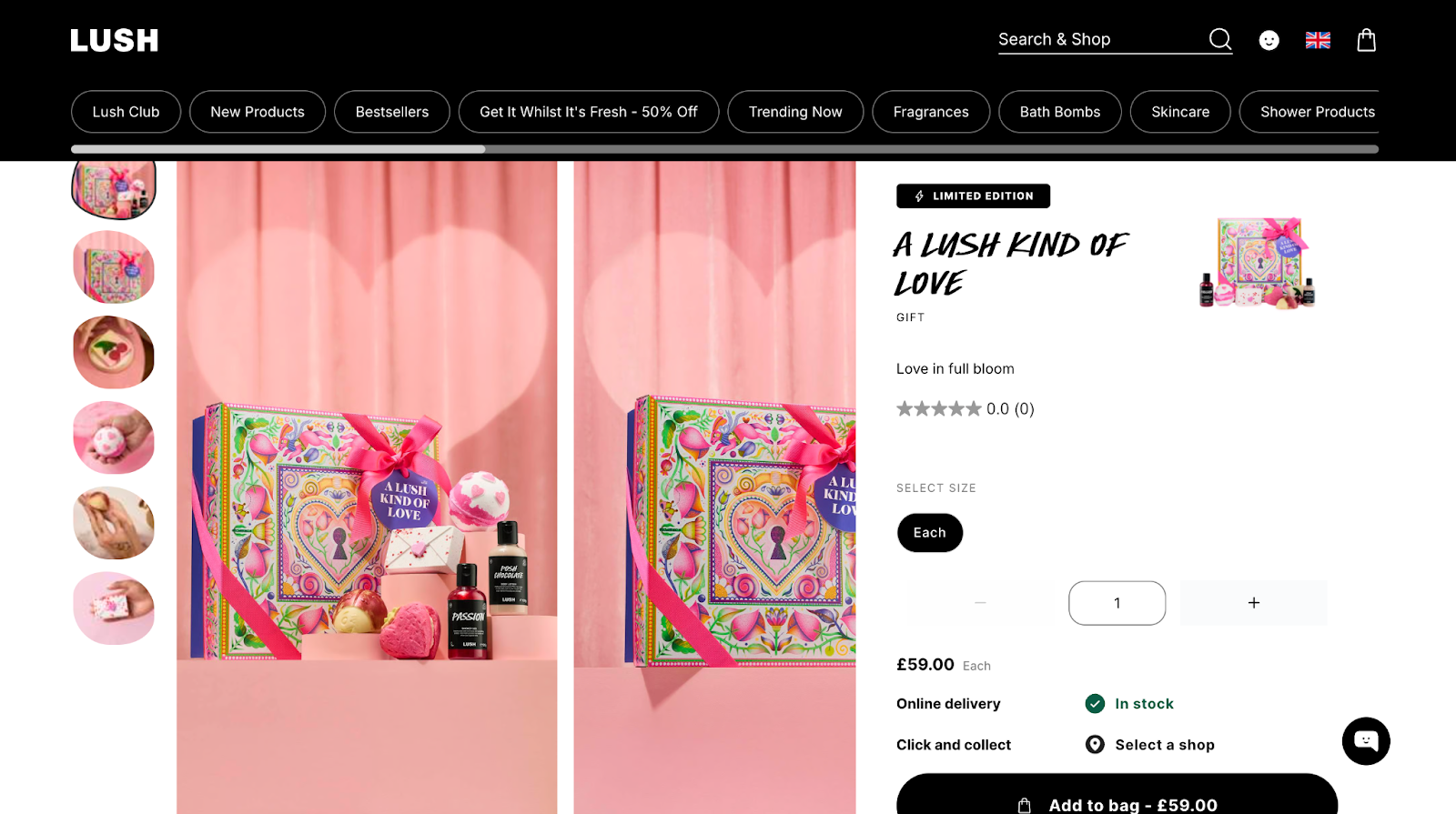
The campaign makes Valentine’s Day feel experiential. Customers are buying a moment. The limited nature of the products adds urgency without aggressive messaging.
To differentiate from traditional, cliché Valentine's gifts, Lush often introduces unconventional, cheeky products, such as eggplant and peach-shaped soaps or products that play on romance and sensuality.
What smaller brands can adapt: One seasonal twist, a limited scent, a special format, or playful naming can turn an existing product into a Valentine’s moment. Focus on experience over expansion.
Lookfantastic
Angle: Gifting made easy
Lookfantastic released a Valentine’s beauty edit, a curated box positioned as a ready-made gift. The value was obvious, the packaging felt intentional, and the messaging focused on removing choice overload.
The campaign emphasized convenience and perceived value over romance-heavy storytelling.
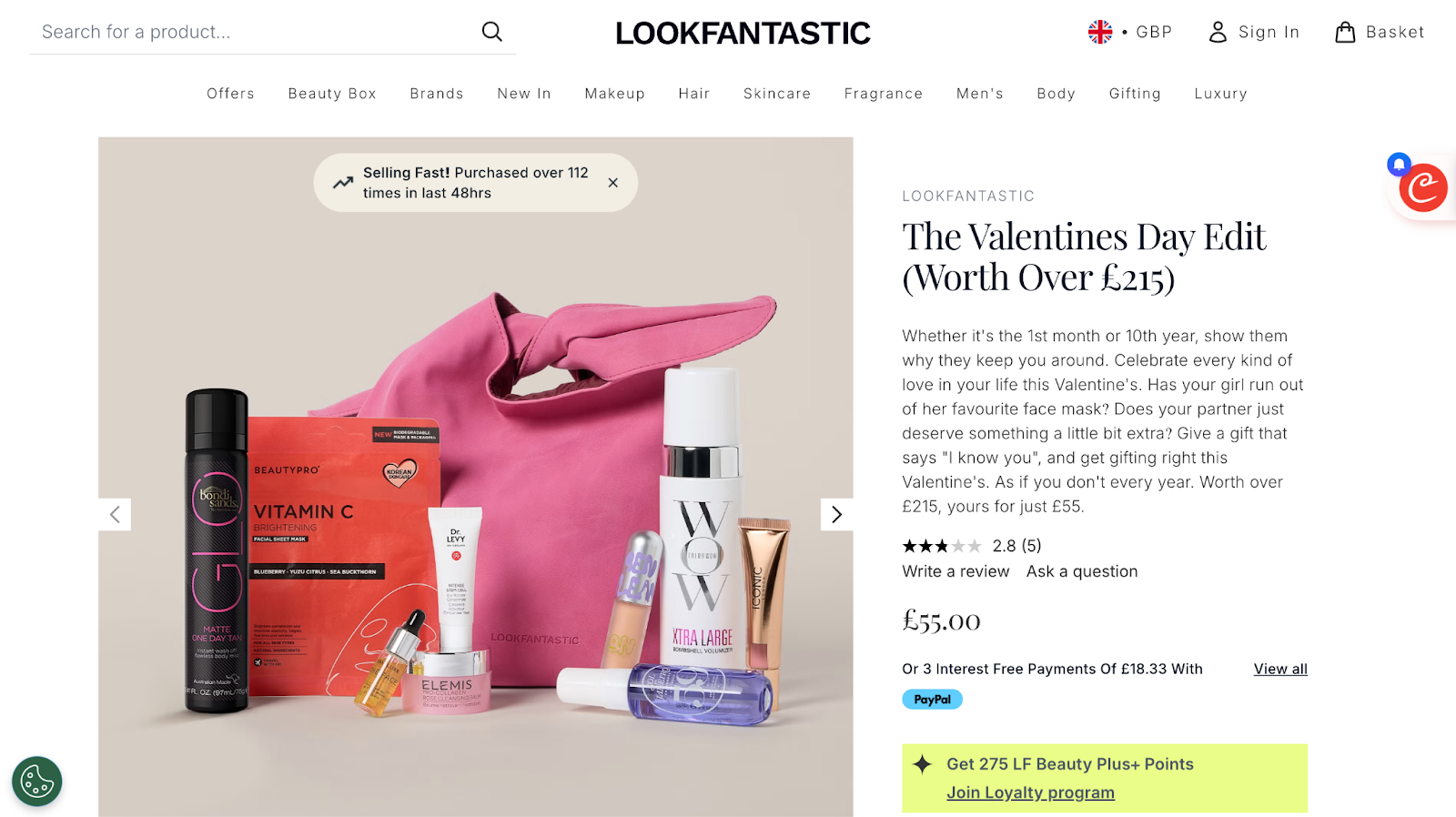
Valentine’s Day creates decision fatigue. This campaign solved that problem directly. One box, clear value, minimal effort for the buyer.
What smaller brands can adapt: Curation is powerful. A single well-thought-out bundle that answers “What should I get?” can outperform multiple product pushes.
Related Articles
• Valentine’s Day Marketing Ideas: Campaign Examples and 20 Tips for 2026
• 16 Valentine’s Day Social Media Post Ideas to Conquer Shopper’s Hearts (and Carts)
• Valentine’s Day Email Marketing: Creative Ideas + Subject Lines That Get Opens
• 11 Valentine’s Day Giveaway Ideas to Make Your Brand the Talk of the Holiday
Conclusion
Valentine’s Day marketing works when beauty brands stop trying to impress and start trying to decide. The strongest campaigns feel intentional because they are. One clear direction, one reason to care, and one story carried without deviation from first touch to checkout.
When campaigns fall short, it’s rarely about effort or aesthetics. It’s about drift. Messages shift, offers blur, and the emotional thread gets lost halfway through execution.
Use this framework as a checkpoint before anything goes live. If the campaign feels clear in a sentence, easy to explain internally, and unified across channels, you’re set up to win attention and conversions in a crowded February calendar.
And if the strategy only works when everything is pink and romantic, it probably needs another look.
[[cta5]]



.avif)

.avif)