%20(1).jpg)


.jpg)
In this article
For most product creators, Kickstarter is the stronger starting point, unless your product is a tech gadget, e-bike, or concept-stage idea where Indiegogo has the edge.
The decision usually comes down to your product category, how developed your product is, and whether you need the structure of all-or-nothing funding or the flexibility to raise funds as you go.
Not every campaign fits that default, and choosing the wrong platform can directly impact your results.
No two crowdfunding websites were created equal, but Kickstarter and Indiegogo have certainly risen to the top. These 2 are streets ahead of the thousands of other active and popular crowdfunding platforms with different funding models currently littering the web.
You can find all sorts of creative projects on both platforms, and depending on the kind of product you’re planning on launching, you may opt for one or the other. However, each has its positives and negatives.
Read on to discover how they rank according to the 17 factors we’ve analyzed. From their page builders to the maximum duration of the campaigns, their analytics, platform fee, and much more. Buckle up, and let’s start the battle of Indiegogo vs Kickstarter.
Key Takeaways
- Kickstarter is the larger platform. It attracts significantly more traffic and has raised over $8B from more than 23 million backers, giving campaigns greater exposure potential.
- Success rates differ sharply. Around 37-44% of Kickstarter campaigns succeed, while estimates place Indiegogo’s success rate closer to ~18-30%, largely due to its more flexible approval process.
- Different product categories perform best on each platform. Kickstarter tends to dominate design-driven products, creative projects, and premium hardware, while Indiegogo often attracts consumer gadgets and mobility tech.
- Kickstarter’s ecosystem is larger and more media-visible. Campaigns on Kickstarter are more likely to receive press coverage and organic platform traffic.
In case you're in an absolute hurry, I've also created a summary table so you can get the overall image. But I can't promise that you'll understand all the whats and whys. That's why I highly encourage you to read all the sections as there is so much to learn about before you can choose between Kickstarter and Indiegogo.
What Won’t Work on Indiegogo and Kickstarter?
Let’s start by discussing some similarities between Indiegogo and Kickstarter.
Generally speaking, both platforms are not suitable for:
- Software or apps:
Crowdfunding backers tend to favor tangible products they can see, understand, and receive. Software on its own is harder to communicate and less compelling in a campaign format.
That said, software can still work when it’s part of a broader product:
- Paired with hardware, like a device with a companion app
- Backed by a clear demo, prototype, or working beta
- Supported by proof, early users, roadmap, or traction
In these cases, the software becomes part of a complete product experience, not the entire pitch.
- B2B products:
B2B products also don’t work well with crowdfunding audiences, especially when the value is tied to operations or niche workflows. Your product has to be designed for consumers.
- Get rich quick, make money, or MLM.
Both Indiegogo and Kickstarter backers look for innovative, cool products for themselves. They are not interested in making money by promoting your products or participating in schemes that will make them richer.
Which Categories Do Well on Indiegogo and Kickstarter?
Historically, loyal backers of both Kickstarter and Indiegogo grew around distinct differences in the preferred products they love to back the most.
For example, Kickstarter is famous for its tech innovation category. This crowdfunding category is so famous on Kickstarter that it adds up to almost three quarters of the total raised funds on the platform.
Indiegogo’s category performance has shifted in recent years. Today, a large share of top-performing campaigns comes from tabletop projects via Gamefound, which now plays a major role in the platform’s ecosystem. At the same time, categories like electric bikes and consumer gadgets continue to perform well, especially in the mid-range funding tier.
You could say that one of the biggest differences between Kickstarter and Indiegogo is the preferences of their users. In general, Kickstarter backers are design lovers, and Indiegogo’s audience is full of functionality lovers. Products that fit into the categories of interior, wearables, travel, and photography do considerably better on Kickstarter. While product categories such as SSDs, home automation, laptops, and gadgets do better on Indiegogo.
Indiegogo’s audience is more sensitive to the price and generally loves to get highly capable gadgets affordably priced. On Kickstarter, people can afford to spend a bit more to get the best products as long as they stand out from their competitors and have great functionality and aesthetic design.
Before we compare Kickstarter vs Indiegogo, let’s discuss each platform individually.
Indiegogo
Indiegogo is a global crowdfunding platform founded in 2008 that allows creators, startups, and businesses to raise money for physical products such as technology, design, and consumer goods.
Campaigns on Indiegogo operate on a fixed funding model, meaning funds are only collected if the campaign reaches its goal. Backers pledge money in exchange for rewards, typically early access to the product being developed.
The platform has hosted hundreds of thousands of campaigns and built a global community of millions of backers.
Initially focused exclusively on independent films (hence the name), Indiegogo started accepting projects from any category a year after its launch. Established to provide more opportunities to backers than Kickstarter, Indiegogo is usually perceived as a less strict platform.
The platform is used by creators around the world and supports campaigns across multiple categories, with a strong focus on tech, gadgets, and innovation-driven products.
The digital world puts Indiegogo’s success rate somewhere around ~18-30%.
From a mechanics standpoint, Indiegogo collects payments after a campaign ends and only if the funding goal is reached, with a short collection window where failed payments are retried and finalized.
Indiegogo also entered a new leadership phase recently. Julie dePontbriand became CEO in October 2024, with a strategy focused on strengthening creator support, improving campaign guidance, and building a more engaged global crowdfunding community.
Indiegogo’s positioning has evolved following its 2025 integration with Gamefound. A large share of top-performing campaigns now comes from tabletop projects driven by Gamefound, which has significantly shifted the platform’s category distribution.
Kickstarter
Kickstarter is a crowdfunding platform founded in 2009 to help creators fund creative projects such as films, games, design products, and technology. The platform uses an all-or-nothing funding model, meaning creators only receive funds if the campaign reaches its goal.
Since launch, Kickstarter campaigns have raised over $8 billion from more than 23 million backers, making it the largest rewards-based crowdfunding platform globally.
So, chances are you’ve heard about Kickstarter. If you’re going with this option for fundraising, you probably have a pretty good handle on this platform’s basic pros and cons, but to be thorough, let’s cover all our bases and start at the beginning.
Kickstarter’s biggest strength is its ecosystem. The platform combines high traffic, strong backer trust, and consistent media visibility, which creates real momentum for campaigns that gain early traction.
Kickstarter has also been evolving its product ecosystem in recent years. Since Everette Taylor became CEO in 2022, the company has accelerated product development, introducing features such as Late Pledge and the native Pledge Manager, part of a broader push toward building a more complete all-in-one platform for creators.
That said, Kickstarter’s structure comes with pressure. Around 37-44% of campaigns reach their funding goal, which means most projects don’t succeed. The all-or-nothing model increases risk, but it also strengthens backer confidence and drives higher commitment when campaigns gain traction.
But don’t get disheartened. Kickstarter still has a few aces up its sleeve.
With a reputation for launching whacky, innovative, and downright marvelous ideas, Kickstarter gets a fair bit of coverage from the media and bloggers. One well-placed article could win you a place in that top 37%.
Indiegogo vs Kickstarter: Let's get the real battle started!
Now that you know about each crowdfunding platform, let’s compare Kickstarter vs Indiegogo on another level.
Rather than rattle off a list, our clever infographics guys whipped up a table to help you distinguish the differences between the two. As a successful crowdfunding marketing expert, I have made a comparison chart and marked my preferences in the boxes in green.
Of course, I’m going to rattle off a list! How else will you determine which crowdfunding platform is right for your venture?
1. Project Registration
If you're choosing between the two platforms based on ease of entry, the difference is clear:
Kickstarter is stricter. Indiegogo is more flexible. Both limit where creators can launch from.
Kickstarter applies a manual review process and enforces tighter rules around what qualifies as a valid project. Indiegogo is more permissive, both in terms of project types and approval standards, which makes it easier to get started.
Both platforms also restrict creator eligibility by country. If you're outside their supported regions, you’ll need a workaround like setting up a legal entity in an eligible country.
What this means in practice
Kickstarter expects:
- A clearly defined project with a tangible outcome
- A working prototype for most hardware campaigns
- Compliance with strict category and content rules
Indiegogo allows:
- A broader range of campaign types
- More flexibility in approval
- Fewer restrictions around prototypes and project structure
Key difference
- Kickstarter filters heavily before launch, which improves overall platform quality and trust
- Indiegogo lowers the barrier to entry, which gives creators more flexibility but also leads to more variation in campaign quality
Either way, the 2 crowdfunding platforms tie in their registration capabilities or restrictions.
One point each!
2. Page Builder
Indiegogo and Kickstarter campaign pages may look similar at first glance, but the way you build them is quite different.
Kickstarter keeps things structured and simple. Its editor supports standard content blocks like headings, paragraphs, images, videos, and lists, but offers very limited control over layout and styling. You’re working within a fixed format, which keeps pages clean and consistent, but limits customization.
Indiegogo gives you more flexibility. You can adjust formatting more freely, add richer layouts, and even use basic HTML if needed. This allows for more creative control, especially if you want to design a more custom-looking campaign page.
That flexibility extends to other elements as well. Indiegogo allows images within perks and more control over how content is displayed across the page, while Kickstarter follows a more standardized structure for rewards and content blocks.
The same pattern applies to updates. Kickstarter keeps things minimal and straightforward, while Indiegogo offers more formatting options and customization.
Indiegogo wins this one.
3. Video Hosting
Another big difference in the Indiegogo vs Kickstarter battle is video hosting. Kickstarter uses its video hosting service, and Indiegogo uses YouTube and Vimeo.
While there are pros and cons to having your video hosting service, one thing is certain — YouTube is the second biggest search engine. It provides great marketing opportunities for small and large businesses to attract new users. So that’s two birds with one stone since more views on your YouTube video mean higher rankings on YouTube while your campaign runs on Indiegogo. As a result, your success rate increases.
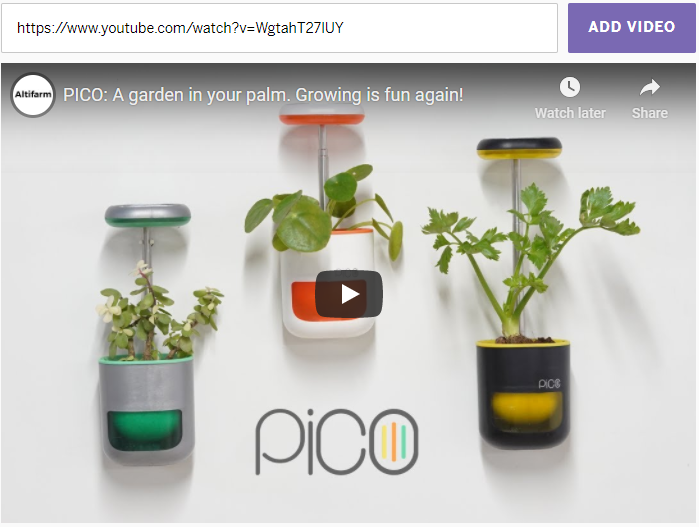

If you have an audience, who will share your video and comment like crazy, then even better. If not, it might be worth asking everyone you know to comment on your video because Indiegogo will show off all those interactions on your crowdfunding page, and no comments are hardly an incentive for backers.
Here’s a formula for creating the best Kickstarter (or Indiegogo) videos.
This point goes to Indiegogo, hands down!
4. Rewards & Pledges
Indiegogo limits campaigns to 20 reward tiers, while Kickstarter allows more flexibility in how many tiers you can create. In practice, 20 tiers is usually enough, but Kickstarter gives you more room if you want to build a more complex pricing structure.
Both platforms support add-ons, allowing backers to customize their orders and increase average order value. This is now a standard part of how campaigns are structured.
One key difference is how private or targeted offers are handled. Kickstarter does not support private perks natively. Indiegogo previously offered “Secret Perks,” but this has been replaced with a more structured system based on user groups and controlled product visibility. Creators can grant access to specific reward tiers for selected audiences, such as email subscribers or early supporters.
Where Indiegogo still stands out is flexibility during the campaign. You have more control over adjusting reward structures, visibility, and offers while the campaign is live. Kickstarter is more rigid once the campaign launches, with fewer options to make structural changes.
1 more point to the pink giant!
[BONUS LEARNING] How to create better rewards on Kickstarter and Indiegogo.
5. Updates & Messaging
Keeping in touch with your backers is one of crowdfunding’s most important factors. Compared to typical ecommerce, this differentiating feature is one of the things that brings superbackers back time and again.
This connection is generally managed through updates, publicly displayed on the crowdfunding page, messages, and comments.
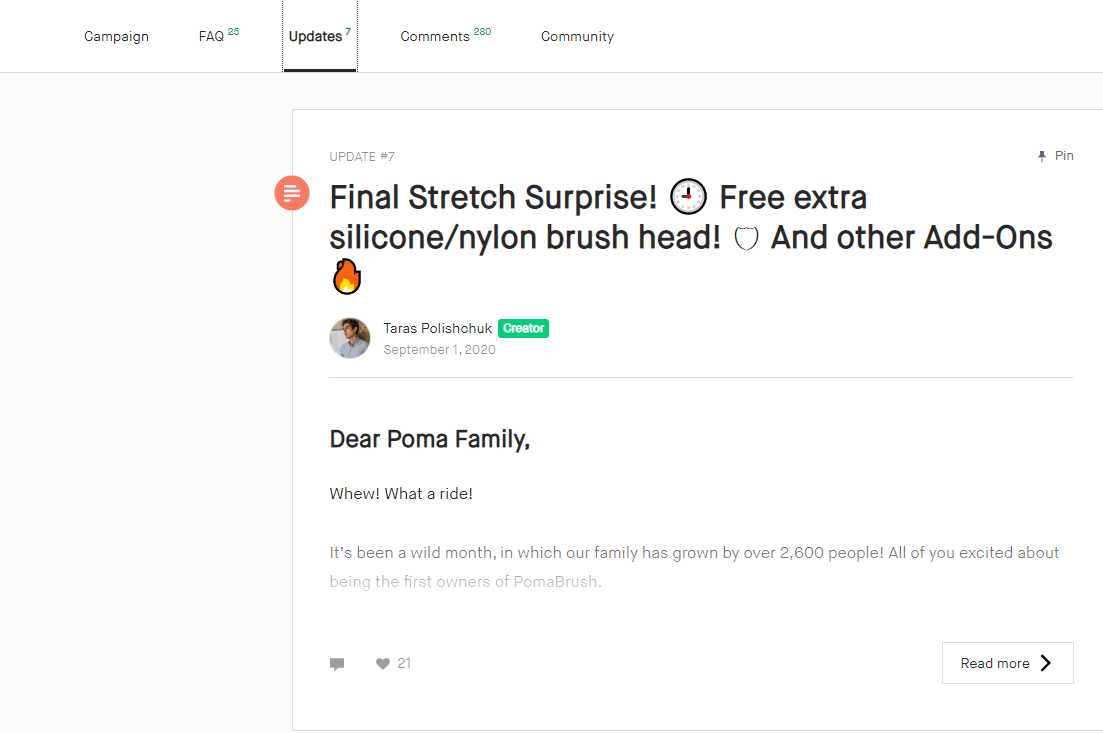

Both crowdfunding platforms offer the same features, but Kickstarter has several cards up its sleeve. With Kickstarter, you can save your updates as drafts and return them later. And when you send out messages (i.e., emails), they’re not sent for 30 minutes. This might sound like a disadvantage, but it’s really not. How many times have you pressed send, only to realize you misspelled your product’s primary benefit? Or have the old, more affordable price listed? Oh no!
With Indiegogo, on the other hand, emails are sent immediately. And there’s no way to save your updates as a draft. Sure, you could just save them in Google Docs and copy them when they’re ready, but we appreciate this added functionality.
Edit it, format it just right, and send it out whenever you’re ready. Just like we’re sending out our first point Kickstarter’s way!
It’s just as well that we gave Kickstarter the point!
6. Number of Campaign Days
Both platforms allow you to run campaigns between 1 and 60 days long. However, both platforms recommend keeping your campaign length below 30-40 days. The longer it goes, the less urgency your backers feel.
Another similarity between Indiegogo and Kickstarter is the ability to extend your campaign length. Although you can’t surpass 60 days from launch, if you started with a 30-day campaign and realized you wouldn’t be hitting your goals on day 29, you’ll be able to extend your campaign’s deadline.
With Indiegogo, you can extend your campaign only 1 time for a maximum of 15 days. Once you extend your campaign deadline, you won’t be able to extend it again, i.e., if you add 7 days to your project, you won’t be able to add another 7 later.
Kickstarter also allows extensions in some cases, but they are not guaranteed and typically require approval. Plus, extensions are only provided during the last week of your campaign.
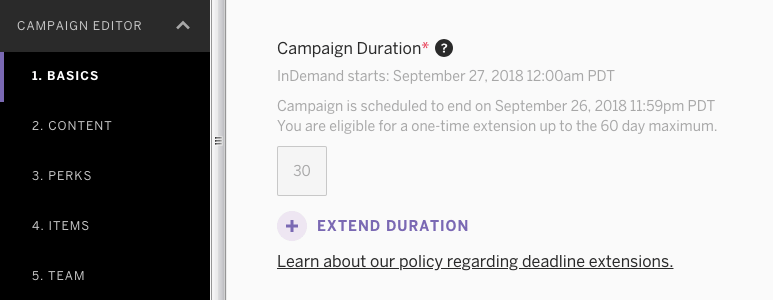
You can only do this once both on Kickstarter and Indiegogo, so use your chance wisely.
It’s a tie! One point to each.
7. Unique Monthly Visits
Unique monthly visits give you a sense of how much traffic each platform attracts, and on the surface, more traffic means more potential backers.
Kickstarter consistently draws significantly more visitors, with estimates ranging around 15-20M+ monthly visits, compared to ~6-8M for Indiegogo.
But raw traffic doesn’t tell the full story.
Each platform attracts different types of backers and performs better in certain categories. Kickstarter has a stronger, more active backer ecosystem overall, especially in high-performing categories like technology, design, and games. Indiegogo’s traffic is smaller and more fragmented, with performance often concentrated in specific niches.
More importantly, most successful campaigns don’t rely on platform traffic alone. Pre-launch audience, email lists, and external marketing play a much bigger role in driving results.
At the end of the day, however, Kickstarter’s massive organic traffic can help your campaign get going. And if you get a little popular, Kickstarter will start featuring you higher and higher in its search results, bringing you thousands of new potential superbackers looking for the next best thing.
Kickstarter wins in most cases. Point taken!
8. Media & Outreach
Similarly, the media loves Kickstarter, so it does get way more coverage than Indiegogo.
The reason for this infatuation is Kickstarter’s strict quality-controlled image. They deliver higher quality products, so journalists don’t have to wade through campaign after campaign rubbish to find a story.
This means that on Kickstarter, your campaign has more opportunities to garner press coverage (discover some tools that will ease your work during your Crowdfunding PR efforts). If you’re doing PR, your project also stands more chances of getting a positive response and brand recognition from journalists if it’s on Kickstarter.
Big advantage. And one point to Kickstarter.
9. Remarketing
Remarketing is one of the most important tools for converting interested visitors into backers, especially during a crowdfunding campaign.
Both platforms now support Meta Pixel integration, allowing you to track visitor behavior and build retargeting audiences. This makes it possible to run follow-up campaigns and optimize performance based on real user data.
Indiegogo offers slightly more flexibility in how tracking is implemented, giving creators more control over audience building and campaign optimization.
Kickstarter advertising has introduced Meta Pixel support as well, but the setup and data access are more structured. You can track performance and build audiences, but you’re still operating within Kickstarter’s ecosystem rather than fully controlling the environment.
Seems this battle ends in a tie.
10. Analytics Dashboard
Understanding where your backers come from is critical for optimizing your campaign while it’s live.
Kickstarter’s dashboard is built around clear attribution. One of its most valuable features is the referral system, which lets you track exactly where your backers are coming from, whether it’s paid ads, email campaigns, or organic discovery on the platform. This makes it easier to identify what’s working and scale it quickly.
Indiegogo also provides campaign analytics and allows integration with tools like Google Analytics, giving you more flexibility to track performance externally and monitor traffic in real time.
The difference comes down to how data is structured. Kickstarter makes attribution easier to read and act on within the platform, while Indiegogo gives you more flexibility if you prefer managing analytics through external tools.
Nevertheless, Kickstarter wins this point.
11. Backer Information
Access to backer data plays a big role in how you manage relationships during and after your campaign.
Indiegogo gives creators access to backer contact information as soon as a pledge is made. This makes it easier to build your own audience, follow up directly, and use that data for remarketing or future launches.
Kickstarter is more restrictive. While you can communicate with backers through the platform, full access to contact details typically comes after the campaign ends, when you collect information through surveys and fulfillment tools.
Point to Indiegogo!
12. Customer Support
Both Kickstarter and Indiegogo have advanced FAQs.
Any problem or question you might have during the launch of your crowdfunding campaign or running it is presented in detail on both platforms. And you don’t even have to be logged in to pass on your question to one of their agents. You can easily get your question answered as a guest.
However, none has got 24/7 or telephone support. This often leaves both backers and campaigners on their own in case of urgent questions.
However, Indiegogo is usually better when you get an answer. Kickstarter is happy just copy-pasting sections of their guidelines in their first few responses without really analyzing your request as an individual.
Really, they both need to wake up and start doing a better job at responding to their backers and creators.
They’re both equally bad at this.
13. Funding Scheme
Kickstarter uses an all-or-nothing funding model. If your project doesn’t reach its goal, backers are not charged and no funds are collected.
Indiegogo now operates on the same fixed funding model for new campaigns. Projects must reach their funding goal for payments to be successfully collected.
This brings both platforms in line on the core funding structure. The difference now lies in how payments, cash flow, and post-campaign sales are handled, not in the funding model itself.
Indiegogo may also hold or structure payouts over time based on compliance checks, risk assessment, and operational readiness, which can affect how quickly you access funds.
From a backer perspective, the fixed funding model reduces risk, since campaigns only proceed if they reach their target.
Result: It’s a tie.
14. Platform Fees
Both Kickstarter and Indiegogo charge a 5% platform fee on the total funds raised.
On top of that, both platforms apply payment processing fees, which typically range between 3-5%, depending on the payment method and region.
Indiegogo may also hold a portion of funds in reserve in some cases, releasing it later based on delivery progress. This isn’t an additional cost, but it can affect short-term cash flow.
Overall, the cost structure between the two platforms is very similar.
It’s a tie!
15. Payment Processing
Kickstarter and Indiegogo both use modern payment infrastructure, but they no longer operate identically under the hood.
Kickstarter processes payments through Stripe. Backers are charged only after the campaign ends and only if the funding goal is reached. This creates a gap between pledged and collected revenue, with failed payments typically reducing the final amount by around 5–10%.
Indiegogo now uses Adyen for newer campaigns, supporting a wider range of global payment methods. Backers are generally charged after a successful campaign, although some payment methods may be processed earlier and held until completion. Payments can continue to be collected for up to ~15 days after the campaign ends, which means the final amount may still change.
Both platforms support installment-style payments for higher-priced rewards. Kickstarter offers Pay Over Time, splitting eligible pledges into four payments after the campaign ends. Indiegogo offers Stretch Pay, allowing creators to define installment structures, with payments collected over time.
The key difference is how funds are collected and released. Kickstarter delivers payouts after the campaign ends, while Indiegogo uses a rolling payout system with weekly transfers, retries, and potential delays based on compliance or risk checks.
The point goes to Indiegogo.
16. Post-Campaign Features
Post-campaign functionality has evolved significantly on both platforms, and the gap between them is much smaller than it used to be.
Indiegogo is built around a structured lifecycle. After a campaign ends, it transitions into Late Pledge, where creators can continue accepting orders. This phase connects directly to Pledge Manager, where backers finalize orders, select add-ons, confirm shipping details, and complete remaining payments. The entire flow, from fundraising to fulfillment, operates within a single system.
Kickstarter introduced Late Pledge in April 2024 and later added a native Pledge Manager. Creators can now continue collecting pledges on the same campaign page and manage post-campaign steps like surveys, add-ons, and order details directly on the platform.
The difference comes down to how each platform handles the order flow after the campaign ends.
On Indiegogo, the campaign acts as the first step. Backers commit during the campaign, but the full order is usually completed later through Pledge Manager, where shipping, taxes, add-ons, and upgrades are finalized. This creates a two-step system that allows for more upsells and revenue after the campaign ends.
On Kickstarter, the process is more straightforward. Backers pledge during the campaign, and post-campaign tools are used mainly to collect details like shipping and preferences. The system is simpler and more linear, with fewer layers built around post-campaign monetization.
Indiegogo vs Kickstarter: Final Scores
If you’re keeping score, Indiegogo comes out slightly ahead on features.
But feature count doesn’t equal campaign success.
When you zoom out and look at what actually drives results, traffic, conversion, trust, and visibility, Kickstarter has the stronger ecosystem. More backers, more media coverage, and higher success rates all stack in its favor.
Indiegogo wins on flexibility. You get more control over your campaign, earlier access to funds, and the ability to keep selling long after your campaign ends. That can be valuable in specific scenarios, especially when cash flow or long-term preorders matter.
So the real question isn’t who “won” the comparison. It’s which platform fits your launch strategy.
Which Should You Choose?
Choose Kickstarter if:
- You need a clear yes or no outcome before committing to production
- Your costs depend on hitting a minimum funding threshold
- Your campaign is locked before launch, pricing, perks, positioning are set
- You’re building something that benefits from strong backer trust and commitment
Choose Indiegogo if:
- You can move forward with production even if you don’t hit your full goal
- You need cash coming in during the campaign, not after
- You expect to adjust your offer while the campaign is live
- You’re comfortable running a campaign with more flexibility and less structure
For most consumer product launches, Kickstarter is still the default choice.
Indiegogo becomes a strong option when flexibility, cash flow, or extended sales cycles matter more than platform-driven momentum.
Pick based on how you plan to launch, not just what features look better on paper.
[BONUS SECTION] Top 250 Indiegogo vs Kickstarter Projects Compared
We analyzed the top 250 projects across both platforms using the latest available data (2026). The gap is hard to ignore, although some figures may shift as late pledges continue to process.
Kickstarter dominates in total funding and $1M+ campaigns. Indiegogo’s results are more concentrated in specific niches.
Key Takeaways
- Kickstarter raised ~$400M, about 2.3x more than Indiegogo’s ~$171M
- 99 Kickstarter projects crossed $1M vs 43 on Indiegogo
- Kickstarter is heavily driven by tech hardware (68%)
- Indiegogo is now strongly influenced by Gamefound’s tabletop ecosystem
Quick Comparison
What’s Driving the Numbers
Kickstarter’s growth comes from high-ticket, scalable hardware. Campaigns like eufyMake E1 ($46M) and Snapmaker U1 ($20.6M) show how far a strong product plus demand generation can go.
Indiegogo tells a different story. A large share of top campaigns now comes from tabletop projects via Gamefound, including titles like The Witcher: Legacy ($11.29M). Outside of that, performance drops off quickly. Tech accounts for only about 15.6% of funding, and most other categories barely register.
Important Context
Gamefound acquired Indiegogo in 2025, and its projects are now displayed on the platform. That shifts category distribution and makes direct comparisons less clean than before.
Some campaigns are still collecting late pledges, so totals may change slightly.
FAQ
Is Kickstarter better than Indiegogo?
For most consumer product launches, yes. Kickstarter has higher traffic, stronger backer trust, and better conversion potential. Indiegogo works better in specific cases where flexibility or early cash flow matters.
Can you launch on both Kickstarter and Indiegogo?
Not at the same time. Creators typically choose one platform for the main launch. With features like Late Pledge on Kickstarter, there’s no longer a need to move to another platform to keep collecting orders after the campaign ends.
Which platform has a higher success rate?
Kickstarter. Around 37-44% of campaigns reach their goal, while Indiegogo is estimated closer to 18-30%.
Does Indiegogo let you keep the money if you don’t hit your goal?
Yes. With flexible funding, you keep the funds even if you miss your target. Kickstarter only releases funds if you reach your goal.
Which platform is better for tech products?
It depends on positioning. Premium, design-led tech tends to perform better on Kickstarter. More functional, price-driven gadgets often do well on Indiegogo.
When do you get paid on Kickstarter vs Indiegogo?
Kickstarter pays out after the campaign ends and only if the goal is reached. Indiegogo charges backers immediately and provides earlier access to funds.
Is Indiegogo riskier for backers?
Slightly. Flexible funding means campaigns can proceed without hitting their goal, which can increase execution risk compared to Kickstarter’s all-or-nothing model.
[[cta2]]



.avif)

.avif)


.jpg)
%20(1).png)