

In this article
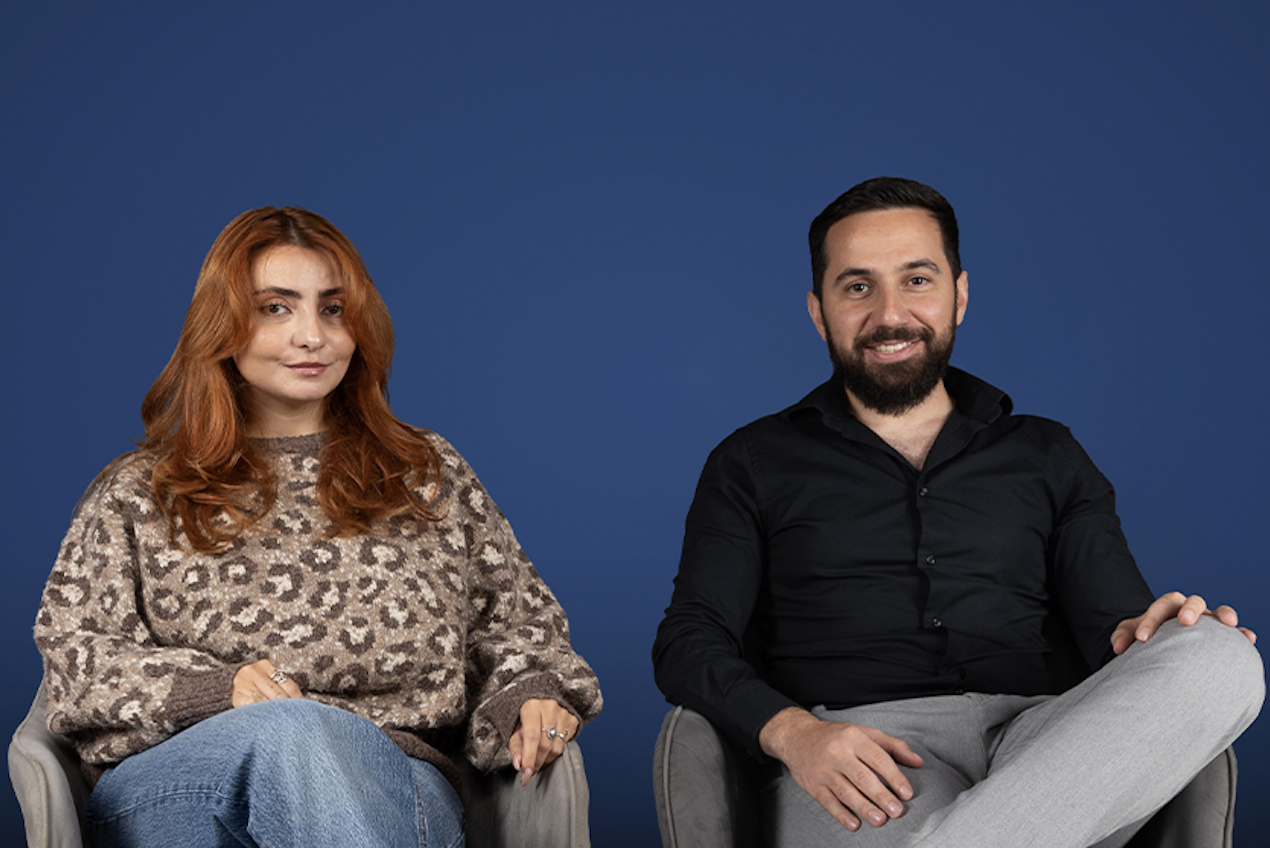
Crowdfunding has hit a turning point, and few people have seen that shift up close the way Norayr has. With more than seven years in the industry and over 53 million dollars raised across the campaigns he has managed, he has worked with early-stage founders building their first audience and established brands looking to scale. His experience spans the full journey, from shaping product stories to guiding companies through complex launch cycles.
Now serving as COO at TCF, Norayr leads both the crowdfunding and ecommerce directions of the company. In this interview, he sits down with me to reflect on what the past years have taught him and to walk through the shifts he sees unfolding across space.
Jasmine: How has AI changed the way crowdfunding campaigns are marketed today compared to a few years ago?
Norayr: It changed a lot. The biggest shift is on Meta. Previously backer-oriented targeting was the best performing option, but that has already shifted. Meta now prefers AI-driven targeting, and tools like Advantage Plus are becoming more popular because the platform itself pushes advertisers to use its suggestions and AI features. So in terms of targeting, things have changed quite a lot.
AI also affected overall campaign preparation and execution. There are many tools now that help companies get better prepared by using AI functionalities. It shortens the time it takes to understand and reach your audiences. We use many solutions at TCF that open possibilities we simply didn’t have before. In the past it was impossible to reach that many people or process that much information with the resources available. AI made those parts of the workflow achievable.
Jasmine: How do crowdfunding agencies use AI in their campaign workflow today, and which parts of the process benefit the most from it?
Norayr: One of the biggest changes is in how we handle leads. We have AI agents that analyze each person’s survey and write personalized emails for every single lead. We reach out based on their specific request or concern and convert them one by one. Previously this was impossible. If you had thousands or even ten thousand leads, the only option was bulk emails. Now we can go fully one to one because AI handles the heavy part.
The same applies to PR. For each campaign we might get 200 to 300 media coverages. Reading all those articles, understanding how each journalist positioned the product, identifying the best angles, seeing what could be used in ads, all of that was extremely time consuming. No human could realistically review everything. Now we have AI that analyzes the coverage and surfaces the strongest positionings, and it improves our ad performance even further.
Overall we use AI in basically every direction where the work would require a large team to handle manually. Sometimes twenty people would need to do what AI can now help with. It lets us scale faster and go into directions that were previously out of reach simply because they took too much time. AI gives us the opportunity to do those things while keeping our human team focused on the activities that matter most.
Jasmine: Is there a real possibility that AI could replace crowdfunding agencies or specialists?
Norayr: I don’t think so. AI is evolving fast, and many activities can already be handled by it, but we’re not at a point where it can replace teams. The human being is still the quality. AI can create a strategy that sounds good, but without human experience behind it, you can’t understand which idea is actually good and which one isn’t. Maybe in a year, maybe in two years or five years it might be different, but right now it’s not there.
Everything we use in terms of automations and AI agents helps us go in directions that humans were unable to go before. No one can write ten thousand individual emails in a month. AI makes that deeper approach possible. But it’s not replacing our sales specialists or email team, it’s enhancing what they can do.
The same applies to PR. AI allows us to quickly analyze hundreds of media placements and extract the strongest angles and positioning, something that wasn’t realistically possible at scale before.
It’s the same with pre-launch. On Prelaunch.com we use a lot of AI tools to process very large amounts of data and produce actionable summaries that previously required several analysts.
AI is changing every industry, and marketing is one of the areas where it has the biggest impact. But instead of replacing people, it’s making our work more interesting. I always tell our team that AI gives them the time to concentrate on what matters most, instead of the technical or mechanical parts of the job. AI can take those parts, but the important work still depends on humans.
Jasmine: Where does AI still fall short when supporting or executing crowdfunding campaigns?
Norayr: In most executions you can’t rely on it 100 percent. For writing it’s good, and everyone uses AI to create texts for ads or emails, but for something like a full Kickstarter page it’s impossible. You can use AI as a helper, but you can’t tailor everything with it. It’s never perfect, and you always need to adjust the output.
AI also has hallucinations in almost all directions, so you can’t fully trust every answer it gives. It’s getting better with each model, and we see significant improvement every time, but I can’t say when it will reach a point where it can work autonomously. For major tasks we still don’t use it, because human experience is too valuable.
A lot also depends on how you use AI. If you write a weak prompt, you get a weak answer. It can come up with strategy ideas that you might take notes from, but it can’t create a complete strategy. The same with copy. It can write interesting text, but you always need to tailor it.
On the visual content side it’s the same story. We use AI a lot because it directly reduces costs for our partners. What used to require expensive product shoots can now be done much more efficiently. You can put a product into whatever environment you want and get realistic images or videos. But it’s still not 100 percent. The models are improving and we watch that closely, but they still fail in places.
And overall, I would say literally everything still needs human touch. There is no role right now that can be fully replaced. Even in sales, where we use many automations, humans still check and guide the process. The current world is not at a stage where AI can replace any direction entirely. We use these tools to get better results, but the quality still depends on people.
Jasmine: What skills do crowdfunding marketers need now that AI is involved in every stage of campaign work?
Norayr: The standard skills are still the most important. Creativity, understanding market research, coming up with hypotheses, implementing strategies, managing the activities, analyzing the results, all of that stays the foundation. AI helps at every stage, but it doesn’t replace those core abilities.
At the same time, we try to make our team as AI-friendly as possible. You need to know how to work with LLMs, and prompt engineering is definitely important. Even the LLMs help you improve your prompts, but you still need to understand how to ask things in the right way so you get a better answer and get the most out of the tools.
Using only ChatGPT is not enough. That’s the base. It’s important to get used to other AI tools, especially the ones built on top of well-known models and designed to automate specific tasks or improve outcomes. For example, we use n8n a lot, and everyone at TCF learns how to use it. We’re more than a hundred people, and everyone is creating AI agents for themselves. That skill set is becoming very valuable.
Jasmine: How should creators think about the role of crowdfunding agencies in an AI-driven future?
Norayr: I would say not to have high expectations for the upcoming years. At least in my prediction for the next three to five years, agencies are still relevant and humans are still relevant. A human should create a tailored strategy. If someone thinks there is going to be an evergreen strategy that works for all products and all campaigns, that is definitely wrong. Every single campaign needs a different approach. We never use the same approach for all our projects. Humans understand the situation, analyze the situation, work with humans, and sell to humans. AI can’t replace that right now.
Maybe later some directions can be eased, but for now creators shouldn’t expect AI to replace agencies. What I can say is that creators are actually privileged when agencies use AI properly. It cuts costs. Instead of spending something like fifty thousand dollars on content creation, we can get the same quality visuals for a tiny fraction of that, because AI lets you produce them without expensive shootings. And when agencies use AI correctly, they also get better results. There are many untouched directions you don’t have the resources to go into, but with AI you can finally reach them.
So in general, replacement is impossible for the upcoming years. In the future, let’s see. Even the people who are building these models don’t know exactly where the world will go.
Conclusion
AI may be doing more of the heavy lifting, but this interview shows that the center of crowdfunding hasn’t shifted away from people. The tools make campaigns faster, sharper, and far more scalable, yet the direction still comes from human insight. Someone still has to recognize the right angle, judge the quality, and decide what truly moves a community.
What AI really redefined is the ceiling. Agencies can now explore ideas and data that used to be unreachable, and creators benefit from that expanded capacity without needing massive teams of their own. The work didn’t disappear, it evolved.
As the industry moves forward, the advantage will belong to teams that know how to pair human judgment with AI’s speed. That balance, not replacement, is what will define the next wave of successful campaigns.
[[cta2]]

.avif)


.avif)


.jpg)
%20(1).png)