
Holiday campaigns for consumer electronics come with a very specific set of pressures.
Products take explanation. Buying decisions take time. Competition compresses attention. At the same time, expectations rise fast. Performance needs to show up, offers need to make sense, and every channel suddenly matters more.
Most teams already know the mechanics. They know how to run ads, build bundles, send emails, and publish gift pages. The challenge sits elsewhere. How to make the product feel clear instead of overwhelming. How to structure campaigns that stand out without leaning on obvious shortcuts. How to balance revenue goals with long-term brand health.
In this article, we’ll go through different holiday campaign ideas for consumer electronics brands and discuss how teams should approach messaging, offers, and execution during this period.
[[cta5]]
Why Holiday Marketing Is Different for Consumer Electronics
Consumer electronics come with built-in friction. Even before the holidays, these products ask more from the buyer. More comparison. More reassurance. More explanation around setup, compatibility, and value over time.
During the holidays, that friction gets amplified.
Attention is fragmented. People move faster. Patience drops. In electronics advertising, this puts extra pressure on messaging to earn trust quickly. At the same time, the decision itself feels heavier. No one wants to give a gift that feels confusing, outdated, or overly technical. No one wants to second-guess a purchase after checkout.
This creates a specific tension for electronics brands. Products still need clarity and context, but buyers have less tolerance for long paths and long explanations. Campaigns that lean too hard on specs, feature lists, or generic gifting language tend to lose momentum.
Understanding this difference shapes how messaging, offers, and execution need to work together. Miss it early, and the rest of the campaign spends its time compensating for it.
Holiday Campaign Types That Perform in Consumer Electronics
Certain campaign types show up again and again in consumer electronics, because they align with how these products are actually evaluated and purchased, even as consumer electronics trends shift product categories, feature sets, and buyer expectations.
They work across categories, price points, and channels. They also scale well, which keeps campaigns manageable as execution pressure builds.
Below are campaign examples that consistently perform for consumer electronics brands during the holidays, with a focus on what makes them effective and how teams typically approach them in practice.
While these ideas can overlap with broader ecommerce holiday marketing ideas, they take on a different shape in electronics, where clarity and decision support matter more.
1. Bundles That Solve a Problem
Bundles perform best in consumer electronics when they remove decision-making rather than add to it.
The strongest bundles are built around a clear use case. A home office setup. A starter kit for a new device. A complete gaming or audio configuration. Each item earns its place by solving part of the same problem.
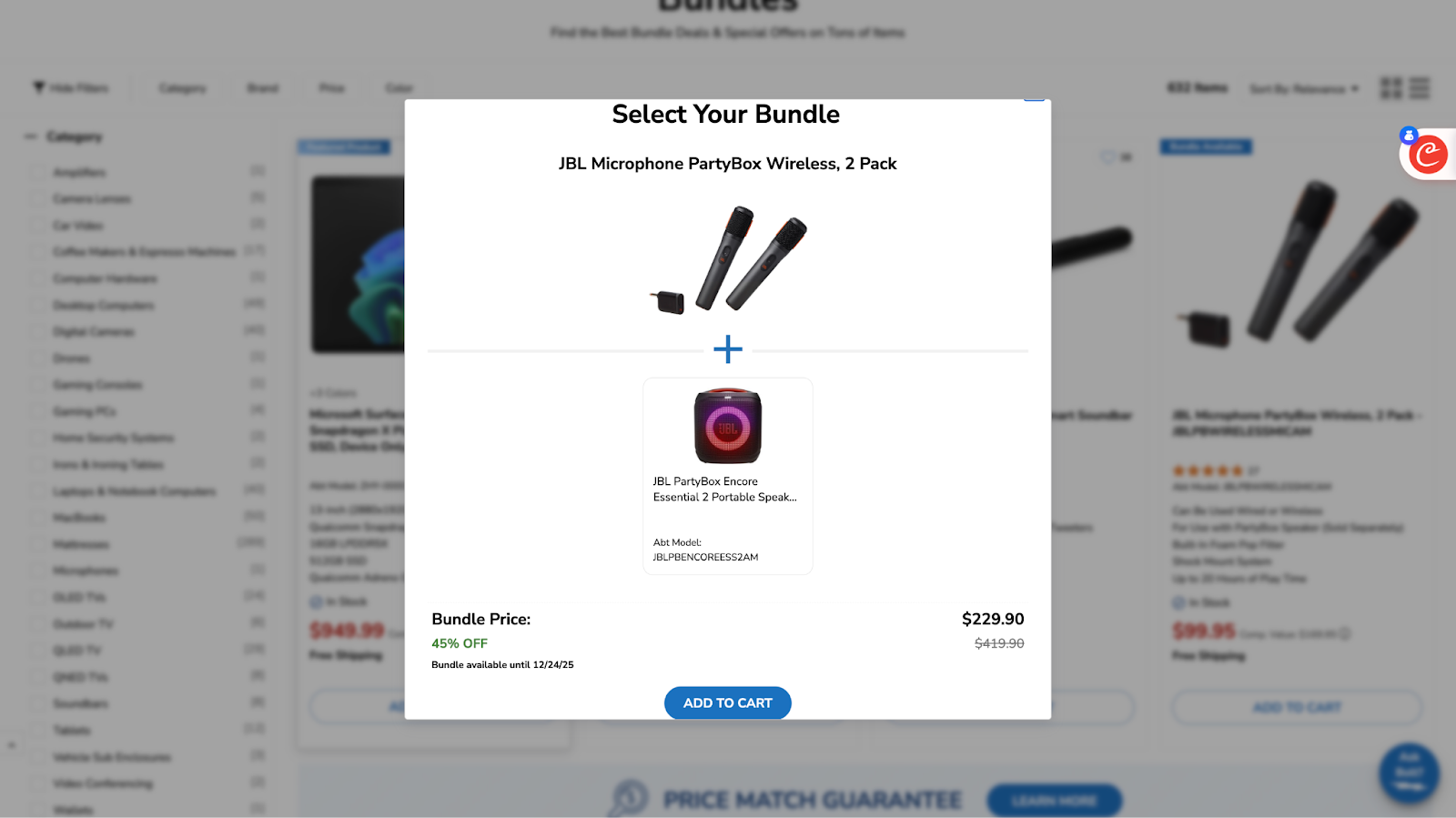
When bundles are framed as solutions, they reduce the need for comparison. Buyers spend less time evaluating individual products and more time confirming that the bundle fits the situation they have in mind.
This usually works best with simple naming, short explanations of why the items belong together, and clear guidance on who the bundle is for. The goal is to make the choice feel finished.
2. Seasonal Editions and Packaging
Seasonal editions and holiday packaging perform well in consumer electronics because they change how a familiar product is perceived, without changing the product itself.
A limited finish, a holiday-specific colorway, or a gift-ready package gives the product a reason to exist in this moment. It signals intention and feels chosen.
For electronics brands, this works best when the seasonal element stays subtle. The product remains the hero. The holiday layer simply makes it easier to imagine as a gift. Clean packaging, clear labeling, and a presentation that looks complete out of the box all contribute to that effect.
Use seasonal editions to create urgency without relying on price pressure. Availability does the work. Packaging does the rest. When done well, this approach elevates perceived value while keeping the core offer intact.
3. Personalization and Data-Led Gifting
Personalization performs well in consumer electronics when it helps narrow the choice.
Most teams already have access to useful signals. Past purchases, browsing behavior, product interest, usage patterns. During the holidays, these signals become especially valuable for guiding shoppers toward a decision that feels appropriate.
Effective personalization usually shows up in small, practical ways. Curated recommendations based on prior behavior. Emails that speak to how a product fits into a specific use case. On-site prompts that highlight a relevant setup or configuration.
The goal is guidance, not precision for its own sake. Buyers respond when personalization makes the decision feel considered and intentional, rather than overwhelming or overly clever.
When data is used to reduce uncertainty, personalization becomes a quiet confidence booster that supports conversion without calling attention to itself.
4. Influencer and UGC for Confidence Building
Influencer content performs best for consumer electronics when it supports confidence rather than excitement.
Holiday buyers tend to look for reassurance. Does this product work as expected? Is it easy to use? Does it hold up in real situations? Influencer and user-generated content answer those questions in a way branded messaging rarely can.
The most effective campaigns rely on creators who explain, demonstrate, and contextualize the product. Short walkthroughs, setup clips, real-world use cases, and honest reactions tend to outperform polished endorsements. The tone stays practical. The product stays central.
Deploy this content across product pages, retargeting ads, and email flows, where it helps reduce hesitation at the point of decision. Used this way, influencer and UGC assets act as social proof that feels earned and credible, rather than promotional.
5. Storytelling That Supports the Product
Storytelling plays a role in consumer electronics when it adds context.
The strongest narratives give the product a clear place in someone’s life. They show how it fits into a routine, a space, or a moment that feels familiar. The story carries the message, while the product remains easy to understand and easy to locate within it.
This approach works best when the story stays grounded. Everyday scenarios, recognizable needs, and realistic use cases tend to resonate more than abstract emotion. The buyer should come away with a clearer sense of what the product does and why it belongs with them.
Pair storytelling with more direct follow-up assets. Short product explainers, comparison blocks, or clear next steps help translate interest into action. When story and structure work together, campaigns feel cohesive and intentional.
Holiday Offer and Campaign Structures for Consumer Electronics Brands
Strong holiday performance in consumer electronics rarely comes from a single big lever. It comes from how offers are structured and layered across the campaign, especially as ecommerce holiday trends continue to influence how shoppers respond to pricing, incentives, and timing.
You should avoid collapsing everything into one universal deal. Instead, create structure. Different entry points for different intents. Offers that feel intentional rather than reactive.
Common approaches include tiered bundles, limited add-ons, or value-based incentives that sit alongside the core product. Extended warranties, accessories, setup support, or early access often carry more perceived value than a deeper price cut, especially for higher-consideration products.
Timing plays a role here as well. Rolling out offers in phases keeps the campaign flexible and avoids training buyers to wait for the biggest drop. It also gives you room to adjust based on performance without resetting expectations.
This approach keeps margins steadier and reduces last-minute changes across channels.
What Happens After the Purchase
For consumer electronics brands, the campaign does not end at checkout.
The post-purchase experience shapes how the product is perceived, how often it gets returned, and how likely the customer is to come back. During the holidays, this phase carries even more weight because many buyers and recipients are interacting with the product for the first time.
Plan this stage alongside the campaign itself. Setup guidance, onboarding emails, short tutorials, and clear next steps help the product feel approachable from day one. When the experience feels supported, satisfaction rises quickly.
This is also where retention begins. Thoughtful follow-ups, accessory recommendations, and usage tips extend the relationship beyond the initial purchase. Instead of feeling transactional, the experience feels complete.
Brands that invest here often see smoother operations, stronger reviews, and better long-term value from holiday-driven customers.
How to Choose the Right Campaign Approach for Your Brand
The hardest part of holiday planning in consumer electronics marketing usually is deciding which ideas deserve focus.
Most brands have more possible campaign directions than they can realistically execute well. Bundles, limited editions, creator content, gift positioning, loyalty plays. All of them can work. Very few work at the same time.
You should start by anchoring your decisions in a few practical realities.
- Product complexity sets the ceiling.
Products that require explanation, setup, or comparison benefit from campaigns that narrow choices and guide decisions. Bundles, clear use-case framing, and supporting content tend to perform better here. Simpler products allow for faster paths to purchase and lighter campaign structures.
- Buyer mix shapes the message.
A brand with a large base of returning customers can lean into upgrades, add-ons, and familiarity. A brand focused on first-time buyers needs to prioritize clarity, reassurance, and social proof. Mixing these approaches without intent often leads to diluted messaging.
- Operational readiness matters more than ambition.
Inventory depth, fulfillment speed, support capacity, and creative resources should influence campaign scope. A smaller number of well-supported initiatives usually outperform a wide set of loosely executed ideas, especially when timelines tighten.
- Post-purchase experience should influence pre-purchase decisions.
If a product requires onboarding, support, or education, the campaign should prepare buyers for that reality. Campaigns that set accurate expectations tend to see stronger satisfaction and lower friction after delivery.
The right approach tends to reveal itself in smoother execution and fewer surprises. When product, audience, execution, and support all point in the same direction, campaigns feel intentional and perform more consistently.
Conclusion
Holiday campaigns in consumer electronics succeed when teams stop trying to do more and start choosing more deliberately.
The patterns that show up across strong campaigns are consistent. Fewer decisions for the buyer. Clear use cases instead of broad positioning. Offers that add structure rather than pressure. Execution that supports the product before and after checkout.
None of this requires reinventing your stack or chasing new channels. It requires deciding what deserves focus and building the campaign around that choice. One or two campaign types executed well tend to outperform a long list of ideas spread thin.
If there’s one takeaway, it’s this. The strongest holiday campaigns make it easy for the right buyer to say yes, and easy for the brand to deliver on that promise afterward. When clarity drives the plan, performance usually follows.
[[cta5]]



.avif)


.avif)