
.jpg)
No one expected the ground to shift in the middle of a foundation aisle.
Then Fenty arrived.
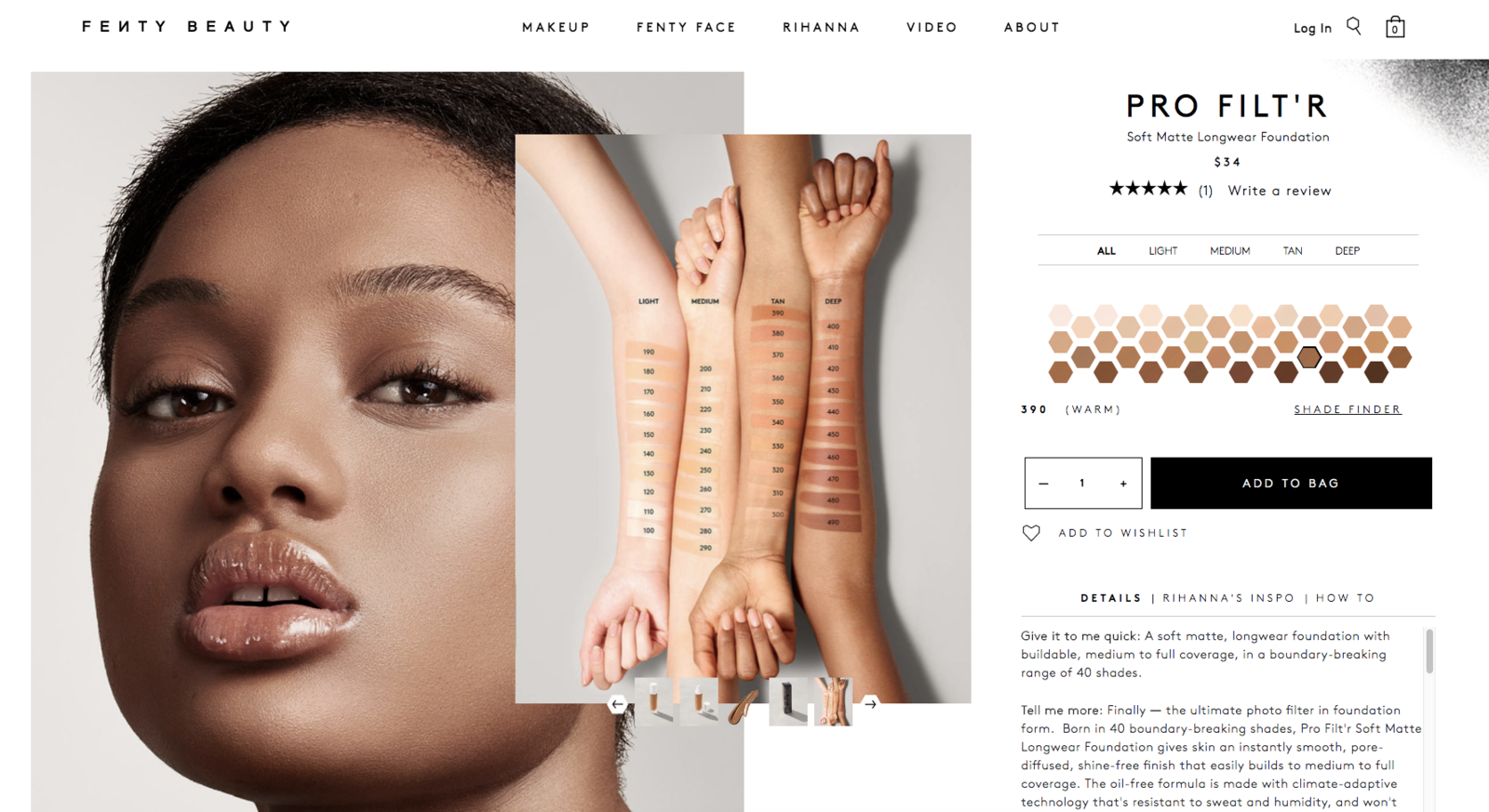
In 2017, shoppers walked into Sephora and saw 40 foundation shades lined up from the fairest to the deepest. People crowded the displays. Darker tones sold out first. Social feeds turned into live reactions from customers who finally found a match that felt real.
Rihanna had been building this moment for years. She trademarked the brand early, partnered with LVMH’s Kendo team, tested formulas across undertones, and set up a global same-day release that hit 1600 stores at once. Every choice aligned with something she repeated often.
“I wanted everyone to feel included.”
That sentence became the blueprint. It shaped the shade range, the launch strategy, the marketing, the distribution, and the way Fenty entered culture. The industry responded immediately. Consumers responded even faster.
Let’s walk through the structure behind the hype and look at the choices that pushed Fenty into a completely different league.
Market Context and the Foundation of Fenty Beauty
Before Fenty arrived, complexion ranges felt like an exclusive club. Many shoppers hunted for workarounds, mixing two or three products to land on something close to their real shade. Beauty creators kept posting swatch comparisons that highlighted the gap. The message was clear. Consumers were tired of adapting to formulas that were never designed with them in mind.
The problem stayed visible but the industry kept moving anyway.
This created a market with a silent pressure point. Millions of shoppers had money to spend, interest in makeup, and zero trust in brands treating complexion like a limited spectrum. Retail stores reflected the same imbalance. Displays leaned heavily toward lighter ranges, and deeper shades often appeared only online or in low stock.
So, Fenty entered from a different angle.
Instead of expanding an old system, the brand built a new baseline. Inclusivity sat at the center of product development. The team focused on range structure, undertone accuracy, and performance across climates and skin types. Everything needed to feel reliable for the people who had been sidelined for years.
This foundation work shaped the brand’s identity. The timing matched what customers had been asking for, and the response confirmed it immediately.
Fenty’s Product Strategy
Fenty built its entire product strategy around one principle, inclusivity with precision. The Pro Filt’r Soft Matte Foundation launched with 40 shades that covered light, deep, and every undertone in between. It shocked the industry. Not because 40 was a big number, but because the range finally reflected real people. Olive, neutral, peach, golden, cool, warm, mixed. Shades that rarely made it into charts before.
Rihanna pushed for formulas that performed as well as they matched. Reviewers talked about texture first, shade range second. The foundation wore comfortably. The finish looked like skin. The Match Stix came in highlight, contour, and corrector shades that worked across complexions. Trophy Wife went viral for its gold payoff and became the unofficial face of the launch.
As customers rushed to share their matches, Make Up For Ever stepped in with a post claiming it already had 40 shades. Rihanna replied with three words the internet still remembers. “lol. still ashy.” The comment drew a line between having shades on paper and having shades that actually show up on skin.
The launch opened with 91 products, all tied together by complexion. Fenty was not dropping random items. It was building a system that made the “Fenty Face” accessible for anyone who wanted it. At a prestige price that still felt reachable.
The public response backed it. Deep shades sold out first. Social feeds filled with people saying they found a match for the first time in their lives. TIME listed Fenty Beauty among the Best Inventions of 2017, highlighting how the brand reshaped inclusivity in beauty through real product innovation.
Fenty’s Ecommerce Strategy and Objectives
Fenty treated ecommerce like mission control. The website, the social channels, and the influencer network worked together from the first hour of launch.
Short-term goals centered on reach and adoption. People needed to see the shades in action, so the brand pushed Pro Filt’r into creator hands fast. Try-ons, swatches, and GRWMs filled feeds and turned curiosity into traffic.
Sales reflected that momentum. Shades sold out on repeat, and restock alerts became part of the hype cycle. Every reaction video pulled more shoppers in.
Long-term goals focused on retention. Fenty wanted buyers who came for foundation and stayed for everything that followed. Email, social content, and a familiar digital tone helped shape that base.
The early data made the direction clear. Traffic was strong, engagement stayed high, and customers kept returning for new drops. Fenty built an ecommerce engine that could scale without losing the spark that made the launch explode.
The Launch Strategy of Fenty Beauty
Fenty’s debut hit the industry like a flash. The brand launched across 1600 stores in 17 countries in a single day, timed with New York Fashion Week so the buzz rolled straight from runways to checkout counters. Sephora gave Fenty prime placement, and Harvey Nichols did the same in the UK. Shoppers walked in, filmed their reactions in terrible store lighting, and still sent the internet spiraling.
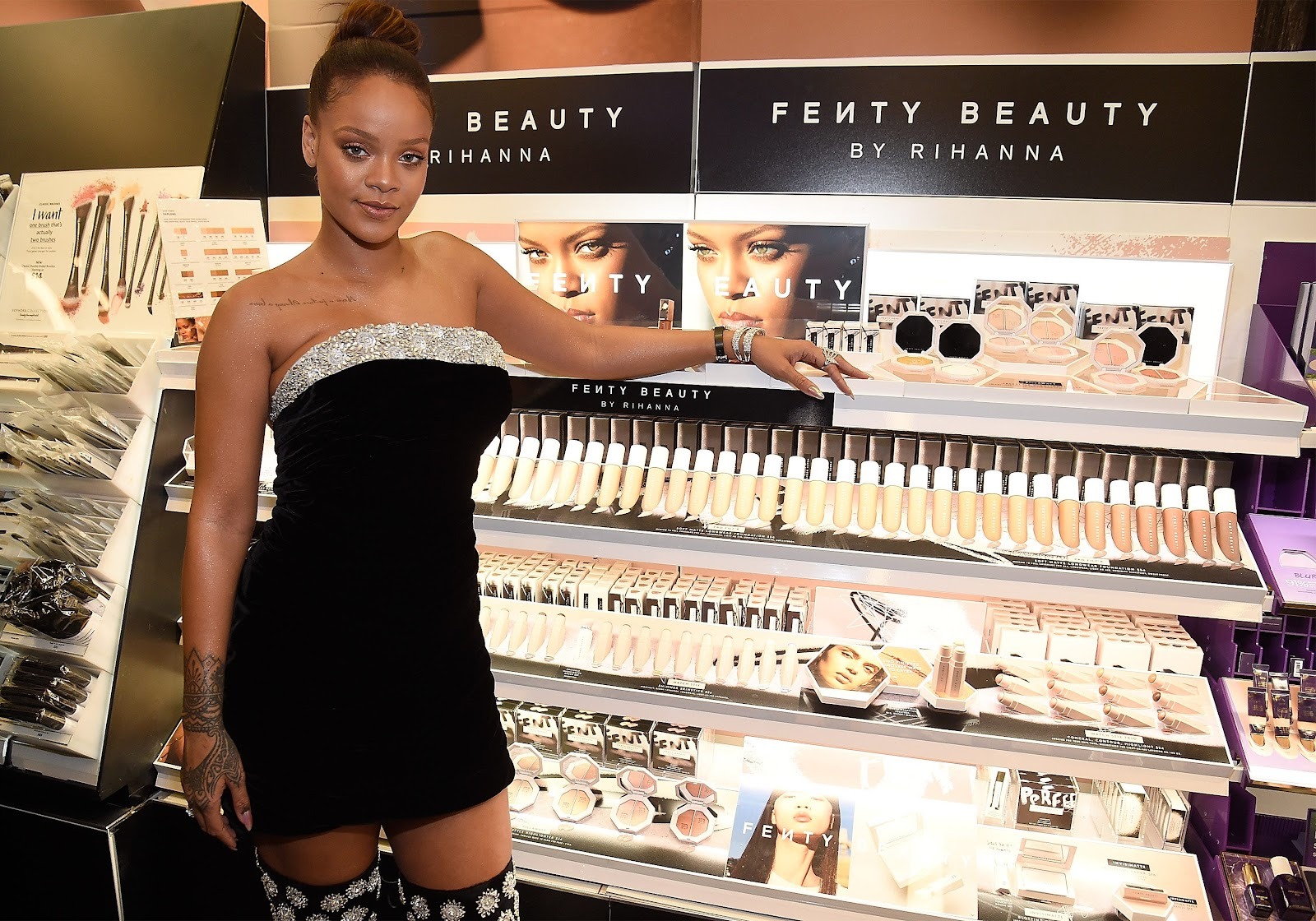
The context made the moment even louder. Most prestige brands were still sitting on 10 to 20 foundation shades. Many had no options for the deepest complexions and claimed there was no market for them.
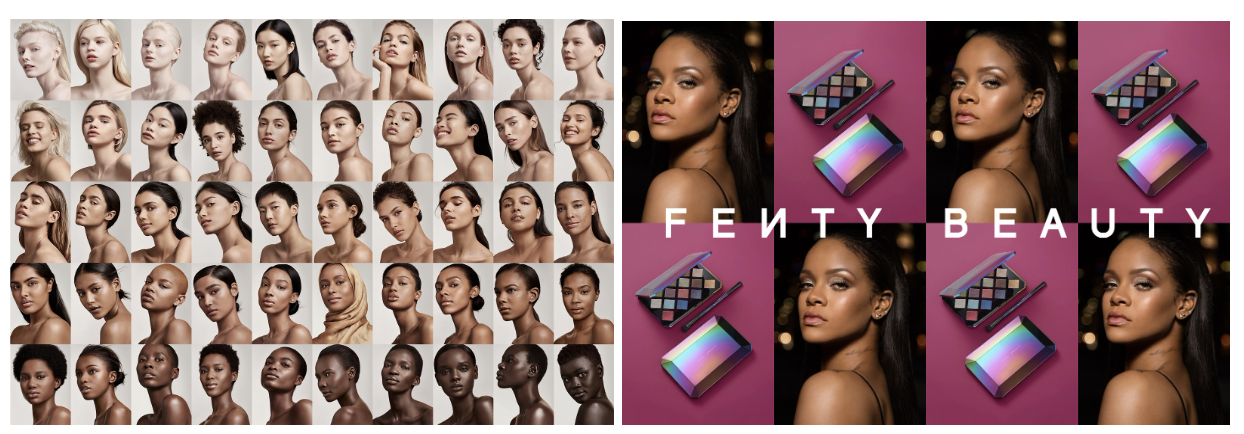
Fenty’s launch video, filled with models from all over the shade spectrum, hit a cultural nerve that had been waiting for a brand to take this seriously. People felt seen, the aisles got chaotic, and deeper shades disappeared from shelves by the hour.
Within a month, Fenty recorded $72 million in earned media value and 132 million YouTube views. The launch was a global arrival that exposed a gap the industry had ignored for years.
Marketing and Momentum: How Fenty Took Over the Feed
Rihanna made herself the engine of the launch. She pushed shade previews on her own accounts, posted tutorials, mixed product shots with everyday selfies, and kept the tone playful enough that the brand felt personal from day one.
The first campaign video did the rest. Slick Woods, Duckie Thot, Halima Aden, Paloma Elsesser, and others appeared together in a lineup that prestige beauty had never shown. The clip traveled everywhere because people saw themselves in it. That was the point.
Influencer strategy worked at every level. Major YouTubers and Instagram creators reviewed the line immediately. Micro creators filled the gaps with first impressions and shade tests. By 2021, more than a thousand creators had collaborated with the brand, so anyone searching for a match could find someone who looked like them using Fenty.
Community reactions built the second wave. Customers posted emotional first matches, undertone comparisons, and shelf photos showing deeper shades sold out. Fenty reposted these moments and let the audience confirm the story.
TikTok delivered the next spike. The #SoStunna challenge pushed the Stunna Lip Paint into millions of feeds. One swipe of red turned into transformation videos across the platform.
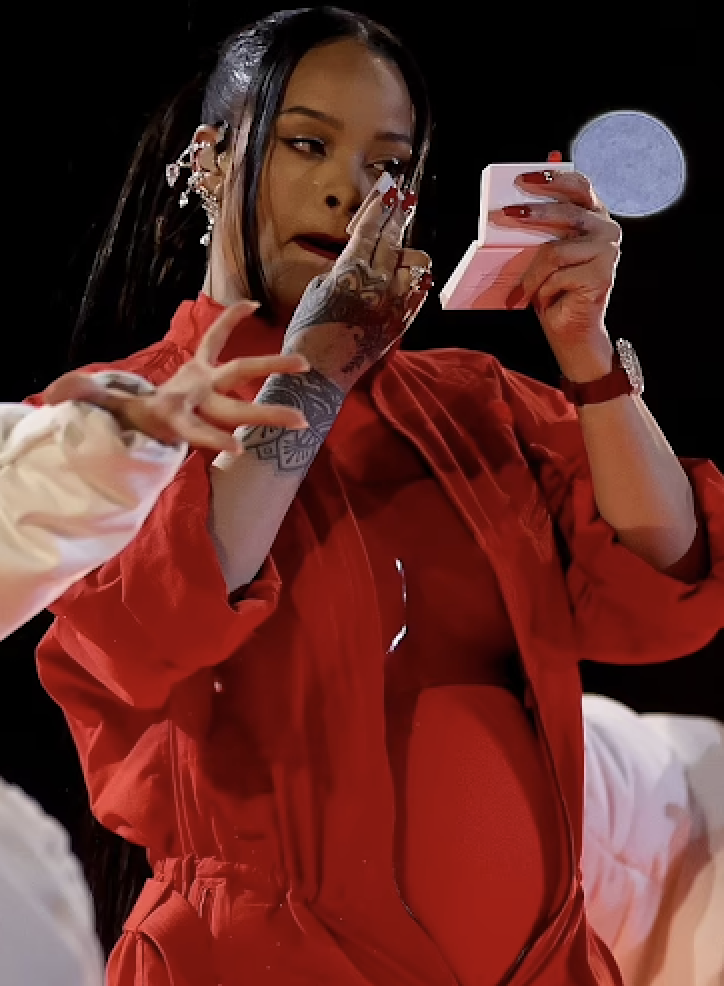
Then Rihanna locked in the most viral placement of the decade. During the Super Bowl halftime show, she paused, tapped Invisimatte across her face, and walked off. Search traffic jumped more than eight hundred percent. Media impact climbed into the millions by the end of the night.
Fenty also experimented early. The Fenty Beauty House acted as a TikTok creator hub where invited talent filmed content and tested launches until the pandemic shut it down.
Rihanna repeated her guiding line in every interview. “I wanted everyone to feel included.” The media ran it because the products proved it.
The brand’s voice stayed consistent across every channel, every creator, and every cultural moment. That consistency kept the momentum rolling long after launch week.
The impact was immediate. The brand made $100 million in sales within 40 days, generated $72 million in earned media value, and pulled 132 million YouTube views in its first month. The numbers reflected customers’ feeling of finally being seen.
Expert Dissection: What Actually Made Fenty Unstoppable
Let’s get one thing straight. Fenty did not win because it launched with 40 shades. Plenty of brands had 40 shades on paper. Fenty won because every part of the system understood the same truth: people were tired of being told they did not exist.
That pressure had been building for years. Rihanna stepped into it with a product that could finally hold the weight.
The magic was in how many decisions lined up at the same time.
- You had a founder who experienced the problem. Rihanna spent years struggling to find her own shade, so she knew exactly what needed fixing.
- You had products that matched real skin instead of the industry’s idea of skin. Undertones, depth, texture, finish. Everything felt deliberate, not theoretical.
- You had a campaign that finally looked like the customers walking into stores. Faces the industry rarely put side by side suddenly shared the same frame.
- And you had an audience that had been waiting for someone with influence to say what they already felt. Rihanna did exactly that. She talked openly about the frustration of never finding a shade that respected her complexion, and that honesty landed.
Customers saw the products and felt the intent behind them. It clicked fast.
When that intent collided with the actual customer experience, the reaction was immediate. Shelf photos of empty deep foundations. First match videos filmed with shaky hands. Influencers across undertones, ages, genders. Shade charts that finally looked human.
This is the part most brands misunderstand. You cannot reverse engineer authenticity after launch. The alignment has to be there before the public ever touches the product.
Fenty also had something other inclusive-first brands don’t: operational discipline.
- Global rollout.
- Training.
- Inventory flow.
- Packaging that photographed well.
- Retail partners who could actually keep up.
Culture moves fast. If your backend drags, the hype dies before the second restock lands. Fenty never slipped. Every spike, from NYFW to the Super Bowl blot moment, stayed supported by infrastructure that knew how to digest virality instead of drowning in it.
What Ecommerce Founders Can Learn from Fenty Beauty
Fenty’s rise is a systems story. Here are a few clear principles ecommerce founders can pull from the way everything clicked.
1. Solve what your industry avoids.
Fenty did not chase trends. It addressed a gap the market kept pretending did not exist. When you fix the problem others ignore, you win loyalty before you ever run ads.
2. Make the product undeniable.
Fenty’s shade range earned attention, but the formulas earned trust. Texture, finish, wear time. People felt the quality before they talked about it. If your product creates its own proof, your marketing works ten times harder with half the effort.
3. Let the community carry part of the engine.
Fenty reposted real matches, real transformations, real excitement. That turned customers into storytellers. UGC has more force than polished creatives because it comes from people without an agenda. Invite it. Amplify it.
4. Build operational depth before scale hits.
Fenty launched worldwide in one day because the backend was ready months before the announcement. Inventory flow, education, logistics, site performance. Ecommerce founders often learn this the hard way. You cannot out-market a weak system.
TCF Commentary on Fenty Beauty’s Performance
Fenty built momentum most brands never experience, but the part that stands out from a performance standpoint is the architecture behind it. The launch did not succeed because it was loud. It succeeded because every signal pushed the customer in one direction with zero friction. That type of alignment is rare, even at prestige level.
From a growth perspective, the brand now sits on untapped leverage. The awareness curve is massive, but the owned ecosystem is lighter than it could be. Stronger first party data, deeper post purchase guidance, and a community channel that lives beyond retailers would create a loop that compounds instead of resets with every launch.
Category growth is another factor to watch. Customers understood exactly why the foundation range mattered. Every new line needs a purpose that is just as clear, so people know why it exists and how it fits the brand. That type of clarity pushes adoption further than sheer volume of new products.
Our takeaway is simple: Fenty set the bar. Staying ahead now depends on keeping the story sharp, the structure tight, and the customer experience as focused as the launch that reshaped the industry.
[[cta5]]


.avif)


.avif)