
For beauty brands, the holiday stretch is where everything piles up at once. Gift buying, self-purchase, replenishment, end-of-year targets, internal expectations. All compressed into a short window where every idea has to pull its weight.
The hard part in 2026 is not execution. It’s coming up with ideas that still feel worth building around. The usual formats exist, everyone knows them, and that’s exactly the problem. Familiar no longer equals effective. Teams need concepts that feel sharp in crowded feeds, make sense for the brand, and scale across channels without quietly turning into discount theater.
In this article, we’ll cover holiday campaign ideas for beauty brands in 2026, focusing on how to choose strong concepts, structure them across the holiday period, and execute them without overcomplicating the season.
[[cta5]]
How Beauty Shoppers Actually Behave During the Holidays
Holiday shopping in beauty ecommerce follows a few predictable patterns, even when the channels and formats keep changing.
A large share of purchases are gifts, but many buyers are not beauty experts, which raises the need for clarity, guidance, and confidence.
At the same time, self-purchase spikes quietly alongside gifting, especially around routines, refills, and products tied to feeling put together during social-heavy weeks.
Shoppers also move fast. Decisions happen in short bursts, often driven by timing, availability, and perceived effort rather than deep comparison. That makes positioning, framing, and ease of choice more important than novelty alone.
Strong holiday performance in beauty often comes from reducing friction, spotlighting a small number of clear options, and repeating the same idea consistently across channels instead of introducing something new every week.
This behavior is what should shape campaign ideas first, before formats, tactics, or channel plans.
How to Structure Holiday Campaigns for Beauty Brands
The easiest way to lose momentum during the holidays is to treat every week like a fresh start. New ideas, new hooks, new creative directions, all competing for the same attention. A stronger approach is to think in phases and let each campaign build on the last, so the season feels intentional instead of noisy.
- Early gifting and demand shaping
This phase sets the tone. The goal is clarity. Highlight what makes your products giftable, who they’re for, and why they belong on someone’s list. Education, social proof, and light storytelling matter more here than hard offers.
- Peak gifting execution
This is where focus pays off. Fewer hero products, clearer bundles, and repeated messaging across paid, email, creators, and onsite. Shoppers are deciding fast, so consistency beats cleverness.
- Last-minute and rescue moments
Speed and reassurance take over. Availability, delivery confidence, and simple choices drive conversions. Campaigns work best when they remove hesitation rather than introduce something new.
- Post-holiday conversion strategies
The season does not end at checkout. Gift recipients, first-time buyers, and self-purchasers all need guidance on what comes next, routines, refills, and reasons to stay connected beyond the holidays.
This structure gives your ideas somewhere to live, instead of asking each one to do everything at once.
High-Impact Holiday Campaign Ideas for Beauty Brands
We’ve done the homework, narrowed down what’s actually working, and pressure-tested these ideas against real beauty brand constraints. These patterns show up repeatedly across DTC and retail-first beauty brands planning for Q4.
What follows is a set of holiday campaign concepts you can realistically plan around and run without overcomplicating the season.
1. Anchored Gift Edit
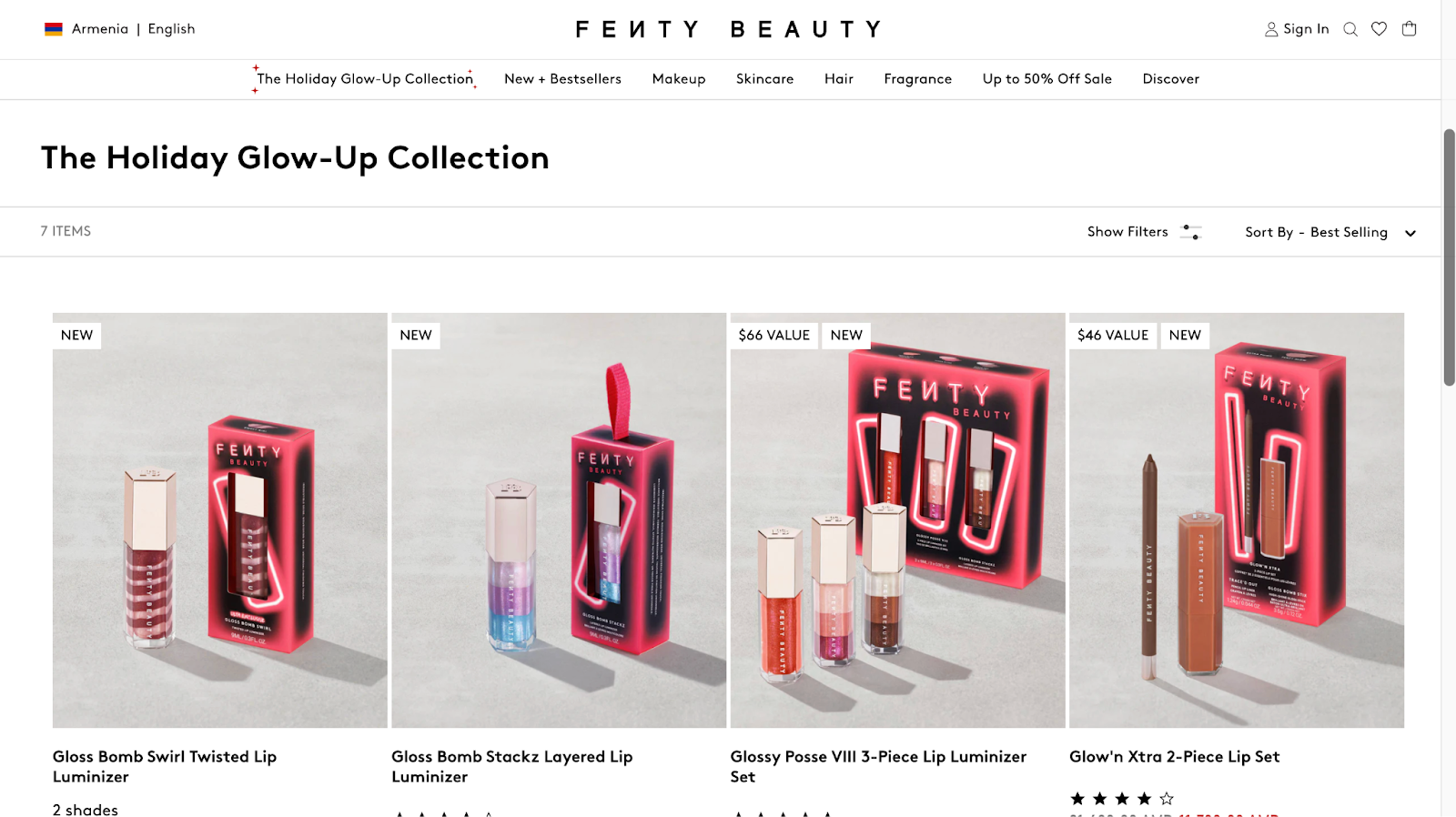
The Anchored Gift Edit is a campaign built around one simple decision, choosing a small group of gifts and letting everything else support them.
Instead of treating the full catalog as fair game during the holidays, this campaign starts by locking 3 to 5 giftable products or sets early. These become the anchors for Christmas and New Year marketing across paid, email, creators, onsite, and retail.
Ideas you can implement inside this campaign
- Define a core gift lineup and commit to it as the primary holiday offer across all channels.
- Use paid and social to repeatedly surface the same gift options, changing angles and messaging, not products.
- Frame gifts by recipient or use case in beauty ads, email, and onsite, easy gift, routine starter, indulgent pick, rather than by category.
- Include one clear premium shortcut, a higher-value option for shoppers who want to make one confident decision and check out.
- Structure email campaigns around helping shoppers choose between items in the edit instead of introducing new products.
- Brief creators to explain how to choose between the gifts in the edit, using comparison and recommendation rather than full catalog showcases.
- Make the edit the onsite default, homepage, navigation, banners, and holiday hubs should all point to the same curated set.
- Mirror the same edit in retail or partner channels, so shoppers see consistency no matter where they encounter the brand.
- Align inventory, creative, and messaging around the edit to avoid internal competition between holiday initiatives.
This campaign works because it mirrors how people shop during the holidays. A strong Anchored Gift Edit reduces friction for buyers and gives internal teams a clear structure to plan around for the entire season.
2. Routine Builder
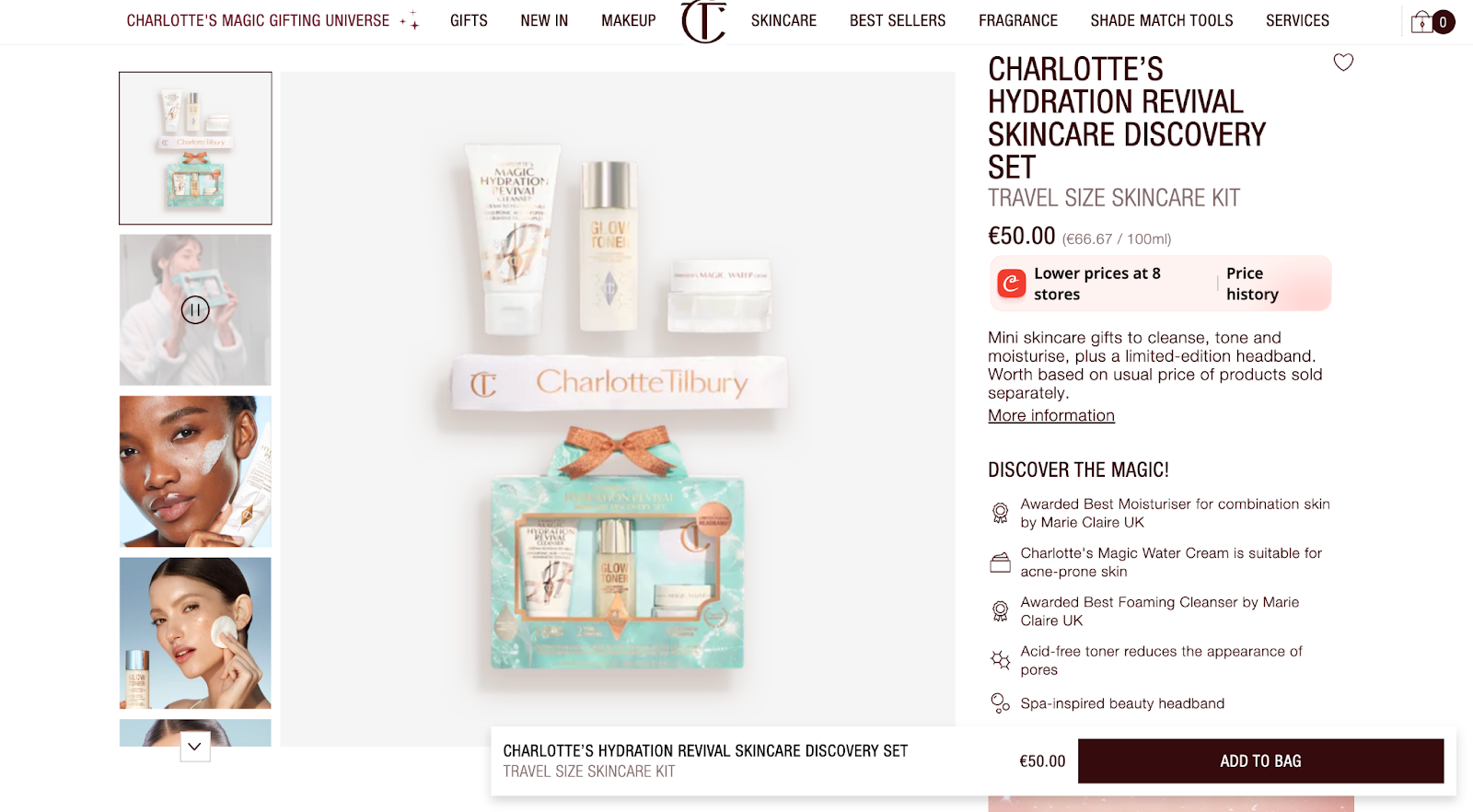
The Routine Builder campaign centers the holiday season around outcomes, not individual products. Instead of asking shoppers to understand formulas, shades, or ingredients, it shows them how products work together to deliver a result.
This campaign starts by defining 1 to 3 clear routines only. Each routine is built around a specific goal that feels intuitive during the holidays, hydration, glow, repair, reset, everyday maintenance. Fewer routines create more confidence.
Ideas you can implement inside this campaign
- Package pre-built holiday routines as complete, gift-ready solutions rather than optional bundles.
- Use paid and social to show the routine in order, focusing on progression and outcome instead of isolated product shots.
- Structure email campaigns so each routine gets its own moment, walking subscribers through the steps over multiple sends.
- Use an advent calendar as a guided routine, sequencing products by step or intensity so recipients learn how the routine works over time.
- Keep step naming and ordering identical across ads, emails, creator content, and onsite to build familiarity fast.
- Brief creators to demonstrate how the routine fits into a real morning or evening, not just application clips.
- Present the routine onsite as the primary decision, with individual product details secondary.
- Reinforce the routine through post-purchase emails and inserts, explaining how to use it correctly from day one.
- Plan post-holiday follow-ups around refills, upgrades, or add-ons that naturally extend the same routine into January.
Routine Builder campaigns work because they reduce decision fatigue and naturally increase AOV without leaning on discounts. They also set the brand up for retention, since a routine that makes sense in December still makes sense weeks later.
3. Gift Buyer Shortcut
The Gift Buyer Shortcut campaign is built for the person buying beauty without feeling fluent in beauty. This is one of the most common holiday buyers and one of the easiest to lose when messaging assumes too much knowledge.
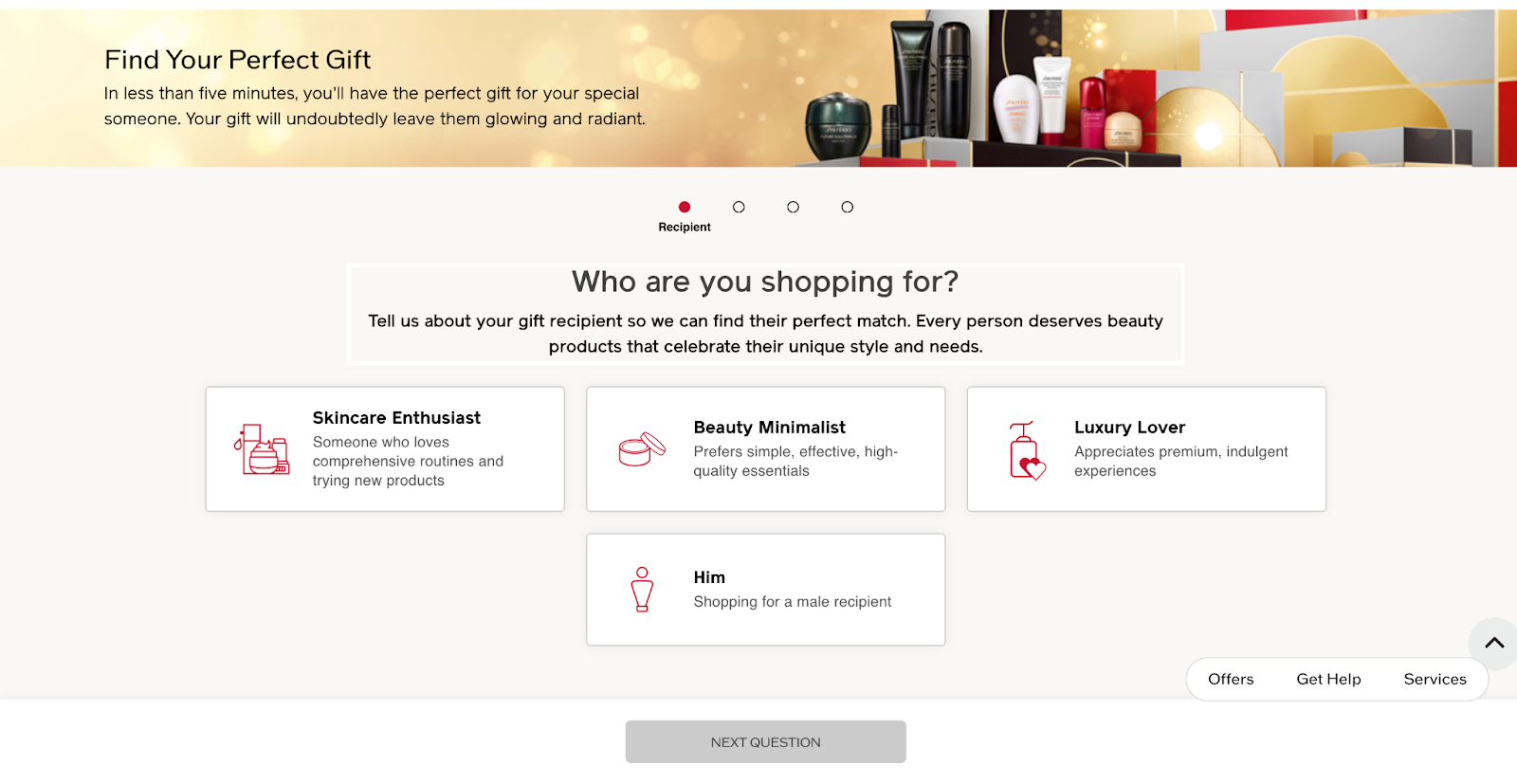
Instead of asking gift buyers to browse, compare, and interpret, this campaign removes effort from the decision entirely. The focus is speed, reassurance, and clarity.
Ideas you can implement inside this campaign
- Organize gifts by recipient type rather than product category, partner, parent, friend, coworker, so shoppers can self-select instantly.
- Use plain-language labels like easy gift, safe choice, or everyday favorite directly in ads, email, and onsite, where decisions actually happen.
- Add a simple gift finder that asks a few buyer-focused questions and delivers one clear recommendation.
- Show side-by-side comparisons between two or three options, focused on the one factor that helps someone decide, not full feature breakdowns.
- Run paid and social creative that acknowledges uncertainty and offers guidance instead of inspiration-heavy messaging.
- Segment email campaigns around gift buying and structure sends around choosing between a small number of options.
- Brief creators to act as advisors, explaining why they would choose one option over another, rather than promoting everything.
- Encourage creator content that compares and recommends, not hauls or unboxings.
- Reinforce the same shortcut language in onsite navigation, PDPs, and customer support or chat scripts.
Gift Buyer Shortcut campaigns work because they respect how people actually shop during the holidays. Most buyers want to feel confident, not educated. When the decision feels easy, conversion follows.
4. Limited Format, Not Limited Product
This campaign creates a sense of newness without introducing new products. Instead of adding pressure to launches, it refreshes what already works through format, packaging, or presentation.
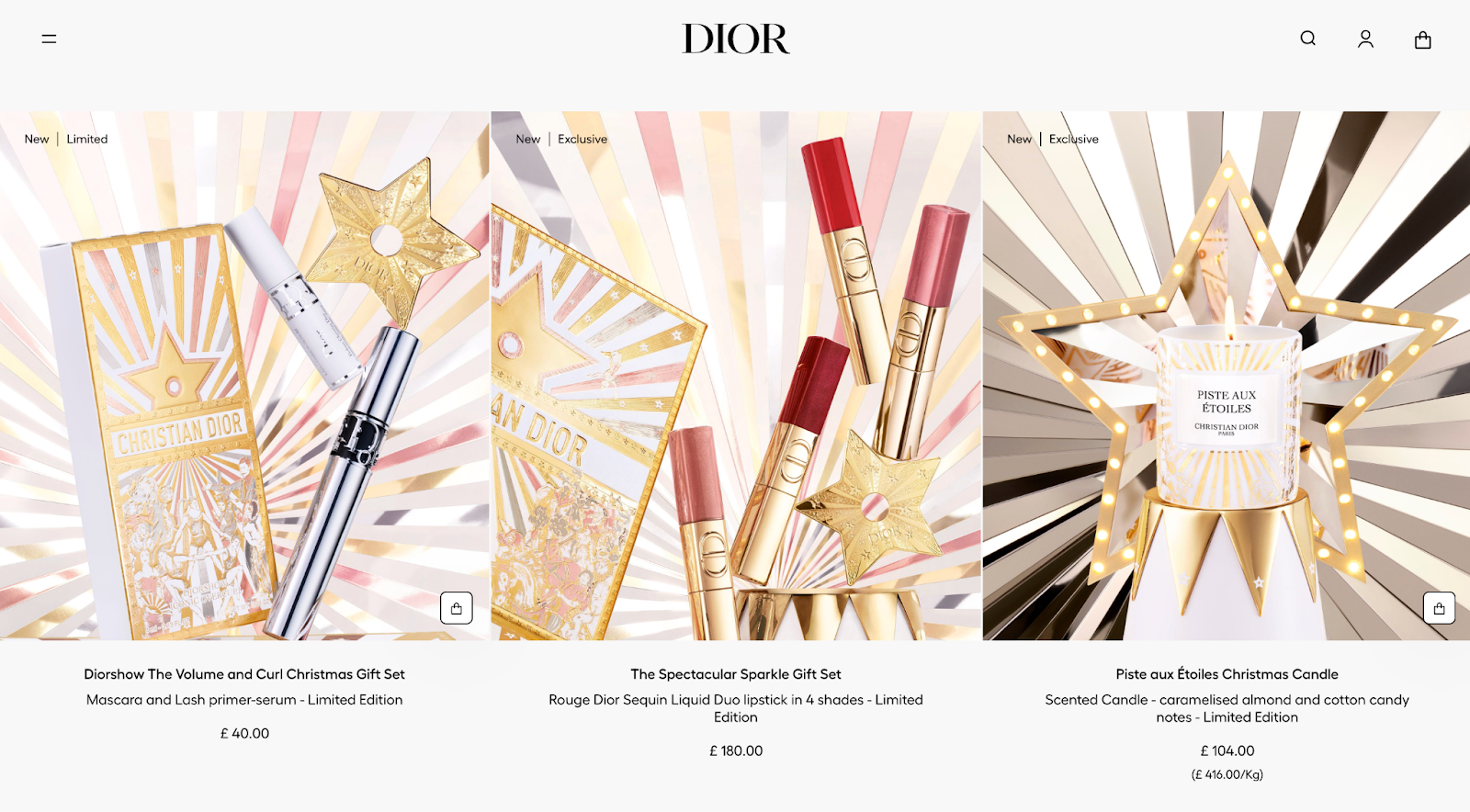
It is especially useful for brands that want holiday relevance without expanding the product roadmap or overloading teams.
Ideas you can implement inside this campaign
- Introduce holiday-only packaging for existing bestsellers, sleeves, boxes, tins, or wraps that signal gifting without changing the product itself.
- Offer exclusive holiday sizes that feel intentional, travel-friendly, or gift-appropriate.
- Create limited pairings or duos from familiar products that make sense together, not leftover bundles.
- Use paid and social to highlight the format change clearly, so shoppers immediately understand what’s different.
- Frame the format as seasonal and considered, not urgent or hyped.
- Brief creators to focus on why the format works as a gift instead of on novelty.
- Surface limited formats onsite as distinct options, clearly labeled but not buried under urgency language.
- Mirror the same formats in retail displays or influencer kits for consistency.
- Plan availability messaging calmly so shoppers understand timing without pressure tactics.
This campaign works because it refreshes attention without fragmenting focus. Shoppers get something that feels special for the holidays, and teams avoid the cost, risk, and complexity of full product launches.
5. Tiered Gift Strategy
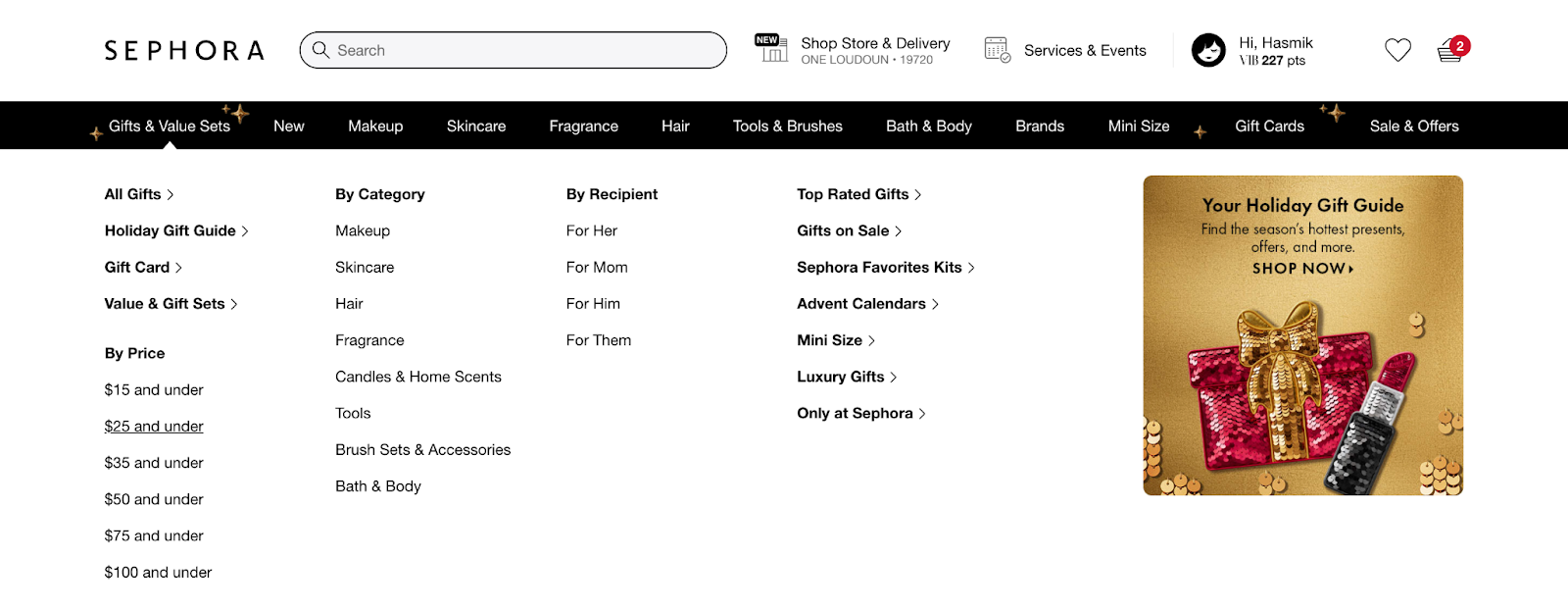
The Tiered Gift Strategy organizes holiday buying around clear price tiers, so shoppers can decide fast without feeling pushed or confused. The campaign succeeds when each tier feels intentional.
Ideas you can implement inside this campaign
- Define 2 to 4 price tiers only, each anchored by one strong, giftable option.
- Use paid and social to spotlight one tier per asset, keeping the message focused.
- Structure email sends around helping shoppers choose the right tier for their situation, last-minute gift, main present, self-treat.
- Present tiers onsite as the primary navigation for holiday shopping, before category browsing.
- Add within-tier add-ons at checkout instead of pushing shoppers up a tier.
- Brief creators to explain who each tier is best for and when they would choose it.
- Keep visual consistency across tiers so the difference feels deliberate.
- Reinforce tier logic in retail or partner placements to avoid mixed signals.
This campaign works because it respects budget reality without cheapening the brand. Shoppers feel in control, decisions happen faster, and AOV lifts naturally through clarity rather than pressure.
6. Creator-as-Guide
The Creator-as-Guide campaign uses creators more to reduce confusion and less to amplify hype. Instead of asking them to sell everything, you give them a clear job: help shoppers choose.
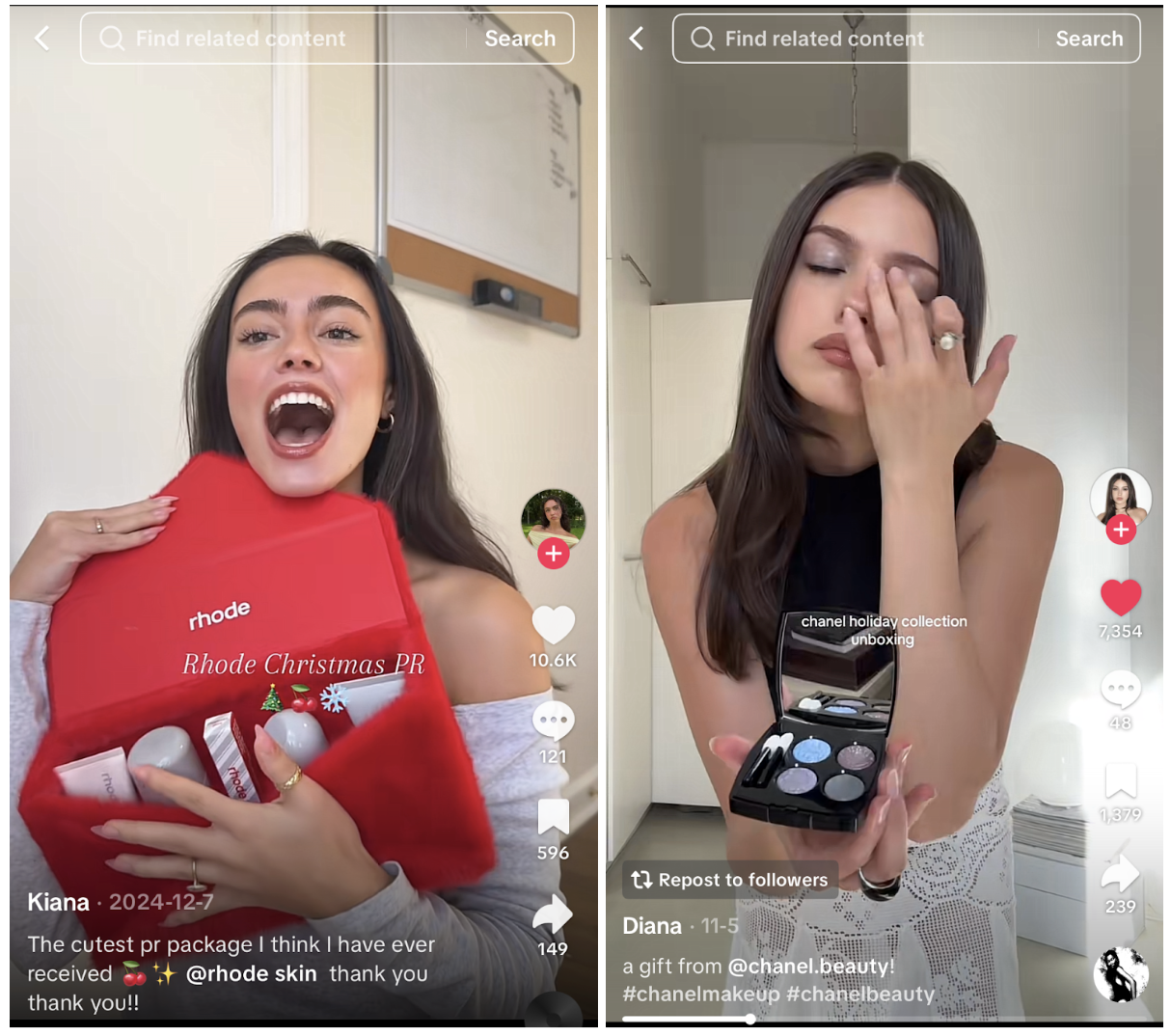
This works especially well during the holidays, when buyers want reassurance and context more than inspiration.
Ideas you can implement inside this campaign
- Assign creators specific roles, explainer, comparator, routine guide, rather than broad promotion.
- Brief creators to answer real questions, who this is for, when to choose it, how it fits into a routine.
- Use paid and social to amplify creator content that explains choices, not just application.
- Structure email content around creator recommendations, “why I’d choose this one” performs better than generic features.
- Reuse creator videos on PDPs and gift pages to reinforce confidence at the decision point.
- Keep creator messaging aligned with your Anchored Gift Edit or Tiered Gift Strategy, so guidance stays consistent.
- Favor fewer creators with clearer briefs over wide seeding during peak weeks.
- Measure success on assisted conversions, saves, and clicks, alongside with views and reach.
Creator-as-Guide campaigns work because they match how people actually shop for beauty gifts. Shoppers trust someone walking them through a choice far more than someone telling them everything is amazing.
7. Post-Gift Journey
The Post-Gift Journey campaign plans for what happens after the gift is opened. Instead of treating the holidays as the finish line, it uses December to set up retention, education, and repeat purchases in January and beyond.

This campaign works because holiday acquisition behaves differently. Many buyers are first-time customers, and many recipients did not choose the product themselves. Without guidance, that attention fades quickly.
Ways to implement this campaign
- Build gift-recipient onboarding flows before the holidays begin, not after.
- Include physical inserts or QR codes in packaging that explain first use, routine order, or next steps.
- Use post-purchase email and SMS to guide recipients through their first week with the product.
- Reinforce routine structure introduced during the holidays so usage feels familiar.
- Trigger education-first messaging before implementing any upsell or promotion ideas.
- Introduce refills, upgrades, or complements only after the product has been used.
- Use January messaging to extend the same holiday story instead of resetting the brand voice.
- Invite gift recipients into loyalty, subscriptions, or community once they understand the product.
Post-Gift Journey campaigns turn holiday gifting into long-term value. They protect retention, improve product experience, and help brands exit the season with momentum instead of starting from zero in January.
Common Holiday Mistakes Beauty Brands Still Make
Even strong teams fall into the same traps during the holidays, not because they lack experience, but because pressure compresses decision-making. These mistakes tend to show up quietly, then compound across channels.
1. Putting shade ranges front and center during gifting moments
What works in October hurts in December. Leading with full shade ranges, customization, or “find your match” tools introduces anxiety for gift buyers who just want something safe and acceptable.
2. Treating minis and sets like leftovers
Holiday sets often feel like excess inventory repackaged. When sets lack a clear purpose or routine logic, shoppers read them as lower value instead of gift-worthy.
3. Letting discounts stand in for gift logic
In beauty, a lower price doesn’t explain who the product is for, how it fits into a routine, or why it’s safe to gift. For non-beauty buyers, heavy discounting can even raise doubts, “Why is this marked down? Is it old? Is it risky?” Without clear context, the discount creates hesitation instead of confidence.
4. Treating every campaign as equally important
When everything is a priority, nothing stands out. Too many parallel initiatives dilute creative focus, confuse shoppers, and stretch teams thin. Fewer, clearer campaigns almost always outperform crowded calendars.
5. Letting PDPs stay evergreen during the holidays
Beauty brands often launch holiday campaigns while leaving PDPs unchanged. Campaigns introduce new angles, sets, or use cases, but product pages still reflect evergreen positioning. When PDPs don’t reinforce the campaign’s promise, momentum breaks at the decision point and conversion quietly suffers.
These mistakes don’t come from poor marketing. They come from forgetting that holiday beauty shopping is about reassurance, safety, and guidance. When campaigns are built around that reality, performance usually follows.
Conclusion
Holiday results in beauty come from clear thinking and steady execution. Fewer campaigns. Stronger ideas. Consistent delivery across every channel shoppers touch.
The campaigns in this guide work because they give people a clear decision to make, then reinforce it everywhere, ads, emails, creators, PDPs, and post-purchase. That consistency builds confidence fast, which matters when people shop under time pressure.
This approach also changes how the season feels internally. Planning becomes more focused. Creative decisions get simpler. Teams stop reacting week by week and start moving with intention.
Going into 2026, aim for structure over noise. Choose ideas that can hold attention for weeks, commit to them early, and let clarity carry the season through Christmas, New Year, and beyond.
[[cta5]]



.avif)

.avif)